Pittsburgh brake bleeder kit
The short answer
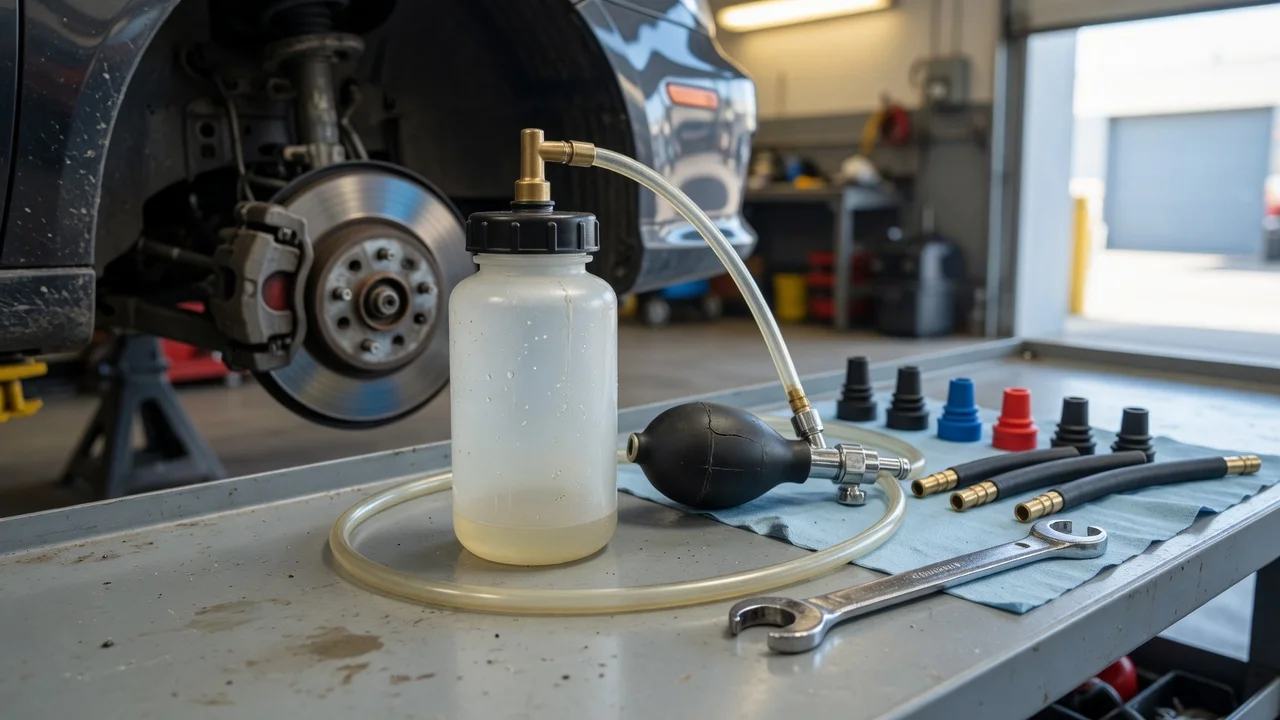
The Pittsburgh brake bleeder and vacuum pump kit is a hand-operated tool. It lets one person pull brake fluid and trapped air out through each caliper or wheel cylinder bleeder screw. It suits occasional home use, and it can also do general vacuum testing. The Pittsburgh pneumatic brake fluid bleeder with auto refill works on the same vacuum principle, but compressed air powers it. It also tops up the master cylinder reservoir while you work. It only makes sense if you already have an air compressor and bleed brakes often enough to value speed.
Three conditions can change that answer. A pneumatic unit is no use without a suitable compressor. Many vehicles with ABS or electronic stability control need a scan tool to cycle the hydraulic unit during a full bleed, and neither kit replaces that step. Vacuum bleeding also has its own quirks, which are explained below.
How the two kits differ
Feature | Hand vacuum pump kit | Pneumatic auto-refill bleeder; Power source | Hand squeeze pump | Shop air from a compressor; Who does the work | One person, pumping by hand | One person; air generates the vacuum; Reservoir top-up | Manual: you watch and refill the master cylinder | Refill bottle feeds the master cylinder while bleeding; Other uses | Vacuum testing of hoses, valves and sensors (where the kit includes a gauge and adapters) | Mainly fluid extraction and bleeding; Best fit | Occasional DIY brake and clutch work | Frequent bleeding or full fluid flushes
The table compares how the two tools work. It is not a specification sheet. This article had no verified data on pump capacity, vacuum rating, air pressure or volume needs, hose sizes, adapter counts or current prices. Check the package listing and the manual for the exact unit before you buy.
What vacuum bleeding means
Vacuum bleeding pulls fluid out of an opened bleeder screw into a catch container. Old fluid and air bubbles leave the brake line, and fresh fluid is drawn in from the master cylinder. The traditional two-person method, where a helper presses the pedal, is not needed. The main risk is letting the master cylinder reservoir run low. If it does, air enters the system and you have to start again. The auto-refill feature on the pneumatic version is meant to prevent that.
Air can also leak past the threads of an opened bleeder screw. This shows up as a steady stream of small bubbles in the hose even when the brake line is clear, which can make it hard to tell when a wheel is finished. Some people seal the threads or rely on fluid colour and pedal feel instead of bubbles alone. Treat a firm pedal after bleeding as the real test.
Checks before you buy
Bleeder screw fit: confirm the kit's hoses or adapters fit the bleeder screws on your vehicle, as sizes vary by make, model and year. Compressor capacity (pneumatic kit only): compare the tool's stated air requirement with your compressor's output before relying on it. ABS procedure: check the service information for your model year, market and powertrain. Some systems need a scan-tool-driven bleed of the ABS unit. Fluid type: use the brake fluid grade in your owner's manual. Glycol-based DOT 3, DOT 4 and DOT 5.1 fluids must not be mixed with silicone-based DOT 5. Clutch hydraulics: if you also plan to bleed a hydraulic clutch, check the procedure for that vehicle, as some systems bleed poorly with vacuum alone.
Which to choose
Choose the hand kit if you bleed brakes now and then, have no compressor, or want a tool that also handles vacuum diagnostics. Choose the pneumatic auto-refill kit if you already run a compressor that meets its air requirement and do enough fluid flushes that hand pumping and refilling the reservoir become a burden. In either case, follow the bleeding sequence and ABS procedure for your exact vehicle, and do not drive until the pedal is firm and consistent.