Pickup Truck Tire Repair: Repairability and Choosing a Shop
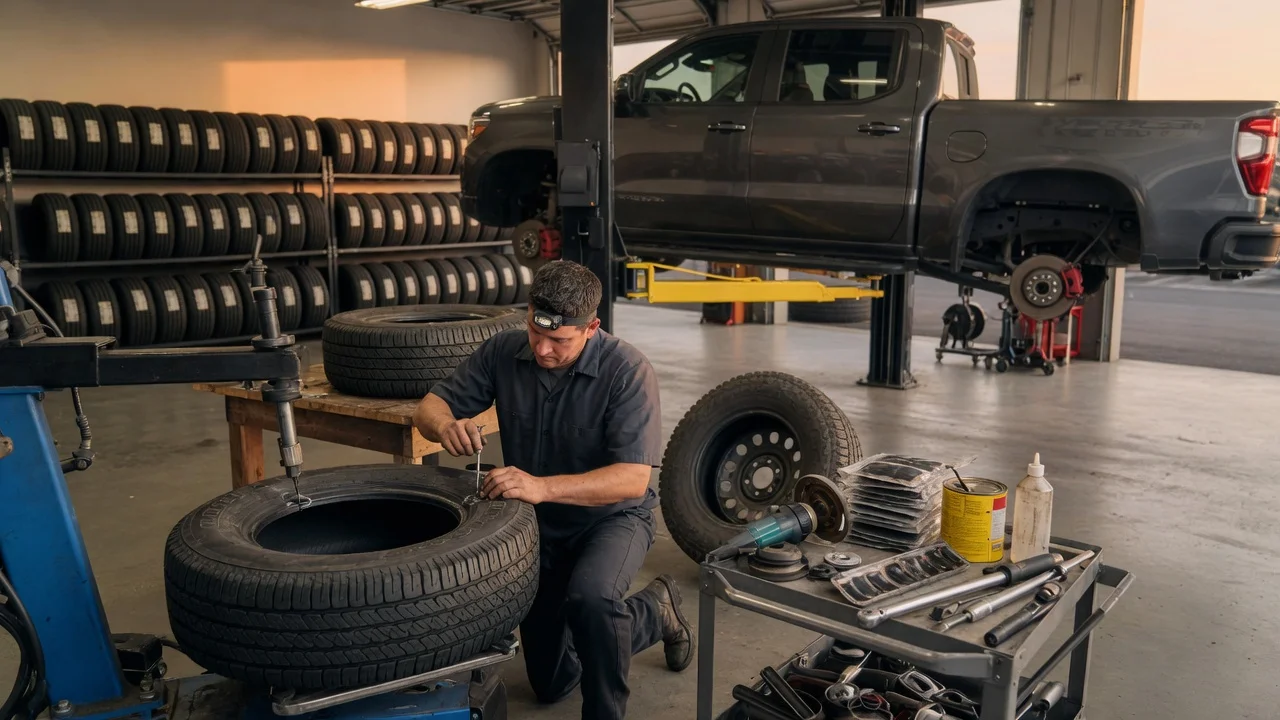
What you can expect from a pickup tire repair
A pickup truck tire can often be repaired when the injury is a small puncture in the tread, the inner liner and belts are undamaged, and the tire was not driven while severely underinflated. Sidewall, shoulder and bead damage, large cuts, and internal belt or liner failure call for replacement. The lasting repair is a combination patch-plug installed from the inside after the tire is dismounted and inspected. An outside-only string plug is an emergency way to reach a shop, not a finished repair. Exact injury-size limits, remaining-tread rules and whether a given light-truck (LT) tire may be repaired are set by the tire maker and by the shop’s adopted repair standard; those numbers are not supplied here and should be confirmed on the tire and with the shop before you decide.
When a truck tire is a candidate for repair
Repairability is about location, size, internal condition and how the tire was used after the injury. Pickup tires are commonly LT-metric or flotation sizes with a stated load range. That construction is thicker than a passenger tire, but it does not make sidewall cuts or crushed belts repairable. Have the tire dismounted so the inner liner can be seen. A nail hole that looks small from the outside can hide a larger inner injury, a previous plug, or liner separation.
The puncture is in the center tread, not the sidewall, shoulder or bead. The injury is a puncture rather than a long cut, tear or impact break. The shop can inspect the inner liner, belts and inner cords and finds them intact. The tire was not driven for a long distance while flat or very low, which can overheat and wrinkle the liner. There is usable remaining tread and the tire is not already at wear-out or dry-rotted. The same area has not already been repaired, and the tire has not exceeded the maker’s allowed number of repairs. Valve, TPMS sensor and wheel are serviceable, or the shop can replace those parts as part of the job.
When replacement is the safer path
Replacement is the correct next step when the carcass is no longer a sound pressure vessel. Off-road and jobsite injuries on pickups often land in the sidewall or shoulder, where a patch cannot restore the flexing area. Dual-rear-wheel (dually) inner duals, load-range E and higher tires, and tires run overloaded or underinflated after a puncture deserve the same interior inspection; load rating does not override a damaged liner.
Sidewall, shoulder or bead cuts, bulges or exposed cords. A puncture larger than the shop’s and manufacturer’s repair limit for that tire. Inner liner wrinkling, belt separation, broken cords or a bulge that appears after the injury. A tire that has been run flat, or a spare that has sat underinflated long enough to crack or take a set. Tread worn to the wear bars, uneven wear that will not clean up with rotation, or weather-checking that reaches the cords. Need to restore matching circumference on a four-wheel-drive truck when the damaged tire is far more worn than its mate.
Repair, emergency plug or replace
Choose among a proper interior repair, a temporary plug, and a new or take-off tire using the same criteria: remaining carcass integrity, where you must drive next, and whether the truck is two-wheel drive, four-wheel drive or a dually. Prices, brand-specific repair limits and test scores are not supplied in this brief, so the comparison below is on method and fit rather than cost.
Option Prefer this when Tradeoff; Interior combination patch-plug Tread puncture, sound inner liner, you want the tire back in regular service Requires dismount, inspection, balance and usually a short wait; not valid for sidewall or shoulder injuries; Outside string or rope plug only You are stranded and need to reach a shop on a spare-less or unsafe-to-stop stretch Seals from the outside only; cords and liner are not inspected; treat as temporary; Replace the tire Location or size is out of spec, the liner is damaged, or a 4WD pair would be badly mismatched Highest parts cost; restores load capacity and matching diameter when the carcass is done; Replace a pair or axle set Four-wheel drive with a large remaining-tread gap, or dual rears that must share load and diameter More tire cost up front; reduces driveline wind-up and uneven dual loading
On four-wheel-drive pickups, a repaired tire that is still close in circumference to its mate can stay in service. A new tire next to a half-worn one can create enough rolling-diameter difference to stress the transfer case. Shops often resolve that by pairing the new tire with the least-worn mate, moving the worn pair to another axle if remaining tread allows, or replacing two. Dual-rear trucks need matched duals so one tire does not carry most of the load. Those matching rules are a reason to pick a shop that measures, not only patches.
How to choose a truck tire shop
The supporting need is a shop that can handle pickup sizes and do a real repair, not only a roadside plug. Ask whether they dismount LT tires, inspect the interior, install a combination repair unit, rebalance, and reset or service the tire-pressure sensor. Confirm they stock or can order your size, load range and speed rating, and that they will refuse a sidewall repair rather than sell one. Hours, towing radius and whether they work duals or 20-inch-plus wheels vary by location; those logistics are local and are not listed here.
Shop type Fits well when Watch for; Retail tire shop with LT equipment You can drive or tow in, want inspection plus balance and TPMS, and the size is a common pickup fitment Unusual flotation or commercial sizes may be special-order; confirm they will not repair a sidewall; Commercial or medium-duty truck tire shop Load-range E and up, dual rears, fleet or farm trucks, or tires too stiff for a passenger-car changer May run on commercial hours; passenger-car convenience services can be limited; General mechanical garage You already trust the shop and they either do interior repairs or send the wheel to a tire specialist Changer, balancer and repair-unit stock for large LT tires are not universal; ask before you leave the truck; Mobile or roadside technician The truck is loaded, off-road, or unsafe to drive in Many mobile jobs are plug-only; request an interior repair at a bay if the tire is otherwise sound; New-vehicle dealer You need an OEM-size match, a sensor from the truck line, or work tied to a warranty visit Tire work may be subcontracted; wait and parts mix differ from a dedicated tire bay
What a proper shop visit should include
A complete job is more than sealing the hole. The technician should mark the injury, break the bead, inspect the inner liner, prepare the injury, install a repair unit that fills the puncture and patches the liner, then mount, inflate, check for leaks, and balance the assembly. On trucks with tire-pressure monitoring, the sensor stem or clamp-in sensor should be inspected and the system relearned if the shop procedure requires it. If the shop cannot show the interior or will only install an outside plug in a tire you intend to keep, choose a different bay for the finished repair.
State the size, load range and whether the truck is 4WD or a dually before they quote. Ask for a combination interior repair and an inner-liner inspection, not a plug-and-go as the final fix. Have them check the mate tire’s tread depth if the truck is four-wheel drive. Replace a damaged valve or TPMS sensor rather than reseating a leaking stem. Torque the wheel to the truck’s specification after the tire is back on; pickup lug hardware is not a hand-tight fit. Recheck inflation after the tire cools, using the door-jamb placard load inflation, which may be higher than a passenger car.
Pickup-specific checks before you drive to the shop
If the tire is still holding air, inflate it to the placard pressure and look for the injury in the tread. A slow leak with the nail still in place is often driveable for a short, moderate-speed trip if the tire is round, the sidewall is unmarked and the truck is not overloaded. If the tire is flat, the sidewall is damaged, the truck pulled hard as it went down, or you must use four-wheel drive to leave the site, use the spare or a tow rather than run on the rim. Many current pickups carry a full-size spare; confirm it is inflated before you need it. After any repair, treat the first miles as a leak check and stop if the tire loses pressure, grows a bulge or the pressure warning returns.
What this guide does not settle
This article does not assign a dollar price, a brand ranking, or a measured puncture-size cutoff for every LT tire. Manufacturer repair bulletins, load and inflation tables, and a given shop’s adopted standard (including whether they repair speed-rated or run-flat-type constructions) can change the yes-or-no on a specific tire. If the inner liner cannot be inspected, treat repairability as unknown and replace or tow rather than guessing from the outside of the tread.