Pickup Truck Tire Repair: Choosing a Repair Shop
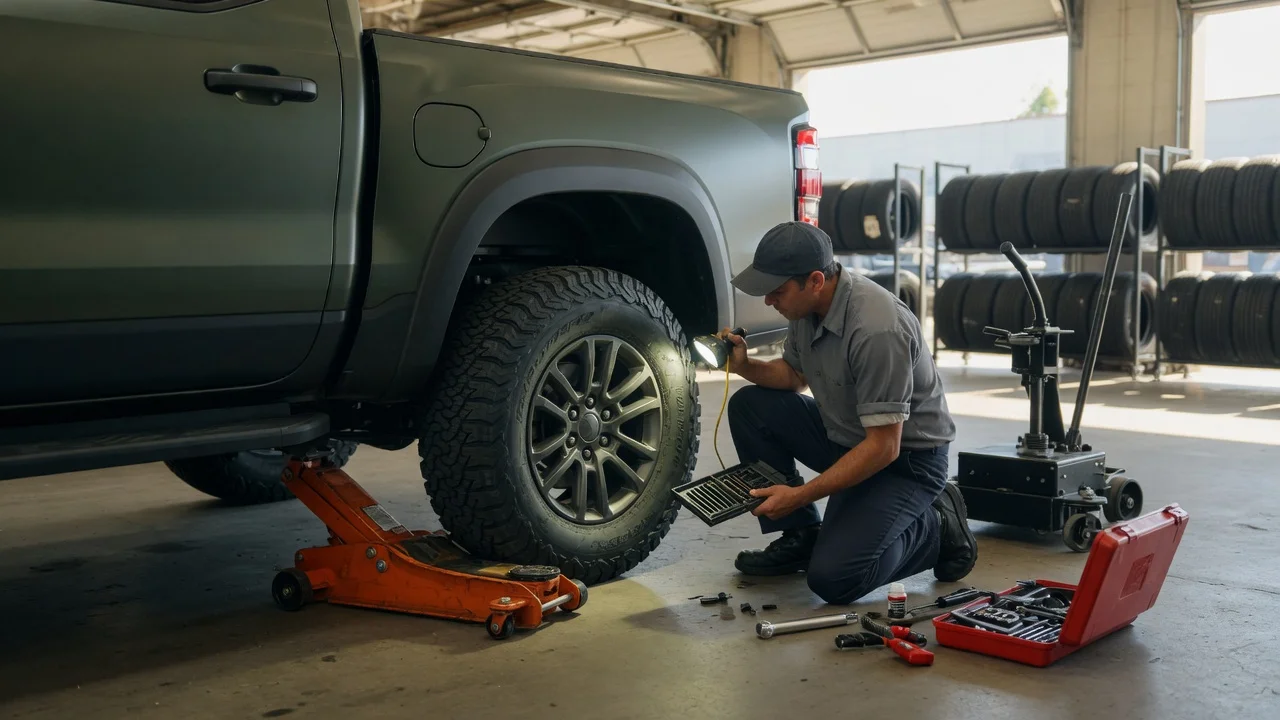
What the repair decision actually covers
The essential answer is that pickup truck tire repair is not one uniform service. The right shop depends first on what the tire needs: a simple puncture repair, a sidewall or shoulder inspection that may end in replacement, or work involving the wheel, tire pressure monitoring system, or load-rated fitment. A shop that is adequate for a passenger car may not be the best choice for a heavier pickup, especially one used for towing, hauling, or off-road driving.
For most puncture repairs in the tread area, a shop can remove the tire from the wheel, inspect the inside, and install a proper plug-patch repair. Repairs performed only from the outside, or repairs in the sidewall and shoulder, are generally not considered safe or durable. The material qualification here is the tire's condition and location of damage, not the shop's brand.
Types of shops to compare
Three common options are franchise tire centers, independent tire and automotive shops, and dealership service departments. Franchise tire centers often carry a wide range of light-truck and all-terrain tires and may have consistent equipment across locations. Independent shops can offer more direct communication with the person doing the work and may be more willing to inspect a tire that another shop would immediately replace. Dealerships are most relevant when the truck is under warranty or the issue may involve a factory wheel, tire pressure sensor, or vehicle-specific procedure.
Option | Best suited for | Typical limitations; Franchise tire center | Common tread punctures and new tire availability | Less flexibility on marginal repairs; Independent tire shop | Older trucks, specialty fitments, second opinions | Equipment and inventory vary by location; Dealership service | Warranty, factory wheels and TPMS concerns | Often less focused on tire-only work
Which option fits different priorities
If the priority is convenience and predictable pricing, a franchise tire center is often the safer starting point. If the priority is keeping a marginal or hard-to-replace tire, an independent shop may be more willing to give a detailed inspection and a cautious repair recommendation. If the truck is new, modified, or under warranty, the dealership or a shop familiar with that specific model can reduce the chance of damaged sensors or incorrect torque procedures.
Specifications such as load range, speed rating, and inflation pressure should be matched to the truck's door placard and usage. This becomes more important on three-quarter-ton and one-ton pickups, where a tire with the wrong load capacity can be unsafe even if the size appears close.
What a tire repair should include
A proper tread-area repair includes removing the tire from the wheel, inspecting the liner for hidden damage, preparing the puncture channel, and installing a plug-patch from the inside. The technician should also check for signs that the tire was run at very low pressure, which can cause internal sidewall damage that is not visible from the outside.
The supplied evidence does not include measured repair prices, regional labor rates, or published success statistics for pickup truck tires, so this guide does not state specific costs or durability percentages. Prices vary by tire size, wheel diameter, and whether the shop must reset a tire pressure monitoring system.
Questions to ask before approving the work
Will the tire be removed from the wheel and inspected from the inside? Is the damage in the tread, or does it involve the shoulder or sidewall? What is the tire's current load range and speed rating, and does the replacement match the truck's requirements? Does the quote include rebalancing and any required TPMS reset? Will the shop check for internal damage from driving on a low tire?
When to stop driving and seek professional help
Stop driving on the damaged tire if the sidewall is cut, bulging, or showing exposed cords, if the puncture is larger than a typical nail hole, or if the tire will not hold air long enough to reach a shop safely. Driving even a short distance on a severely underinflated or flat tire can destroy the internal structure and turn a repairable puncture into a necessary replacement.
The most direct next action is to choose a shop based on the damage location and the truck's use, then confirm before the work begins that the repair will be performed from inside the tire and that the tire's load and speed ratings remain appropriate for the vehicle.