Pickup Truck Tire Maintenance Checklist
What Pickup Truck Tire Maintenance Actually Covers
Pickup truck tire maintenance is a recurring inspection and service routine built around five related checks: inflation pressure, tread condition, rotation, wheel alignment and load rating. The direct answer is that there is no single step that keeps truck tires healthy. Instead, the routine works as a set because each check affects tire wear, traction and the truck’s safe payload or towing capacity. Unlike a passenger car schedule, a pickup schedule must also account for how often the truck is loaded, tows a trailer or operates on unpaved surfaces, so the maintenance interval may need to be shortened from the base recommendation.
Start With Inflation Pressure
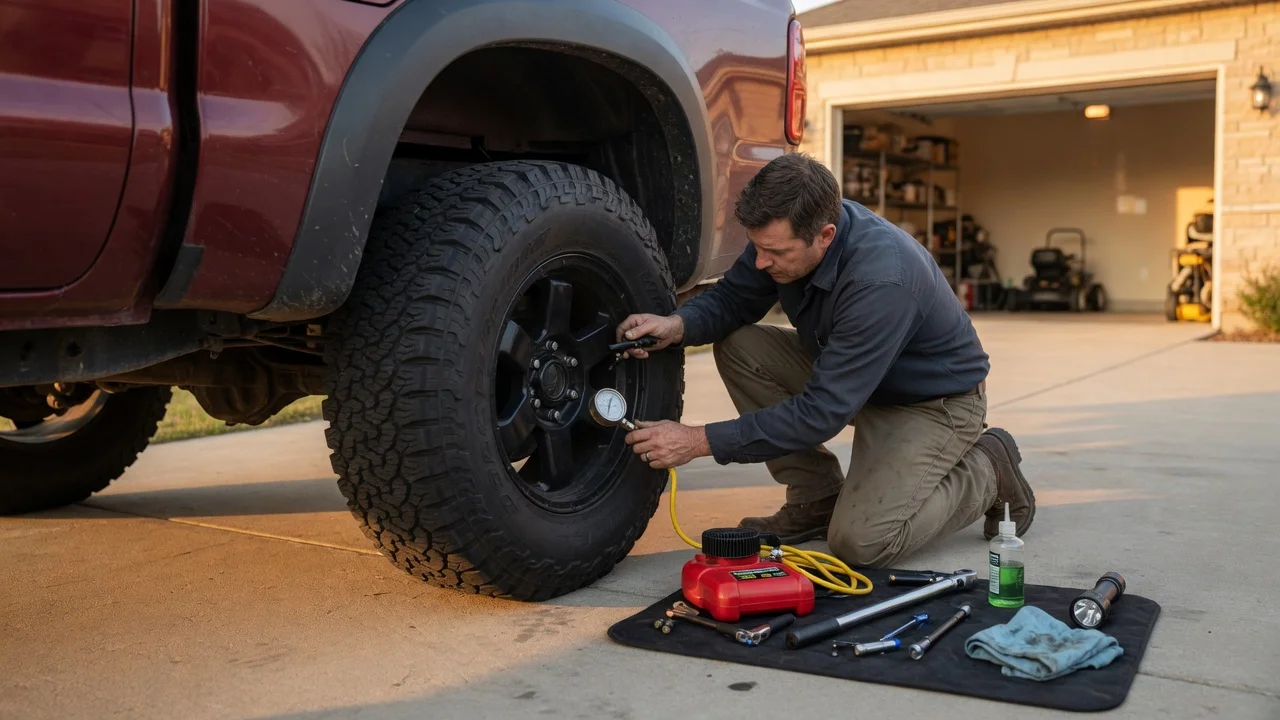
Pressure is the most frequent maintenance item because it changes with ambient temperature and use. Check pressures when the tires are cold, meaning the truck has been parked for at least three hours or driven less than a mile at moderate speed. Heat generated by driving raises internal pressure temporarily and can make a low tire read as normal. Use the vehicle’s tire information label, usually found on the driver’s door jamb or door edge, rather than the number molded into the tire sidewall. The molded figure is the tire’s maximum allowable inflation, not the recommended pressure for that truck.
Pickup-specific guidance often includes different pressure steps for loaded and unloaded operation. If the owner’s manual or door label lists a higher rear pressure for full payload or towing, adjust the rear tires before the load is applied and return them to the normal setting afterward when that is specified. A pressure gauge should be used rather than relying on tire appearance or the dashboard warning system alone. The tire pressure monitoring system is a backup warning, not a substitute for a measured check.
Read Tread Depth and Wear Patterns
Tread depth should be measured in multiple grooves across each tire. A dedicated tread depth gauge is more accurate than a visual check. The widely used minimum for wet-weather service is 2/32 of an inch in the United States, while raised white letters or styling features on truck tires do not indicate remaining depth. Replacement may be justified earlier for trucks driven in heavy rain, mud or snow because deeper tread helps evacuate water and maintain grip.
Wear pattern is a diagnostic tool as well as a service guide. Even wear across the tread is normal. Faster wear on both outer shoulders often indicates underinflation for the load carried. Faster wear in the center can indicate overinflation. Feathered or uneven wear on one side may point to alignment trouble, while irregular patchy wear can suggest worn suspension parts or inadequate rotation. When the pattern does not match simple pressure-related wear, a professional inspection is appropriate before the problem advances.
Rotate Tires on a Truck-Appropriate Schedule
Rotation is included in tire maintenance because pickup weight distribution can create different front and rear wear rates even with proper pressure and alignment. Many light-duty pickup owners follow an interval near every 5,000 to 7,500 miles, but the owner’s manual or maintenance guide is the controlling reference for that model. Trucks used for towing, hauling or frequent off-road work may require earlier rotation, and the tire warranty may have its own interval requirement that affects coverage.
The rotation pattern depends on drivetrain and tire construction. A rear-wheel-drive, four-wheel-drive or all-wheel-drive truck commonly uses a different crossing pattern than a directional tire allows. Directional tires, identified by a rotation arrow on the sidewall, can usually be moved only front to rear on the same side unless they are remounted. Matching the truck’s specified pattern preserves even wear and avoids placing a damaged or unevenly worn tire in a critical position.
Check Alignment and Suspension as Contributing Parts
Wheel alignment is not a tire adjustment, but it is part of sustained tire maintenance because misalignment creates concentrated wear that shortens tire life. Signs include the truck pulling to one side on a flat road, an off-center steering wheel during straight-line driving or the feathered wear pattern noted earlier. Alignment should be checked after a hard impact, when steering behavior changes, or at the interval recommended for the vehicle. A tire rotation is not a correction for an alignment defect.
Suspension components affect tire contact and wear. Worn shocks, struts, ball joints or steering links can allow movement that causes uneven or patchy tread damage. If rotation and pressure checks repeatedly show the same irregular wear, the suspension should be inspected rather than treating the symptom by moving tires.
Match Load Range and Tire Type to the Truck’s Work
Truck tire maintenance includes confirming that the installed tires are suitable for the loads the truck actually carries. Load range, shown on the sidewall, indicates the tire’s load-carrying capacity at a specified inflation. A tire with a lower load range may be acceptable for an empty commuter truck but not for maximum payload or trailer tongue weight. Replacing a tire should not reduce the load capacity below what the vehicle application requires. Any load or towing rating stated by the vehicle or tire manufacturer should be treated as the limit, not exceeded because the tires appear substantial.
Tire type also matters. Highway-terrain tires generally favor quiet road use, all-terrain tires add off-road capability, and mud-terrain tires prioritize aggressive traction at the expense of some paved-road comfort or wear characteristics. The best choice follows the majority of the truck’s actual use, not the most aggressive available pattern. Mixing tire types in a way that creates a material traction difference between axles can compromise handling, and four-wheel-drive systems may be sensitive to meaningful rolling-diameter differences.
Monthly and Load-Condition Maintenance Checklist
Checked items for a routine inspection: • Check cold tire pressures on all four tires and the spare when so equipped. • Measure tread depth in multiple grooves and compare wear across each tire. • Inspect sidewalls for cuts, bulges, cracks or exposed cords. • Look for uneven tread wear and note whether the pattern suggests pressure, alignment or suspension trouble. • Confirm that valve caps are in place and that no tire shows repeated slow pressure loss. • Adjust rear pressures for heavy payload or towing only according to the manufacturer’s stated settings.
Gaps to Confirm for Your Specific Truck
The checklist in this article applies to light-duty and common full-size pickup trucks generally, but the controlling intervals, pressures, rotation patterns and load ratings are model-specific. Exact figures are not supplied here because they vary by model year, cab and bed configuration, axle ratio, wheel size and tire option. The owner’s manual, maintenance schedule and door-jamb tire information label are the authoritative sources for the truck being serviced. Vehicles with dual rear wheels, heavy-duty chassis ratings or specialized upfits may require additional inspection points and should follow the manufacturer’s commercial or vocational guidance.