Performance Tool W3000 Electronic Parking Brake Tool: Functions and Compatibility
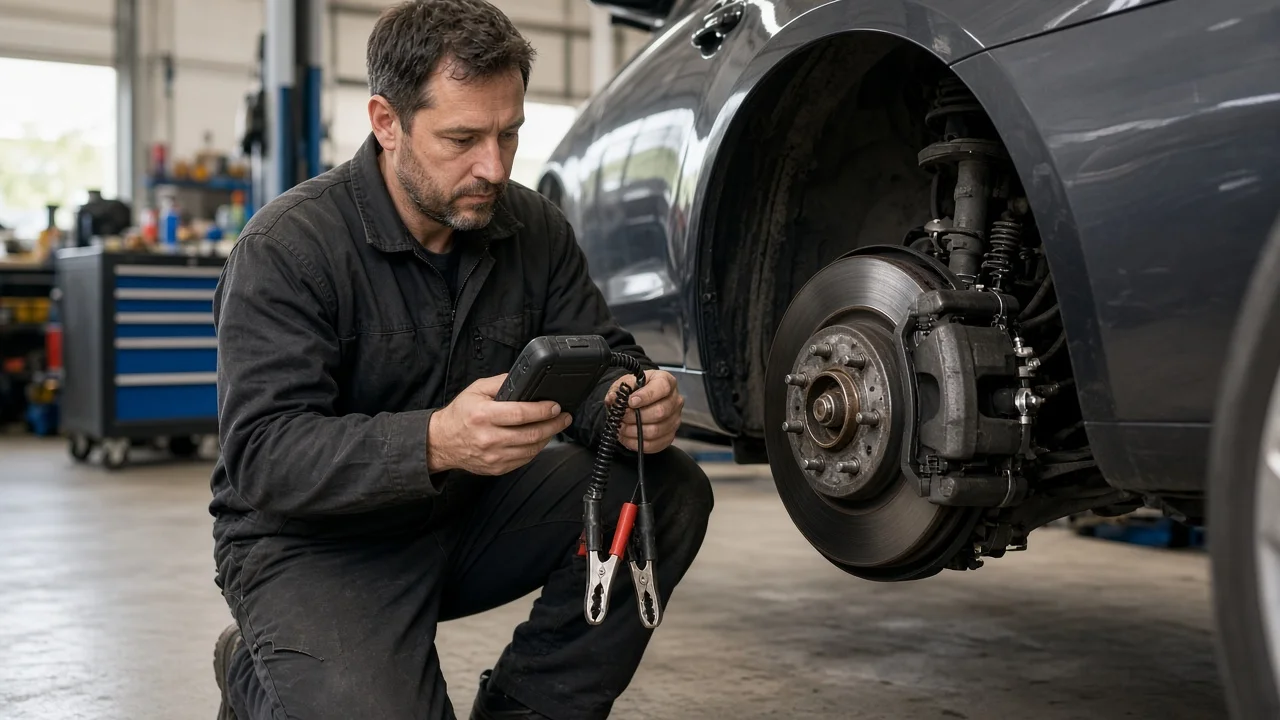
An electronic parking brake turns a routine rear pad job into one that needs a way to move the caliper motor out of the way. The Performance Tool W3000 is sold for that purpose. Whether it suits your car depends on how the vehicle's system expects to be serviced. This guide covers what to confirm before buying, how to check fitment against your service information, and where a dedicated tool is not enough.
Define the job the product must do
On many cars with an electronic parking brake, the actuator is a small motor bolted to the rear caliper that drives a spindle against the piston. Before new brake pads can go in, that spindle has to be backed off so the piston can return into its bore. Forcing the piston back with the motor still engaged can damage the actuator gears, the spindle or the caliper itself. Some vehicles use a different layout, such as a cable-pulling motor with a drum-in-hat parking brake, and their procedure is not the same.
The question is therefore narrow: do you need a way to retract and re-apply the rear actuators during pad and rotor replacement, and how often will you use it? Someone servicing one car every few years has different constraints from someone maintaining several household vehicles. Write down the year, make, model and rear brake design, and note whether the factory procedure calls for a service or maintenance mode, a calibration after reassembly, or both.
Check compatibility
Electronic parking brake tools generally work in one of two ways. Diagnostic-style units connect through the OBD-II port and ask the brake control module to enter service mode, then to re-apply and recalibrate afterward. Direct-drive units connect to the actuator harness and power the motor in or out, bypassing the module. Confirm from the W3000 packaging and instructions which approach it uses, because that one detail settles most of the compatibility question.
For a port-based tool, vehicle fitment depends on the makes, models and years its software supports, so look for your exact vehicle on the coverage list rather than relying on the brand name alone. For a harness-based tool, check that its leads or adapters suit your actuator connector and that the manufacturer's procedure permits powering the motor directly. Some vehicles set a fault code or need the brake module to relearn actuator position if the motor is moved without its knowledge, and your service information will say whether a scan tool step is still required.
Also confirm whether your caliper has a screw-in piston that must be rotated back with a wind-back tool after the motor is retracted, or a piston that pushes straight in. Releasing the actuator and retracting the piston are separate steps, and an EPB tool handles only the first.
Features that affect the choice
Useful features are the ones that match your vehicle's procedure: a clear retract and apply function, a calibration step if your car requires one, readable status or error indication, and instructions that list the vehicles and sequences covered. In the driveway, lead length, clip quality and a safe, stable power connection matter more than a long feature list on the box.
Treat labels such as universal, professional grade or works on all makes as marketing until the documentation backs them with a specific coverage list. A tool that claims broad coverage but does not name your platform is unproven for your car. Owner reviews can point to common problems, yet they describe other vehicles and conditions, so weigh them against your own service information rather than treating them as test results.
Limitations and ownership costs
Setup usually means locating the correct connection, confirming the ignition state the procedure requires and following the exact retract sequence. Chock the wheels, because the parking brake is released while you work. A port-based tool may need software updates to cover newer models, while a harness-based tool may need extra adapters for different actuator plugs. Budget for these alongside pads, rotors, hardware and possibly a separate caliper wind-back kit.
No parking brake tool diagnoses a seized caliper slide, a leaking piston seal, contaminated friction material or a rotor that is out of specification. Measure pad and rotor thickness against the wear limits in your service data, check brake fluid level and condition, and replace hardware as specified. If the parking brake warning stays on, an actuator will not respond, the pedal feels wrong or the car pulls under braking after the job, stop driving it and have the system inspected by a qualified technician.
Build a practical shortlist
Start with your vehicle details and the factory EPB service steps, then compare each option against them. Confirm the connection method, whether your vehicle appears on the coverage list, whether retract, re-apply and calibration are all supported, and which accessories or updates are needed to complete the job.
Then compare the practical points: clarity of the instructions, availability of support, warranty terms, and whether the tool will be reused on other cars in the household. If the W3000 or any other electronic parking brake tool cannot confirm support for your exact model and procedure, a scan tool with documented EPB functions or a professional brake service may be the more reliable choice.