Parking Sensors Not Working: Causes, Safe Checks and Diagnosis
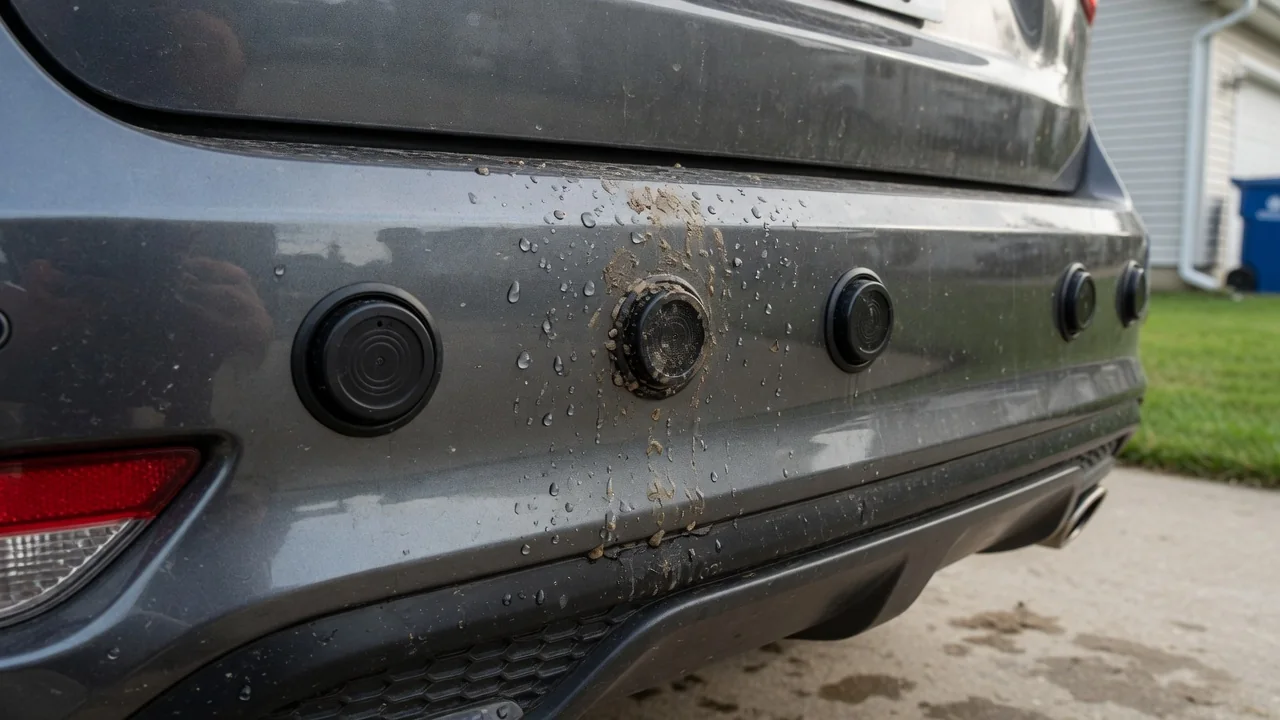
When parking sensors stop working, backing into a tight garage or a crowded lot suddenly takes more care. Whether you drive a Toyota RAV4, a BMW 1 Series or a GMC Sierra, the park assist system works on similar principles. Many parking sensor problems come from dirt, settings, accessories or wiring rather than a failed sensor. Here is how to read the symptoms, make safe checks and know when you need a diagnosis.
Recognizing Parking Sensor Problems and What the Symptoms Mean
Parking sensor problems usually show up in a few familiar ways. The system may stay silent, give a constant tone with nothing nearby, send false alerts in an empty driveway, or show distance readings that come and go. Some vehicles also display a sensor fault warning on the instrument cluster. Each pattern suggests something different, from a blocked sensor face to a system that has found an internal fault and turned itself off.
Ultrasonic sensors in the bumper send out high-frequency sound pulses and time how long the echoes take to return. The control module turns that timing into distance. Anything that disturbs the sound path can throw off the readings, such as mud, ice, a cracked sensor face or hissing air brakes on a nearby truck. A system you've switched off behaves differently from one showing a dash warning, which usually means it has detected a fault. On some vehicles, one bad sensor shuts down the whole system, so the symptom may not show which sensor is at fault.
Front vs. Rear Parking Sensors: Why One Set Fails While the Other Works
If your front parking sensors aren't working but the rear set is fine, the cause is often how the system switches on, not a failure. Many vehicles turn on the rear sensors only in reverse. Front sensors may work only below a certain speed or after you press a button. Check the settings described in your owner's manual first. If the rear sensors aren't working, look for a trailer hitch, bike rack, thick license plate frame or towing accessory. These can block the sensors or make the system switch them off.
Front bumper sensors take the brunt of road grime, stone chips, ice and packed snow. Recent bumper or grille work can also leave a sensor at the wrong angle or disturb a connector. Before you visit a shop, write down exactly what happens. Note whether the beeping is constant or missing, what warning message appears, and whether the problem affects the front, the rear or both. That information helps a technician narrow down the diagnostic scan quickly.
Safe Checks to Try Before Assuming a Sensor Has Failed
Start by cleaning each sensor face gently with a soft cloth, water and mild soap, then dry it. Don't aim a pressure washer straight at the sensors, because the spray can force water past the seals or shift a sensor in its housing. Next, look over the bumper for cracked or pushed-in sensors, a misaligned bumper cover, fresh paint that coats the sensor faces, or aftermarket parts sitting in front of them.
Make sure the system is actually turned on, using the dash button or the vehicle settings menu as your owner's manual describes, since controls differ by vehicle. With the vehicle parked safely and the system on, you may hear a faint clicking from a working sensor if you listen up close. Clicking doesn't prove a sensor is healthy, though. Unplugging connectors, probing wiring or removing bumpers goes beyond basic checks and can cause damage or set new faults.
Toyota, Lexus, Honda, Acura, Mazda, Hyundai and Kia: Approaching Brand-Specific Issues
Toyota owners with a Highlander or RAV4, and Lexus RX 350 or ES 350 owners, will find that controls, menus and warning messages vary by model and trim. The same is true for the Honda Accord, CR-V, Pilot and Civic, the Acura MDX, the Mazda CX-5, the Hyundai Genesis, and the Kia Picanto or Stonic. Start with the owner's manual for your exact vehicle.
On some newer vehicles, the parking sensors are combined with other driver assistance features, so one warning may involve more than the sensors and needs proper diagnosis. Look up any stored fault code for your exact make, model and year. Code meanings depend on the manufacturer, and there is no universal definition. Also, don't assume a replacement sensor fits other model years or trims. A dealer or qualified shop can confirm the correct part using your VIN.
BMW, Mercedes, VW, SEAT, Ford and Citroen: What Owners Should Check
Many European models, including BMW and Mercedes vehicles, show parking sensor status as a graphic on the central display. When that graphic is grayed out or crossed out, it often means the system has detected a fault rather than being switched off. Older vehicles such as the E87 BMW 1 Series, Ford C-Max, Citroen C4 Grand Picasso, SEAT Leon and VW Golf may have aging sensors and wiring after years of road salt and moisture.
Diagnostic access is another hurdle. Scan tools differ by manufacturer, and a basic code reader may not be able to read the module that controls parking assistance. A scan that shows no codes doesn't prove the system is free of faults. When you do get a code, check it against the manufacturer's information for your exact vehicle. A code that seems to point to a failed sensor may actually come from a wiring, connector or module problem.
Jeep and GMC Trucks and SUVs: Towing, Accessories and Off-Road Exposure
Jeep Grand Cherokee, Jeep Cherokee and GMC Sierra owners often use their vehicles for towing or rough roads. Some vehicles may mute or limit the rear sensors when they detect a trailer or hitch accessory, so check your owner's manual to see whether yours does. Mud, gravel, water crossings and winter road salt can coat bumper-mounted sensors or chip their faces, especially on work trucks.
Aftermarket bumpers, lift kits, light bars and step bars can block sensors or change where they point, so think about whether the problem started after a modification. A lift may also change how the sensors see the ground, which can cause false alerts. Problems that come and go after rain or a car wash may point to moisture in a sensor or connector. Confirming that takes professional testing, not guesswork.
Can You Drive With Parking Sensors Not Working, and When to Get Professional Help
Can you drive with your parking sensors not working? Usually yes, because parking sensors are a convenience aid, not a primary safety system. Always use your mirrors, backup camera and over-the-shoulder checks, especially when the sensors are unreliable. False alerts can teach you to ignore warnings, and missed obstacles can give you false confidence. Rely on the sensors less until the problem is fixed.
Get a professional diagnosis if a warning won't clear, the problem remains after cleaning, it started after a collision or bumper repair, or several systems are acting up at once. A qualified shop will usually scan the correct control module with equipment that supports your manufacturer and test each sensor. They will also inspect the wiring harness and connectors for corrosion or damage. This step-by-step approach finds the real cause before any parts are replaced.