Parking Brake Cable Replacement Cost: What Changes the Price
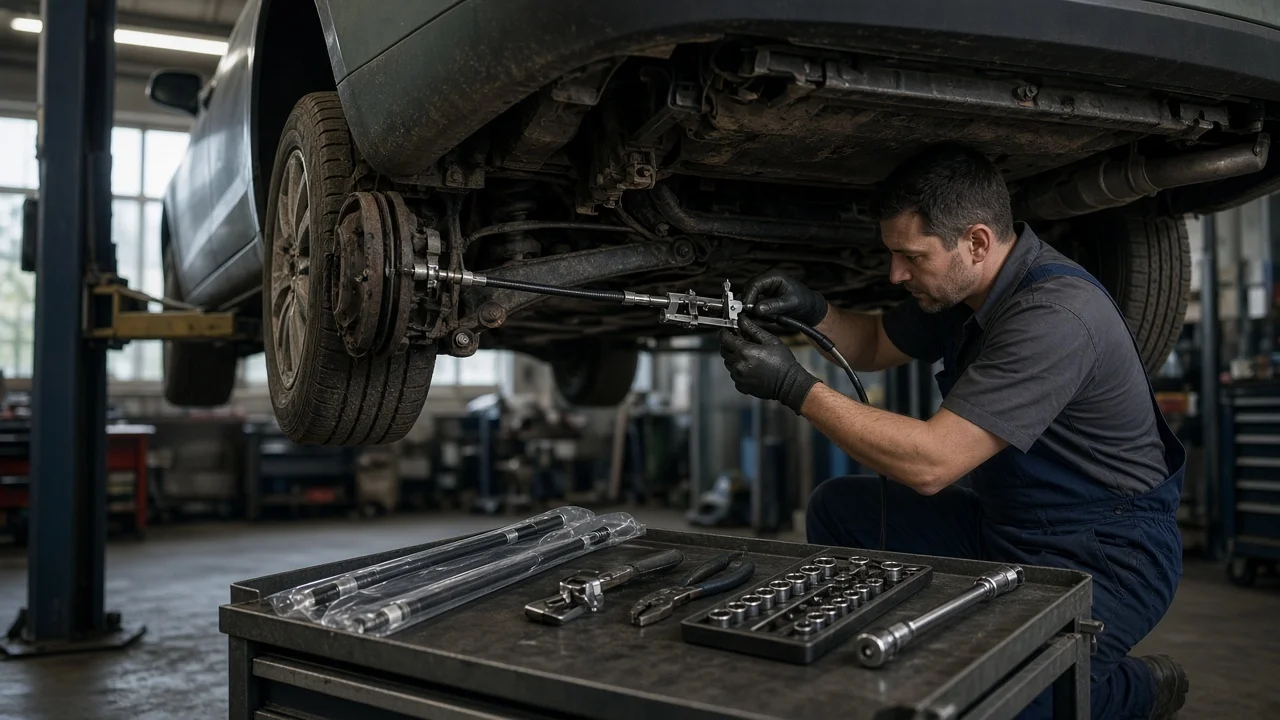
A parking brake cable job can look simple on paper, then the final bill adds labor, adjustment or worn rear brake parts. This guide explains what a shop is actually pricing when it replaces a parking brake cable, which details of your vehicle move the total, and how to compare offers fairly. It does not quote current prices. The real figure depends on your vehicle's brake design, which cable has failed, its condition and local labor rates.
What the estimate includes
Most mechanical parking brake systems use more than one cable. A front cable usually runs from the hand lever or foot pedal to an equalizer under the vehicle. One or two rear cables then run from the equalizer to each rear brake, and some designs add an intermediate section. A quote may cover a single cable or the full set, so confirm which section is being replaced and why. A complete job normally includes the replacement cable, removing the wheel, opening the rear brake assembly to release the cable end, routing the new cable through its brackets and guides, and adjusting the system to the travel specified in the vehicle's service information.
Separate a total from a partial figure. A parts-only price, a labor-only price or a price for one side does not tell you the cost of the finished repair. A full estimate lists parts, labor time, adjustment, any related rear brake parts found worn during disassembly, shop supplies and tax. Inspection or diagnosis fees may be listed separately. Some shops credit that fee toward the repair and others do not, so ask before you compare totals.
What changes the cost
Brake configuration has the largest effect. On rear drum brakes, the cable hooks to a lever on the brake shoes inside the drum. Many rear disc systems use a drum-in-hat design: a small parking brake drum sits inside the rotor hat, so the caliper and rotor come off before the cable can be reached. Other rear disc systems have the parking brake built into the caliper, with the cable attached to a caliper lever. If that internal mechanism is seized, the caliper itself may need replacement. Many newer vehicles use an electronic parking brake with motors at the calipers and no conventional cables, while some electronic designs still use a central actuator that pulls cables. Vehicle fitment also matters, because cable length and end fittings can differ by year, body style, drive type and brake option.
Labor depends on which cable fails and its condition. On some vehicles, a front cable requires removing the center console, exhaust heat shields or part of the exhaust, while rear cables are often more accessible. In regions that use road salt, corrosion can seize fasteners and lock cables inside their guides, and broken bolts add time. Related parts matter too. Parking brake shoes, springs, hardware or adjusters may need replacement if they are past their wear limits, contaminated or damaged. Labor rates vary by region and by shop type, and original-equipment parts are usually priced differently from aftermarket parts.
A cable replacement does not normally open the hydraulic system, so brake fluid service is not part of the core job. If a caliper is replaced, however, the brakes must be bled, which adds fluid and labor. Brake pads, brake rotors and the friction material on service brakes belong on the quote only when inspection shows they need attention, and they should appear as separate lines.
Compare like-for-like options
Typical choices are a dealer using original-equipment parts, an independent shop using original-equipment or aftermarket parts, or doing the work yourself. A lower total only means something if the scope matches. Check that each offer covers the same cable sections, comparable part quality, the same associated work and the adjustment step. Compare warranty terms on both parts and labor, including duration and any mileage limit.
Decide whether you need a repair or a replacement. A parking brake that holds weakly may only need adjustment if the cable has stretched slightly or the rear adjusters are out of position. A cable that is frayed, kinked, seized or has a damaged sheath should be replaced, not just lubricated. When one rear cable fails from corrosion, the other is often in similar condition, so ask whether replacing both is justified on your vehicle. Doing the job yourself requires the correct part for your vehicle, correct routing, and adjustment to the service specification. Rear brake work with shoes and springs needs proper tools and experience. If you are not equipped for that, a professional repair is the safer option.
Read an itemized quote
A useful quote identifies the vehicle by year, model and ideally VIN. It names each cable being replaced with a part number or brand and states whether the part is original-equipment or aftermarket. It shows labor hours and the hourly rate, confirms that adjustment and a road test or holding test are included, and lists any related parts as separate lines with a stated reason. It should also show shop supply or disposal fees, tax, and the written warranty terms.
Look for open-ended wording such as additional parts as needed, or charges for seized fasteners, broken studs or rust-related extra time. Ask the shop to contact you before doing anything beyond the approved estimate. If it recommends parking brake shoes, rotors or a caliper, ask what it found, such as measurements compared with the wear limit or a description of the damage. Ask to see the removed parts as well. That makes recommendations from different shops easier to compare.
Decide the next step
First, confirm whether your vehicle has a mechanical cable system or an electronic parking brake, and which brake design it uses at the rear. Second, write down the symptoms: a lever or pedal with excessive travel, a brake that will not release, or a brake that will not hold. Third, get an inspection and a written itemized estimate. Fourth, request comparable quotes covering the same cables, part quality and associated work. Finally, check the warranty and approve extra work only after the shop explains why it is needed.
Avoid shortcuts that create new problems. Do not disconnect or tie back a seized cable to keep driving, rely on Park alone on an automatic transmission, install a cable that does not match your vehicle, or skip the final adjustment. If the parking brake will not hold on a slope, chock the wheels and arrange service. If a rear wheel drags, smells hot or the brake will not release, stop driving the vehicle and have it inspected or towed to a shop.