Parking Brake Actuator: Function, Motor and Assembly Identification
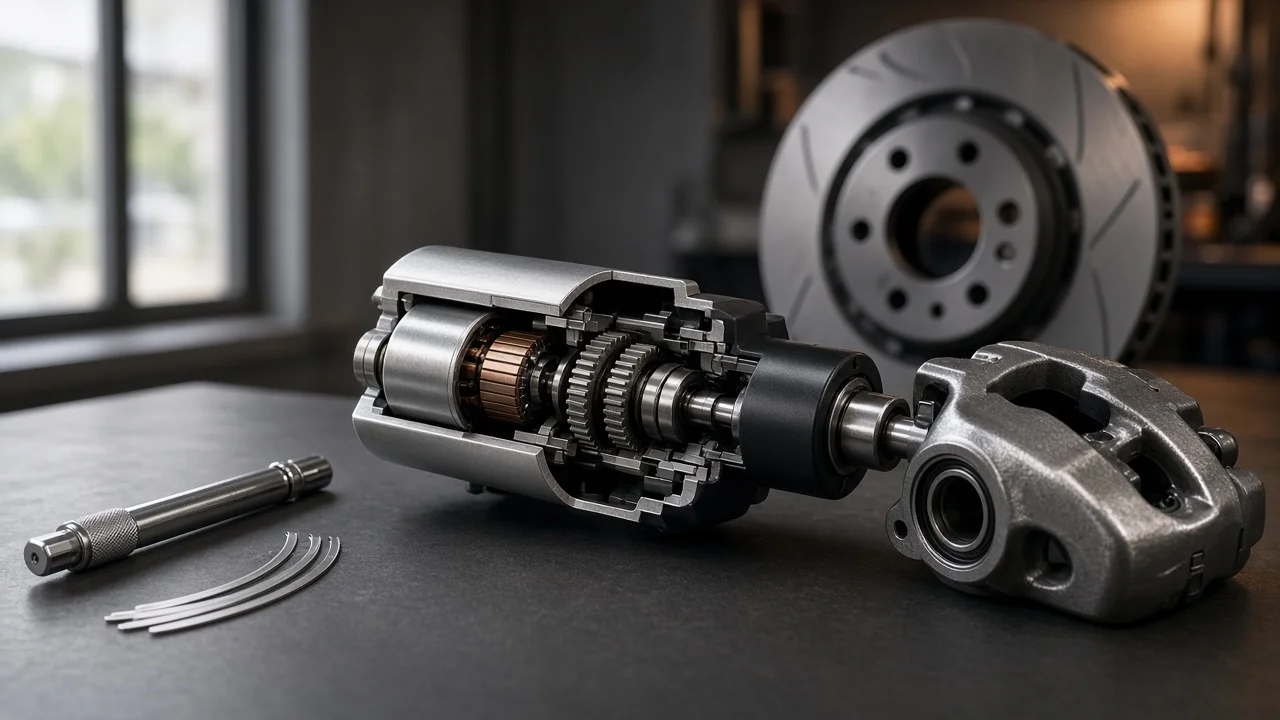
A parking brake actuator is the component that applies and releases the parking brake. On older vehicles, a lever or pedal pulls a cable to do this. On most newer cars and SUVs, an electric motor unit does it, controlled by a switch and a control module. Before you diagnose a fault or order parts, find out which type your vehicle has and whether the motor can be replaced separately from the caliper.
What a parking brake actuator is
In everyday use, the term usually means the electric unit in an electronic parking brake system. It is also called an electric parking brake actuator or EPB motor. When you pull or press the parking brake switch, a control module powers the actuator. The actuator clamps the rear brakes and holds them without needing hydraulic pressure. When you release the switch, or drive off on vehicles with automatic release, the motor reverses and frees the wheels. Most systems act on the rear axle, so parts catalogs often list a separate rear parking brake actuator for the left and right sides. The actuator's main job is to hold a stationary vehicle, not to stop a moving one. Many systems do provide an emergency braking function if the switch is held while driving, but how that works varies by manufacturer.
How the electronic parking brake motor works
The most widespread design mounts the motor on the caliper. A small DC motor bolts to the back of each rear caliper and drives a reduction gearset. The gearset turns a threaded spindle inside the caliper piston. The spindle nut pushes the piston outward and presses the brake pads against the brake rotors, using the same friction material as normal braking. The thread is self-locking, so the clamp stays in place after the motor switches off. The brake therefore holds without drawing power continuously.
The control module typically judges clamp force by monitoring motor current. As the pads tighten against the rotor, current rises, and the module stops the motor at a set point. This is why battery voltage, wiring condition and correct calibration all affect how the system works. A second design uses a single central actuator mounted under the vehicle or behind the rear seat. This unit pulls conventional parking brake cables, which then operate either levers on the rear calipers or small drum shoes inside the rotor hat.
Motor versus complete actuator assembly
A parts listing called a parking brake actuator assembly can mean different things depending on the manufacturer. On many caliper-mounted systems, the motor and gear housing unbolts from the caliper and is sold on its own as the parking brake actuator motor. On others, the motor unit is only supplied with the caliper, so you have to buy a complete caliper with the actuator built in. On cable systems, the assembly is the central motor unit, which sometimes has its own control electronics built in.
Look up vehicle fitment by VIN rather than by model name alone. Different brake packages, engine options or production dates can use different calipers and actuators. Check which side the part is for, because left and right units are often not interchangeable. Compare the part number on the housing label, the shape of the electrical connector, the mounting bolt pattern and the caliper casting. If the original label can't be read, use a dealer parts department or a reliable VIN-based catalog rather than matching photos.
What changes the answer
System design matters most. Caliper-mounted actuators sit close to heat, water and road salt, so corrosion at the connector or inside the caliper piston often contributes to faults. Central cable-pull systems keep the motor better protected, but their cables can stretch, seize or freeze. Drum-in-hat designs add a separate set of shoes with their own wear limits, and these are easy to overlook during routine brake checks.
Operating conditions also change how the system behaves. A weak battery can trigger warnings or prevent the brake from releasing. Freezing weather can lock a wet cable or shoe in place. Software features also change when the actuator runs, for example auto hold or automatic application when the engine is switched off. Some vehicles also require a specific retraction routine before brake service. On heavy trucks with air brakes, the same phrase refers to a spring brake chamber, which is a different component not covered here.
Signs the actuator or system needs attention
Typical symptoms include: • a parking brake or brake system warning light; • a dashboard message about the electronic parking brake; • a motor that whirs without clamping; • clicking or grinding from one rear wheel; • a brake that will not release on one side; If one rear wheel stays hot after driving, you smell burning, or the car coasts less freely, the brake may not be fully releasing. None of these signs prove the actuator itself has failed. A switch fault, damaged wiring, low voltage, a control module problem, a seized caliper or worn pads can all cause similar symptoms.
What the owner can do
Start with checks that need no tools. Make sure the battery is healthy and its terminals are clean, because low voltage is a common cause of EPB warnings. Note when the fault appears: when applying, when releasing, on a cold start or after rain. Have the fault codes read with a scan tool that can access the brake system, since basic engine-code readers often cannot reach the parking brake module. Fault codes and live motor-current data usually show whether the problem is in the motor, wiring or caliper more reliably than symptoms alone.
If you plan to replace brake pads or rotors yourself, first find out how your vehicle retracts the parking brake. Many electronic systems must be put into a service or maintenance mode before the caliper piston can be pushed back. This is done with a scan tool or a switch sequence specified by the manufacturer. Forcing the piston back on these calipers, or unplugging the motor while the brake is applied, can damage the gear train. After any actuator, caliper or pad work, complete these steps: • follow the specified calibration or initialization; • check the brake fluid level; • measure the pads and rotors against the manufacturer's wear limits; While the parking brake is not working, use wheel chocks. Leave an automatic in park, or leave a manual in gear.
Limitations and when to get professional help
Actuator designs, retraction procedures, torque values and calibration steps differ between manufacturers and even between model years. General guidance cannot replace the service information for your specific vehicle. Stop driving and arrange professional service if any of the following happens: • the parking brake will not hold the vehicle; • it will not release; • it drags on one side; • the brake warning light stays on and the pedal feels different; A dragging rear brake can overheat the pads, rotors and brake fluid, and a parking brake that cannot hold creates a rollaway risk. A brake technician with the right diagnostic tool can confirm whether the motor, caliper, wiring or module is at fault before you order parts.