Parking Brake Actuator Replacement Cost: Parts and Labor Factors
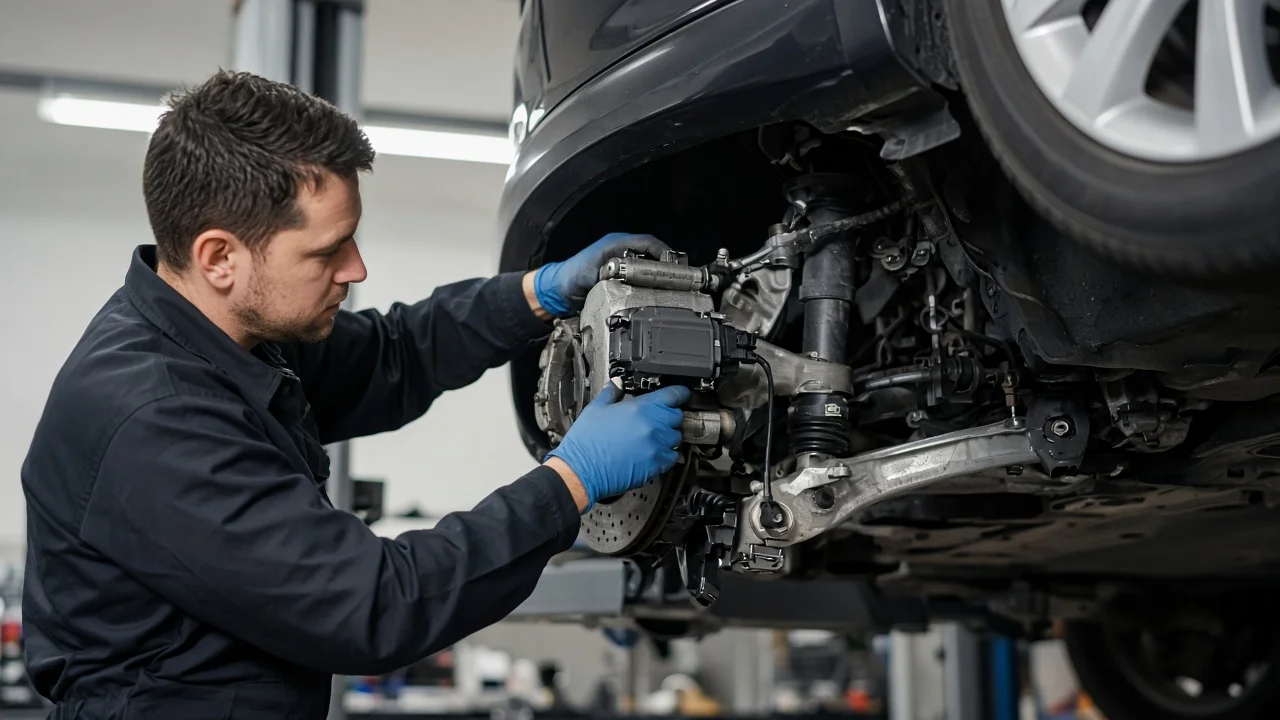
The cost of replacing a parking brake actuator depends less on one part price than on what the actuator is on your vehicle and how much related work the job requires. On many modern cars it is an electric motor mounted on the rear caliper. On others it is a central motor that pulls cables. This guide explains what a complete estimate covers, what moves the total, and how to compare quotes.
What the estimate includes
The word actuator can describe different parts, so first confirm what is being replaced. On a motor-on-caliper electronic parking brake, the actuator may be a separately serviceable motor bolted to the caliper housing. On some models, though, the motor is sold only as part of the complete caliper assembly. Other vehicles use a single central actuator that tensions the parking brake cables to both rear wheels. A quote for one of these setups cannot be compared directly with a quote for another.
A complete estimate normally covers several steps. Diagnosis comes first: reading fault codes and confirming whether the motor itself has failed, rather than the switch, wiring, connector or control module. Then comes the replacement part and the labor to remove the old unit. Many electronic systems also need a scan tool to put the brake into service mode so the caliper piston can be retracted safely. After installation, the actuator is calibrated or initialized and the vehicle is road tested. A partial quote may list only the part price, or labor without diagnosis and calibration. That makes it look cheaper than the real total you will pay.
What changes the cost
Vehicle configuration has the biggest influence. If the motor can be unbolted from the caliper, the job may involve little more than the motor and a short labor time. If the motor is integral to the caliper, you are paying for a caliper assembly. Because opening the hydraulic system lets air in, the brake fluid then has to be bled. Central actuators vary widely in location, from under the body near the rear axle to inside the cabin, and access largely decides the labor time. Some estimates cover one side and others cover both, so check the quantity.
Parts choice matters too. You may be offered original equipment, an equivalent aftermarket part, or a remanufactured unit that carries a core charge refunded when the old part is returned. Fitment must be confirmed by VIN, because actuators and calipers are often specific to the left or right side and to the brake package. Labor depends on the shop rate, the published labor time for the vehicle, regional differences and corrosion. Seized bolts or rusted caliper slides can add time.
The condition of nearby components can raise the total legitimately. If the rear brake pads are at or below their wear limits, the rotors are under minimum thickness, or the caliper piston is sticking, the technician should report measurements against your vehicle-specific service specifications before recommending extra work. Some vehicles also need a module software update or online programming after replacement, and not every shop has that equipment.
Compare like-for-like options
Compare options only when they cover the same scope. Replacing a damaged connector or repairing a wire may cost far less than a new motor, but only if diagnosis shows that is the actual fault. A motor-only replacement and a complete caliper assembly are different jobs. The caliper option also replaces the piston, seals and housing, which may be worthwhile if the caliper is corroded or leaking. A remanufactured unit can match a new one in function, but check its warranty and core terms.
Warranty belongs in the comparison. Note how long parts and labor are covered, whether coverage has a mileage limit, and whether it applies at other locations. Associated work should be justified rather than bundled by default. New brake pads or rotors make sense when the friction material or rotor thickness is out of specification, not simply because the wheel is already off. When two quotes differ, check whether one includes diagnosis, calibration and fluid service while the other leaves them out.
Read an itemized quote
A useful written estimate lists the part number or brand and states whether the part is new or remanufactured. It also shows the quantity, the side, and any core charge. Labor should appear as hours and rate, or as a clearly described flat price. Look for separate lines for the diagnostic fee, and ask whether that fee is credited toward the repair. Other lines to check are scan tool service mode and calibration, brake fluid and bleeding when a caliper is replaced, shop supplies, disposal fees and taxes.
Pay attention to exclusions and conditional wording. Phrases such as if needed or additional time may apply to broken hardware, wiring repairs, module programming or further diagnosis if the first test is inconclusive. Ask the shop to state these limits in writing and to call you before exceeding the approved amount. If pads or rotors are recommended, ask for the measured thickness of each and the minimum allowed for your vehicle.
Decide the next step
Treat parking brake faults as a safety issue. If the brake will not release, drags, shows a warning light, or fails to hold the vehicle on a slope, do not rely on it. A dragging brake can overheat the rotor and pads and reduce braking performance. If the service brakes feel abnormal, stop driving and arrange professional service, using a tow if necessary.
To get an estimate that actually applies to your vehicle, start by having the fault codes read and the failed component confirmed. Provide your VIN so the correct part can be matched. Request an itemized written quote that states whether calibration and any fluid service are included. Compare offers only on the same scope and warranty, and approve extra work only after seeing the measurements behind it.
Avoid shortcuts that create larger bills. Forcing an electronic caliper piston back without service mode can damage the actuator. Disconnecting the actuator so you can keep driving leaves you without a working parking brake. Buying a part online without confirming fitment often leads to returns or a second labor charge. A do-it-yourself replacement is realistic only with the correct service information and a scan tool that supports the calibration procedure for your vehicle.