Parking Brake Actuator Connectors: Identifying the Correct Connector
Answer the main question
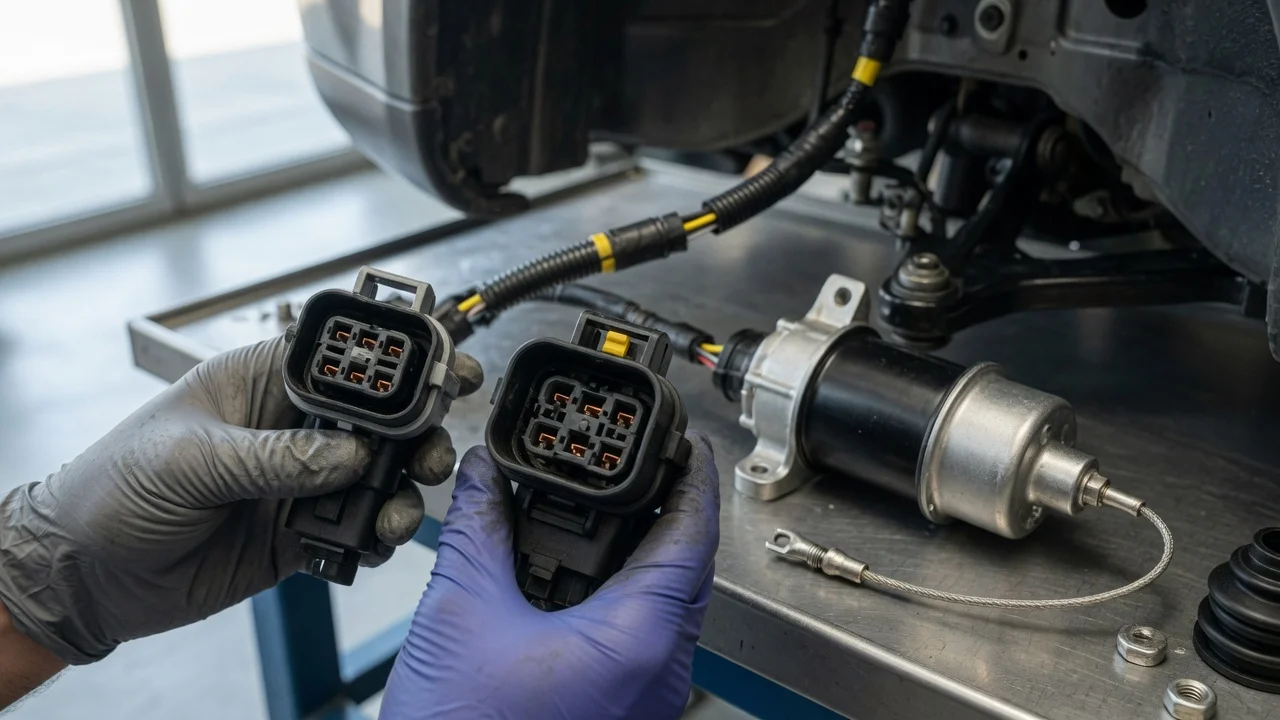
A parking brake actuator connector is the electrical plug and matching socket that carries power, control signals, or sensor feedback between the vehicle wiring harness and the actuator assembly at a wheel or axle. The correct connector is the one that matches the vehicle fitment for the production brake system, has the same number of pin cavities and keyway orientation, and fits the mating connector on the actuator without forcing, stretching, or leaving a gap. Replacement connectors are selected by vehicle application and actuator design rather than by appearance alone, because the same shell shape may be used with different pin counts or terminal arrangements.
How it works
The connector is the weakest part of the actuator circuit because it is exposed to road splash, heat from the caliper or axle area, vibration, and repeated flexing of the harness. The connector body aligns the terminals so the signal from the control module reaches the correct actuator function. Many electric parking brake systems use a motor on the caliper to push the brake pads against the rotor through a screw or gear mechanism. If the connector is incorrect, the actuator may not run, may run in only one direction, may set a fault, or may leave the parking brake unable to secure the vehicle.
Correct terminal tension is as important as the plastic shell. A plug that latches visually but has loose or oversized terminals can cause intermittent operation even though the part number appears right. The sealing face must also be intact when the connector is located in a wet or road-debris area, otherwise corrosion can enter the terminals and change the resistance seen by the control module.
What changes the answer
The connector differs by actuator type. A vehicle with a cable-operated parking brake actuator at the console or underbody uses a different connector than a caliper-integrated electric motor, and a separate drum-in-hat parking brake may use another harness. Front and rear positions can also differ, although parking brake actuators are normally rear-fitment. Regional production, trim level, and model year can change the pin count or the presence of a wear-sensor or position-sensor circuit even when the caliper looks familiar.
Some vehicles use a connector that is integrated into the motor housing, so the replacement is the actuator pigtail rather than a serviceable plug. Others offer a repair pigtail with a short length of wire for splicing. The exact repair path depends on whether the harness connector or the actuator socket is damaged, and on the wire gauge and insulation type specified for the repair.
What the owner can do
Start by comparing the old connector to the replacement before cutting or splicing. Count the cavities, compare the keyway shape and guide ribs, and check the latch and seal. If the connector is still partly readable, use the production part number or the vehicle application lookup for the exact model, year, and brake option. Photograph the actuator, the full connector face, and any marking on the harness branch before ordering.
Inspect the terminals in the actuator socket for corrosion, spreading, or evidence of heat. If the vehicle sets a parking brake fault, do not assume the connector is the only issue: check for the same fault after a professional scan and service procedure, because a motor failure, worn gear mechanism, or worn brake pads can produce similar symptoms. Brake work has stopping risk, so if there is reduced parking brake holding, a warning lamp, noise, or fluid loss, stop using the vehicle until a qualified mechanic has inspected the brake system.
Limitations and next step
Visual identification has limits. Two connectors can look alike but differ in terminal plating, current rating, or internal sealing. A universal pigtail may fit the shell and still be wrong for the circuit. The decisive information is the vehicle-specific wiring diagram, part catalog, and the actual connector face comparison. If the old connector is missing, melted, or unrecognizable, the actuator harness branch may need to be identified from the production wiring diagram rather than guessed from a photo.
When there is uncertainty about fitment, terminal repair, wiring routing, or a recurring brake fault, have the vehicle inspected by a professional brake technician. A parking brake system that cannot reliably hold the vehicle or release the brakes correctly is a safety fault, and continued use may be unsafe.