Paperwork You Need When Buying a Used Car: Title, Bill of Sale and Registration
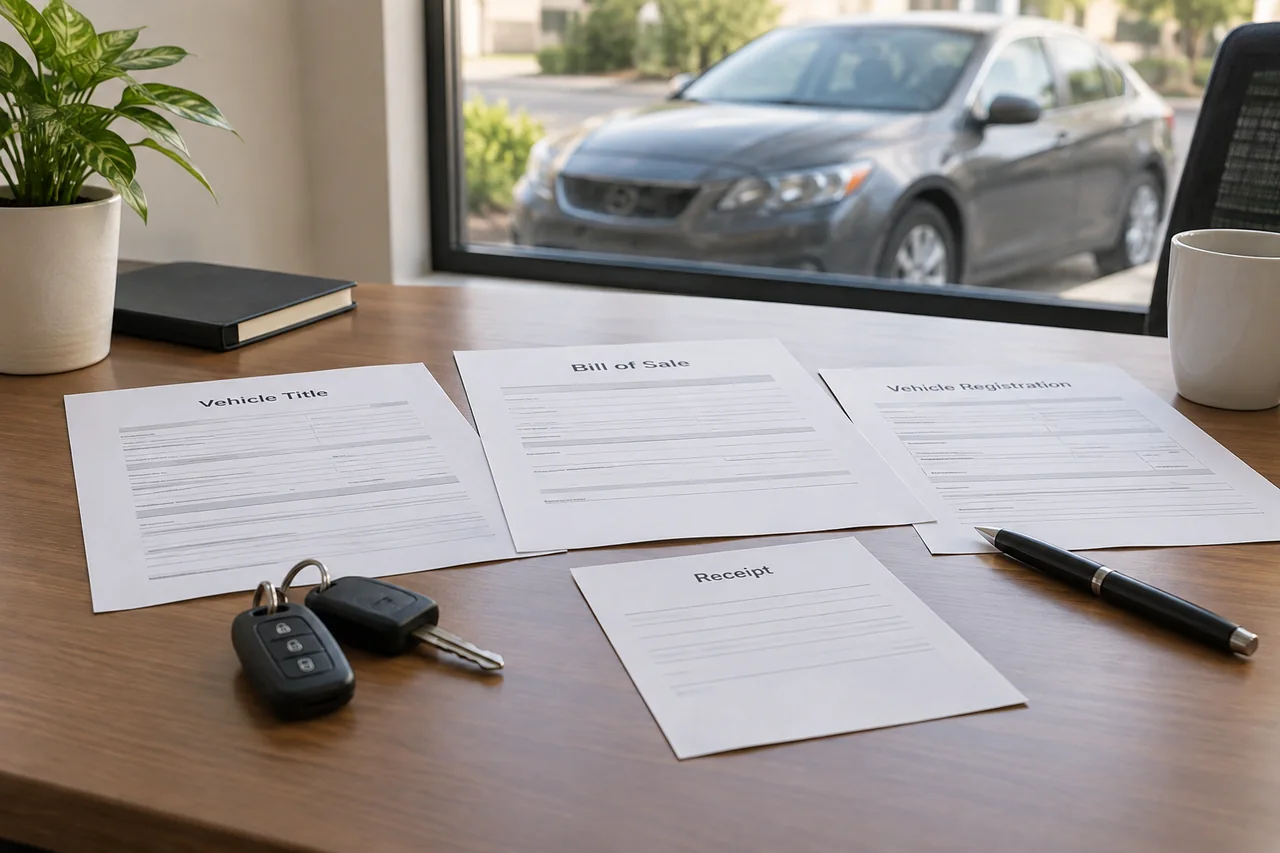
The paperwork for buying a used car is more than a handshake and a set of keys. You need the right documents at the sale, a completed ownership transfer, and a plan for DMV registration before you drive away. What you bring, what you receive, and how you sign the vehicle title all affect whether the purchase can be recorded. A compact checklist, a clear purchase agreement, and a payment receipt help keep the handoff orderly.
Paperwork Checklist: What to Bring to the Purchase
When buying a used car, a paperwork checklist works best when it separates documents the buyer brings, documents the seller supplies, and forms you complete together. Bring government identification, the agreed payment method or any financing documents, and insurance information if a policy is already in place. Obtain the vehicle identification number in advance so coverage can be arranged and later forms can be filled accurately. Confirm payment arrangements before you arrive so the handoff is not delayed by last-minute questions.
The documents required when buying a used car also depend on the type of sale and the registering jurisdiction. A private-party purchase, a dealer sale, and a financed transaction do not always use the same packet. Confirm which forms apply before the keys change hands, including any registration application the motor vehicle agency will later expect. That confirmation is part of what you need when buying a used car: not a universal stack of papers, but the specific set that will let the ownership transfer and later DMV filing proceed.
Documents to Receive Before the Vehicle Handoff
What you should receive when buying a used car starts with the ownership document itself, whether a paper vehicle title or a documented electronic transfer, plus signed purchase paperwork and a payment acknowledgment. Required disclosures, including odometer disclosure when the form calls for it, belong in that same packet. Match the VIN on the vehicle to every document in the file, and confirm the seller is named as the owner or otherwise has authority to sell. If names do not align or the seller cannot explain how a valid transfer will occur, pause rather than take the keys.
An outstanding lien is not a small detail. Before funds change hands, establish how the lender will be paid off and how the lien release will be issued, then obtain that release documentation or a written process you can follow. Ask for other records that apply to the deal, including written warranty terms, promised repairs, inspection paperwork, and available service history. Missing ownership papers or a seller who cannot produce a path to a valid transfer are reasons to stop, because those documents are what you should receive to complete the sale.
Signing the Title and Completing the Ownership Transfer
A completed sale does not, by itself, finish the official ownership transfer. The vehicle title is the record that names the owner, so the title transfer still has to be completed through a correct assignment or electronic process. Follow the instructions printed on the title or provided for electronic transfer, and identify the buyer and seller fields before anyone signs. Check that names, VIN, sale date, purchase amount, and odometer information appear wherever the document requires them. Signing in the wrong box or leaving required fields empty can stall registration later.
How to sign the title when buying a used car depends on the document in front of you, not on a single national script. Co-owners may both need to sign, notarization may be required, and a separate odometer disclosure may sit beside the assignment. Do not leave assignment lines blank for someone else to fill later, guess at mileage, or improvise a correction that the agency may reject. If a field is unclear, a lienholder still holds the title, or the form looks damaged, ask the motor vehicle agency or the lender before you proceed.
What the Purchase Agreement Should Put in Writing
A used-car purchase agreement, sometimes called a contract, should identify the parties, describe the vehicle, state the agreed price, and set the terms of the sale. Payment timing, how a deposit is treated, any financing condition, and when and where the vehicle will be delivered need to be clear before anyone signs. Promised repairs, extra keys, equipment that stays with the car, and warranty representations belong in the signed paperwork rather than in a conversation that later cannot be proved. Verbal assurances are easy to misunderstand once the vehicle has left the lot.
Read as-is language and any cancellation provisions with care. Those clauses describe what happens if the vehicle has problems after delivery, and they do not create a universal return window. If a field is blank, a price on one page disagrees with another, or included items are listed in two different ways, resolve the conflict before signing. Keep a complete signed copy of the contract with the rest of the paperwork when buying a used car. That file is what you will show if payment, delivery, or a promised repair is later disputed.
Bill of Sale and Payment Receipt: Details to Record
A bill of sale records that a particular vehicle changed hands on a stated date at a stated price. A payment receipt records money received. One document can serve both roles if it includes the parties, a vehicle description, the VIN, the sale date, the agreed price, the amount paid, any balance due, and signatures. That simple receipt template remains useful even when a purchase agreement already exists, because it is the shortest proof that funds actually moved. Do not mark the vehicle paid in full if only a deposit was collected.
Record a partial payment as a deposit or a stated amount received, with the remaining balance written clearly. A homemade receipt can still be useful between the parties, but it may not replace official forms the motor vehicle agency expects. A bill of sale also does not, by itself, complete ownership transfer on a titled vehicle; the title assignment or electronic process still has to be done. Keep copies of the receipt and the signed sale papers with the rest of the file you will present for registration.
How DMV Registration Generally Works After the Sale
Buying and registering a used car are related steps, not the same act. Registration records the vehicle for road use and happens after the purchase documents are signed. The buyer or the dealer generally submits the applicable ownership papers, a registration application, identification, proof of insurance, and any required inspection or emissions record. Confirm who is responsible for that DMV filing and what the buyer must still provide. Keep a copy or a stamped receipt showing the packet was submitted so you can follow up if processing stalls.
Before driving away, confirm the deadline to complete registration and whether a temporary operating permit is available. Do not assume the seller's plates or existing registration remain lawful for the new owner. After processing, verify the registration document, the plates or permit issued, and the ownership record against the VIN and the names on the sale papers. Retain those items with copies of the purchase documents. Completing that DMV step is how registration works in practice after the sale.