P3401–P3499 Cylinder Deactivation Valve Control Codes
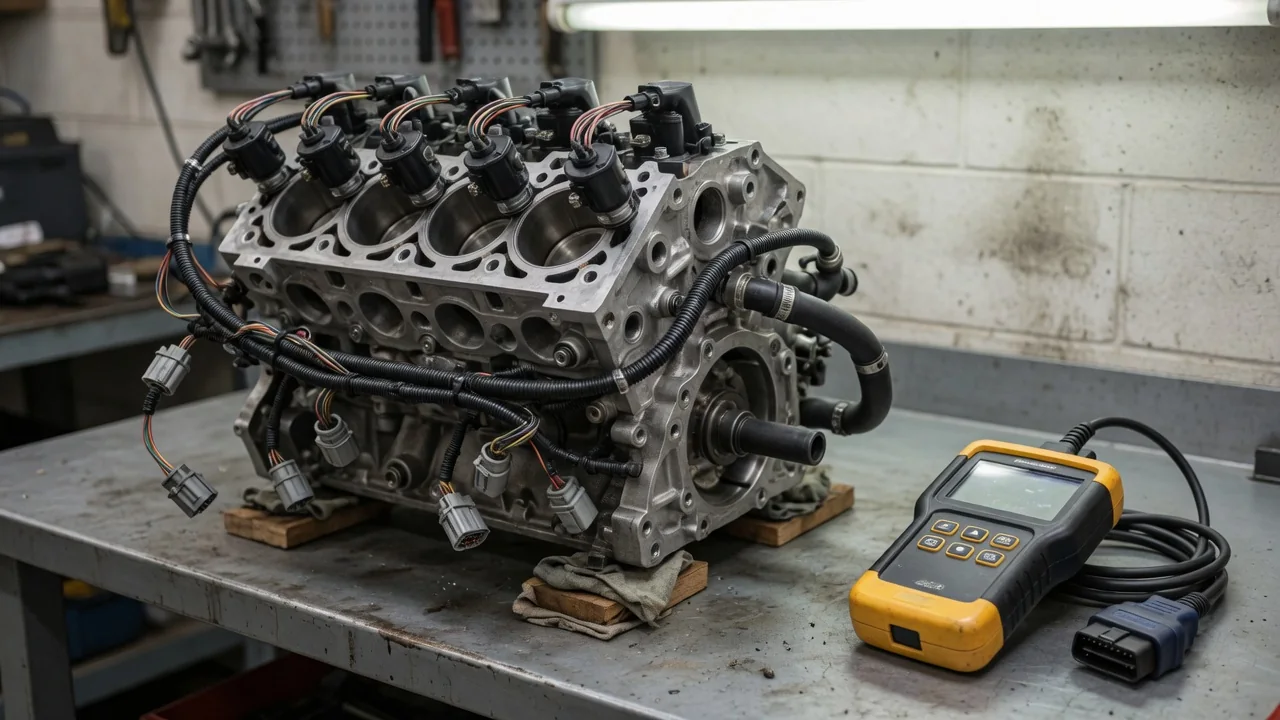
Cylinder deactivation valve control codes from P3401 through P3499 report a monitored condition in a per-cylinder intake valve control circuit or exhaust valve control circuit. They do not, by themselves, prove that a valve control solenoid, deactivation lifter, or wiring harness has failed. The cylinder number and circuit wording must match the engine in the vehicle, and entries such as P3499 need a confirmed definition before they are treated as cylinder-specific faults.
Confirm the Exact Code Definition Before Interpreting P3401–P3499
A scan tool may display P3401, P3425, P3441, or another value in this family, yet the complete definition still has to be read from service information for that year, make, model, and engine. The P3401–P3499 span is a numbering block for cylinder deactivation valve control monitoring, not a guarantee that every code in the block is used, or that two engines share the same title. Manufacturer overlays, extra characters, and calibration can change what the module actually set. Record the scanner wording, any suffix, and companion codes before treating one circuit as the failed part.
Treat P3499 with extra care. Confirm its assigned meaning and whether that engine even monitors it before grouping it with a cylinder-specific deactivation intake or exhaust valve control circuit fault. Some vehicles never store P3499; others may assign it a system-level or manufacturer-defined title that does not name a cylinder. A stored code is evidence of a monitored condition the module saw, such as circuit performance outside expected limits. It does not prove a solenoid, connector, or mechanical part has failed until the diagnostic procedure for that definition is completed.
Locate the Cylinder Named by the Deactivation Code
Under the common SAE generic titles used for this family, P3401 names cylinder 1 deactivation intake valve control circuit/open, P3417 names cylinder 3, P3425 names cylinder 4, P3433 names cylinder 5, P3441 names cylinder 6, and P3449 names cylinder 7. Those titles still require confirmation in the vehicle’s service information, because a manufacturer can overlay a different description. Cylinder numbering identifies physical cylinders in the engine manufacturer’s scheme, not the order the spark plugs fire and not a bank label by itself.
Identify the valve control solenoid, connector, deactivation lifter, or bank only after the engine-specific cylinder layout is in hand. Cylinder 1 must be the physical cylinder the manufacturer numbered as 1, and the matching intake or exhaust control hardware follows from that map. Firing order, bank numbering, and physical location are separate references. Mixing them can send testing to the wrong bank on a V engine or the wrong end of an inline engine. Confirm all three on the engine diagram before aiming a circuit or hydraulic check at one cylinder.
Read the Intake, Exhaust, and Circuit Fault Wording
Once the cylinder is identified, read the rest of the title. In typical SAE wording, P3410 is cylinder 2 deactivation intake valve control performance, P3430 is cylinder 4 exhaust valve control performance, P3431 is cylinder 4 exhaust valve control circuit low, P3443 is cylinder 6 deactivation intake valve control circuit low, and P3448 is cylinder 6 exhaust valve control circuit high. Circuit/open, range/performance, low, and high describe the electrical monitor the module used, not a mechanical position of the valve. Confirm each title on the vehicle before treating those generic labels as final.
A low or high circuit designation concerns a monitored electrical condition on that intake valve control circuit or exhaust valve control circuit. It does not independently establish oil pressure, hydraulic lock of a deactivation lifter, or actual valve position. Circuit performance wording points toward a value the module saw outside the expected window, which may still be electrical, hydraulic, or mechanical after testing. The precise fault wording selects the professional diagnostic path: an open-circuit check is not the same procedure as a performance or circuit-high check, even when the same cylinder is named.
Recognize Symptoms and Decide When to Stop Driving
A malfunction indicator may illuminate with a stored P3401, P3417, P3433, or related code, and the engine may run roughly, feel down on power, or keep cylinder deactivation unavailable. None of those symptoms has to appear, and a normal-feeling drive does not identify the cause or prove continued driving is safe. The module can store a circuit fault while the remaining cylinders still mask the problem. Note whether any change showed at startup, after the engine warmed, or under load, without recreating harsh or unsafe driving conditions to force the code.
Stop as soon as it is safe and arrange assistance if an oil-pressure warning appears, the engine shakes severely, a loud mechanical noise develops, or the malfunction indicator flashes. Those signs can point to lubrication, misfire, or valvetrain distress that a deactivation circuit code does not fully describe. A steady lamp with otherwise mild drivability still deserves prompt diagnosis, because ignored oil supply or wiring faults can progress. Do not keep driving to see if it clears when any of the stop-now warnings are present.
Assess Wiring, Solenoids, Oil Supply, and Lifters
The monitored circuit can be upset by wiring harness damage, a loose or corroded connector, a lost power or ground feed, or an electrical fault inside the valve control solenoid. Those problems may set an open, low, high, or performance code on one cylinder even when the valvetrain is intact. Shared power, ground, or a common harness section can explain several cylinder codes together, yet that pattern still does not prove one shared cause until the diagram and tests say so. A cool, engine-off visual look is only a starting observation.
Where the engine uses oil pressure to operate deactivation lifters, oil level, oil condition, and hydraulic supply become relevant checks, but only as the vehicle’s diagnostic procedure directs. A circuit code does not establish that a deactivation lifter has collapsed or stuck. Mechanical parts should be discussed only if that engine is actually fitted with them and the procedure reaches that step. Several affected cylinders can justify inspecting shared electrical feeds and shared oil galleries without treating a common-cause story as proven. Keep hydraulic and electrical paths distinct until measurements separate them.
Prepare for Testing and Verify the Repair
Before any code is cleared, preserve stored and pending codes, freeze-frame data, warning messages, and recent repair history. Freeze-frame shows engine conditions when the fault was recorded, including idle, load, or temperature clues. Limit owner checks to accessible visual inspection with the engine off and cool, plus an oil-level check done as the owner’s manual describes. Do not bypass circuits, apply power to solenoids, probe running-engine components, or disassemble the valvetrain. Those steps can add damage and hide the original fault.
A technician may need vehicle-specific wiring diagrams, circuit measurements, commanded actuator tests, oil-pressure testing, or mechanical evaluation once the exact code definition is known. Those tools belong in a procedure written for that engine, not in improvised owner tests. Repair is verified only when the applicable diagnostic procedure is completed, symptoms that were present have resolved, and the same codes do not return after the required drive or monitor conditions. Clearing P3448, P3431, or any related code without that follow-up does not confirm a repair. Recheck freeze-frame and pending status before releasing the vehicle.