P3400 and P3497 Codes: Cylinder Deactivation Faults Explained
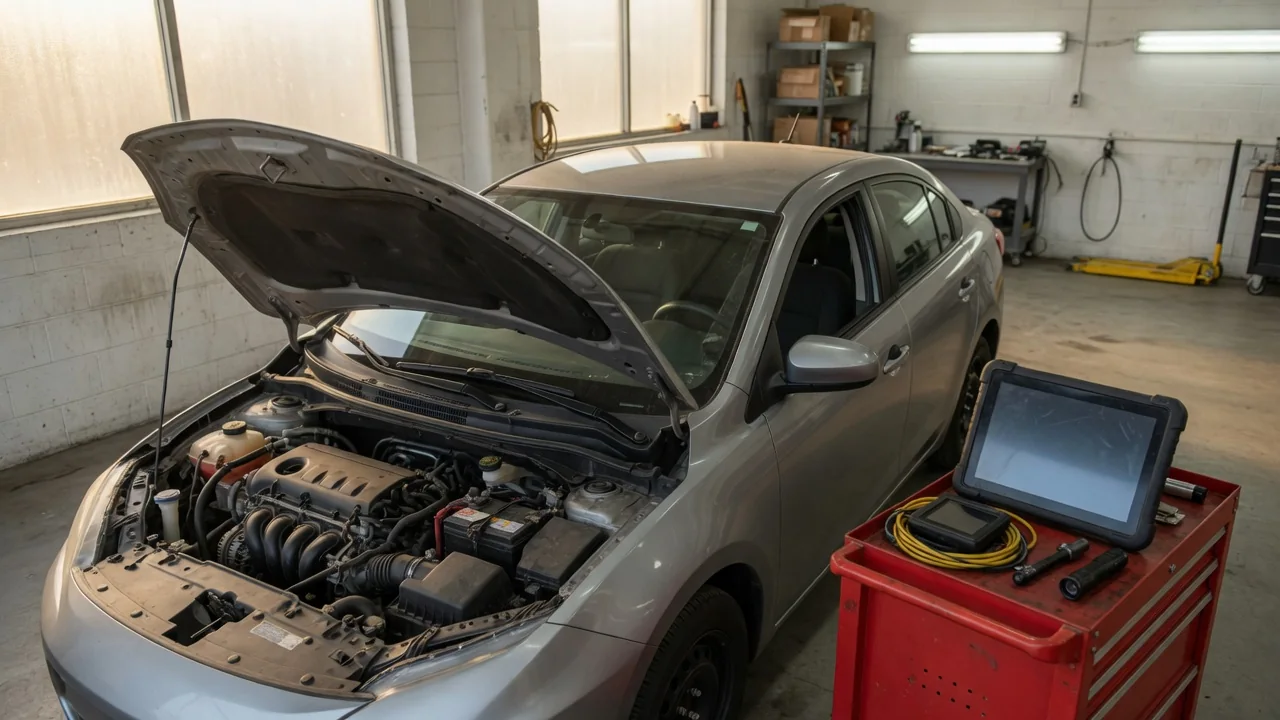
When a scan tool stores a P3400 code or a P3497 code, the engine controller has detected a bank-level problem in cylinder deactivation. Many engines use variable displacement or active fuel management to idle some cylinders under qualifying conditions. These codes record a system concern rather than proving a single part has failed. Exact definitions vary by manufacturer, so vehicle-specific confirmation is required before assigning a bank, circuit, or repair.
What P3400 and P3497 Mean on Your Vehicle
P3400 is generally associated with the bank 1 cylinder deactivation system, while P3497 is generally associated with bank 2. Those associations still require confirmation of the exact definitions and diagnostic criteria for your vehicle and engine before you interpret them. Bank 1 is the bank that contains cylinder 1. Cylinder numbering is vehicle-specific, so bank identification cannot be reduced to a universal driver-side or passenger-side label. Locating each bank starts with the engine's published cylinder map rather than an assumed layout.
A bank-level code records a detected system problem and does not identify a failed component by itself. Cylinder deactivation reduces the number of firing cylinders when load, speed, temperature, and other qualifying conditions allow it, which can improve fuel use on some engines. Implementation depends on the engine: some designs collapse hydraulic lifters, others change valve events through oil control hardware. Until the controller's criteria are confirmed, P3400 and P3497 remain evidence of a monitored condition, not a completed diagnosis.
Symptoms and Warning Signs That Affect Driving Decisions
Possible symptoms include an illuminated check-engine light, cylinder deactivation that stays unavailable, rough running, a misfire sensation, or changed fuel consumption. Not every vehicle exhibits those signs, and some drivers notice only the warning lamp. A vehicle may appear to run normally even when the controller has disabled cylinder deactivation and left the engine in full-cylinder operation. That fallback can hide the fault during ordinary driving, so the absence of roughness does not mean the P3400 code or P3497 code is unimportant.
A flashing check-engine light, severe shaking, abnormal mechanical noise, or an oil-pressure warning are reasons to stop safely and seek assistance. Those conditions can indicate misfire severe enough to risk catalytic damage, lubrication trouble, or a mechanical event that should not be driven through. Urgency should be based on accompanying warnings, symptoms, and vehicle-specific guidance rather than a promised safe driving distance. A steady lamp with smooth running still warrants prompt service, while worsening noise or oil-pressure alerts change the decision to stop immediately.
Oil Conditions and Other Possible Causes
Many cylinder deactivation systems use engine oil to operate collapsing lifters or related hydraulic hardware, so oil level, oil condition, specified viscosity, and hydraulic pressure can all affect whether the system meets its criteria. Check level with the owner's manual procedure on a parked vehicle, typically after the engine has been off long enough for oil to drain back. Do not overfill, and do not add unapproved treatments that can change flow or aeration. A correct dipstick reading does not establish adequate operating oil pressure once the engine is running.
Where the engine design uses them, an oil control solenoid, pressure switch, wiring, connector, restricted oil passage, or mechanical fault in a deactivation lifter can contribute to a bank-level code. Those possibilities apply only when the architecture actually includes that hardware. Engine oil pressure that is low, aerated, or delayed at operating temperature can keep solenoids from moving valves as commanded even when the electrical circuit looks intact. A stored code alone does not justify replacing parts; measured pressure, circuit integrity, and the manufacturer's diagnostic path still have to support the repair.
Reading P3401, P3425, P3441, and P3449 Alongside Bank Codes
A P3401 code, P3425 code, P3441 code, or P3449 code should stay inside the same cylinder deactivation investigation rather than being treated as unrelated electrical noise. Each exact vehicle-specific descriptor must be checked before assigning a cylinder, circuit, or failure mode. Those numbers can provide cylinder-specific deactivation or intake-valve control circuit context, and any qualifier in the descriptor, such as open, short, or performance, belongs in the interpretation. Inferring bank location, component compatibility, or a required replacement from the code number alone is not reliable.
Record which related codes occur with P3400 or P3497 and whether each is pending, stored, or current. The complete code set helps a technician choose the appropriate diagnostic path, because a single bank code with no cylinder-level companions points to a different starting point than a cluster of valve control circuit faults. Manufacturer-dependent numbering means the same P3401, P3425, P3441, or P3449 identifier can describe different cylinders or circuits on different engines. Confirmation of the published definition for that powertrain is required before mapping a code to a physical location.
Safe Observations to Record Before Professional Testing
Save the complete scan report and available freeze-frame data before clearing codes, including pending and stored entries. Freeze-frame data captures engine speed, load, temperature, and related parameters at the moment the controller set the fault, which can show whether cylinder deactivation was being requested. Record when the warning appeared, what you could observe, any recent oil service, and whether the issue occurred during startup, warm operation, or steady driving. Those notes prevent lost context if the lamp later goes out or additional codes appear.
Limit owner inspection to accessible visual observations with the engine off and cool, such as visible oil leaks or obvious connector damage around solenoids and harnesses. Do not probe circuits, disconnect sensors while the engine is running, or work near belts, fans, or other moving components. Intentional fault reproduction, component activation with a scan tool, and invasive oil-passage or mechanical checks belong in a controlled professional diagnostic process. Those steps can create additional faults or unsafe conditions if they are attempted without the engine's procedure and the right equipment.
How a Technician Confirms the Fault and Checks the Repair
A technician starts by confirming the applicable diagnostic information for that engine, including how the controller enables cylinder deactivation and what evidence it uses to set P3400 or P3497. When the procedure indicates it, measured engine oil pressure is compared with the specification at the relevant temperature and speed. Electrical controls and feedback are evaluated next, looking at oil control solenoid command, circuit continuity, and any position or pressure feedback the design provides. Component command tests, circuit measurements, and mechanical assessment must follow that engine's diagnostic procedure rather than a generic parts-swapping sequence.
Repair decisions remain conditional on those test results. A solenoid, sensor, or lifter is replaced only when measurements show that component is at fault, not because a bank code is present. Clearing the warning is only part of verification. The technician should confirm that cylinder deactivation actually commands and that related monitors complete under appropriate operating conditions, then recheck for returning codes, including P3401, P3425, P3441, or P3449 if those were part of the original set. Successful verification means the system operates as designed, not merely that the lamp is off.