P2800 to P2805 Codes: Transmission Range Sensor B Circuit Faults
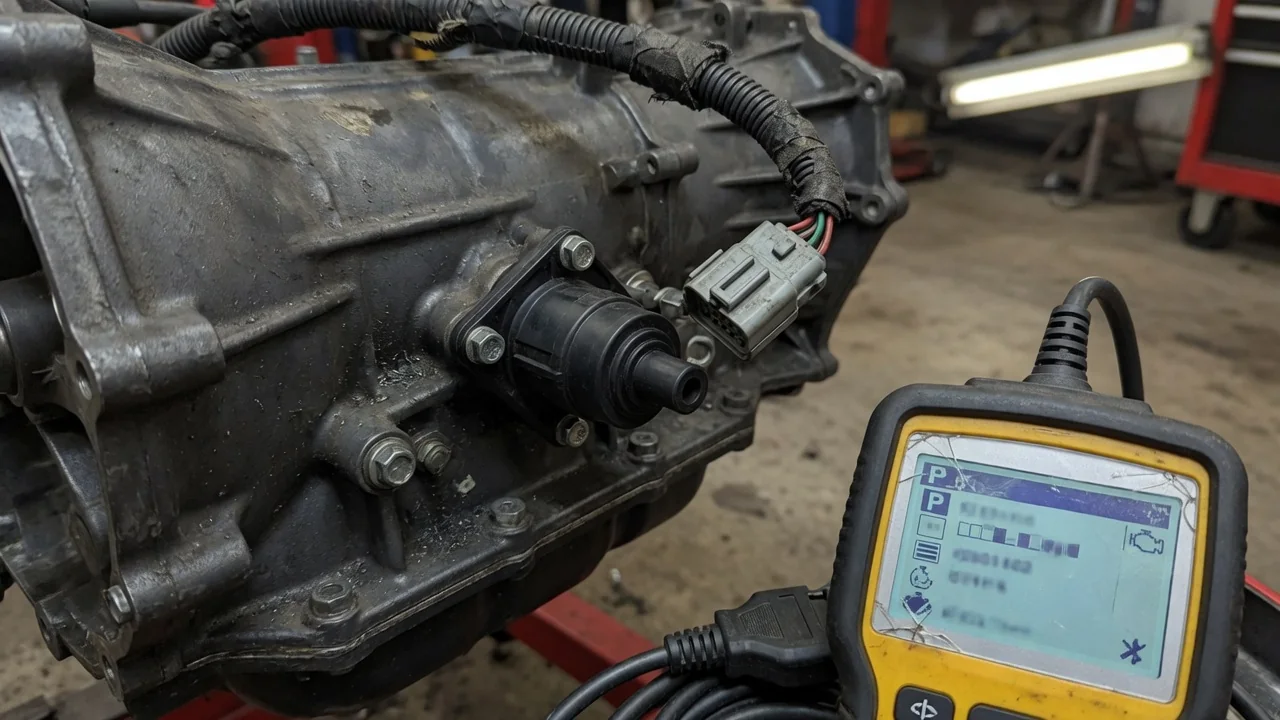
A P2803 code indicates that the transmission range sensor B circuit is sending a signal outside the expected range, often causing the gear indicator to mismatch the shifter or preventing the engine from cranking in Park. This fault family covers P2800 through P2805, each narrowing down a specific electrical issue with the sensor B input. Understanding these codes helps identify whether the problem lies in wiring, connectors, or the sensor itself.
What the P2800 Code Family Means for Transmission Range Sensor B
The transmission range sensor tells the control module which lever position is selected—Park, Reverse, Neutral, Drive and so on—using separate inputs labeled A and B. When the module sees a problem with input B, it sets codes P2800 through P2805. P2800 indicates a general circuit fault, P2801 a range or performance issue, P2802 a low signal, P2803 a high signal, P2804 an intermittent signal, and P2805 a correlation mismatch between A and B.
These codes point to a signal problem, not proof that the transmission itself is damaged. Because sensor layouts and naming differ between manufacturers, the exact meaning of P2800 to P2805 can vary by make, model, year and transmission. Always check the vehicle-specific description in service information or with a scan tool that has manufacturer coverage before drawing conclusions.
P2802 and P2803: Sensor B Circuit Low and High Readings
When the module sees a signal below the expected range, it stores P2802 for a low circuit input. This can happen if a wire chafes through and shorts to ground, an open circuit breaks continuity, or a poor ground raises resistance. On the other hand, P2803 means the module saw a signal above the expected range, which may come from a short to voltage or a sensor returning an implausibly high reading.
A P2803 code on its own does not confirm that the sensor has failed. The circuit must be tested before any part is replaced, because a wiring fault or connector issue can produce the same code. Freeze-frame data and the vehicle-specific wiring diagram are essential to interpret whether the high reading points to a short, an open, or a sensor problem.
P2804: Intermittent Sensor B Signal and Why It Is Hard to Pin Down
An intermittent code such as P2804 means the signal dropped out or jumped for a moment, often only under certain conditions. Heat, vibration, bumps or shifting can cause a brief fault that disappears by the time you check. Loose connector terminals, a damaged harness near moving parts, or moisture getting into a connector are common reasons for intermittent circuit faults in general.
When the code appears, note the outside temperature, road surface, and whether it follows gear changes or engine movement. Freeze-frame data captures the conditions at the moment the fault set, and a code that returns after clearing is more significant than a one-time event. These details help a technician reproduce the fault and find the root cause.
P2805: Range Sensor A/B Correlation Disagreement
A P2805 correlation code means the two range sensor inputs disagree about which gear position is selected, so the module cannot trust either one. This can happen if the sensor is out of adjustment, a shifter cable or linkage is worn, or one input has a wiring fault. A worn internal contact inside the sensor can also cause the A and B signals to mismatch.
Comparing live data for the A and B inputs while moving the lever—with the vehicle safely stopped—is one of the main diagnostic steps a technician uses. Because the way the inputs are compared differs by manufacturer, the vehicle-specific description and test procedure need to be checked before interpreting the data.
Symptoms: Wrong Gear Display, No-Start in Park and Shift Behavior
Typical warning signs include a gear indicator that does not match the lever, a blank or flashing gear display, a check engine or transmission warning light, and the engine not cranking in Park or Neutral. Some vehicles may shift harshly, hold a fixed gear, or enter a reduced-function mode when the module cannot confirm lever position. The exact response depends on the vehicle.
Other side effects can include reverse lights not working correctly or a shift-lock or key-release problem, depending on how the vehicle is wired. A vehicle that reports the wrong gear position may not behave as the driver expects. Always set the parking brake and do not rely on the gear display until the fault is diagnosed.
Likely Causes: Sensor Adjustment, Wiring, Connectors and the Sensor Itself
A range sensor that has moved out of alignment with the shift linkage can produce position codes, especially after transmission or shifter work. Harness and connector problems are also common: corrosion, bent or pushed-back pins, damaged locking tabs, fluid contamination, and wires rubbing on brackets or exhaust parts can all cause electrical faults.
A sensor with internal wear or failure is possible, but only after the wiring, power, ground and adjustment have been checked. In some designs the range sensor is built into the transmission or its control module, which changes both how it is diagnosed and how it is repaired. Confirm the vehicle's layout instead of assuming a standalone sensor.
Safe Checks You Can Make and When to Get Professional Testing
Low-risk owner steps include recording every stored code and its freeze-frame data, noting when the problem happens, and looking at any easy-to-reach harness for obvious damage with the engine off and the vehicle secured. A basic code reader can identify the fault, but clearing codes without fixing the cause loses diagnostic information.
Avoid bypassing the neutral safety function, forcing the shifter, or working under a vehicle supported only by a jack. Professional diagnosis is needed if the vehicle starts in gear or will not start, the gear display is wrong, the vehicle is in reduced-function mode, or the codes keep coming back after basic checks. A shop will check the manufacturer-specific code definition, review live A/B sensor data, test the circuit and confirm adjustment before replacing parts.