P2765–P2769, P2781 and P2784: Transmission Code Diagnosis
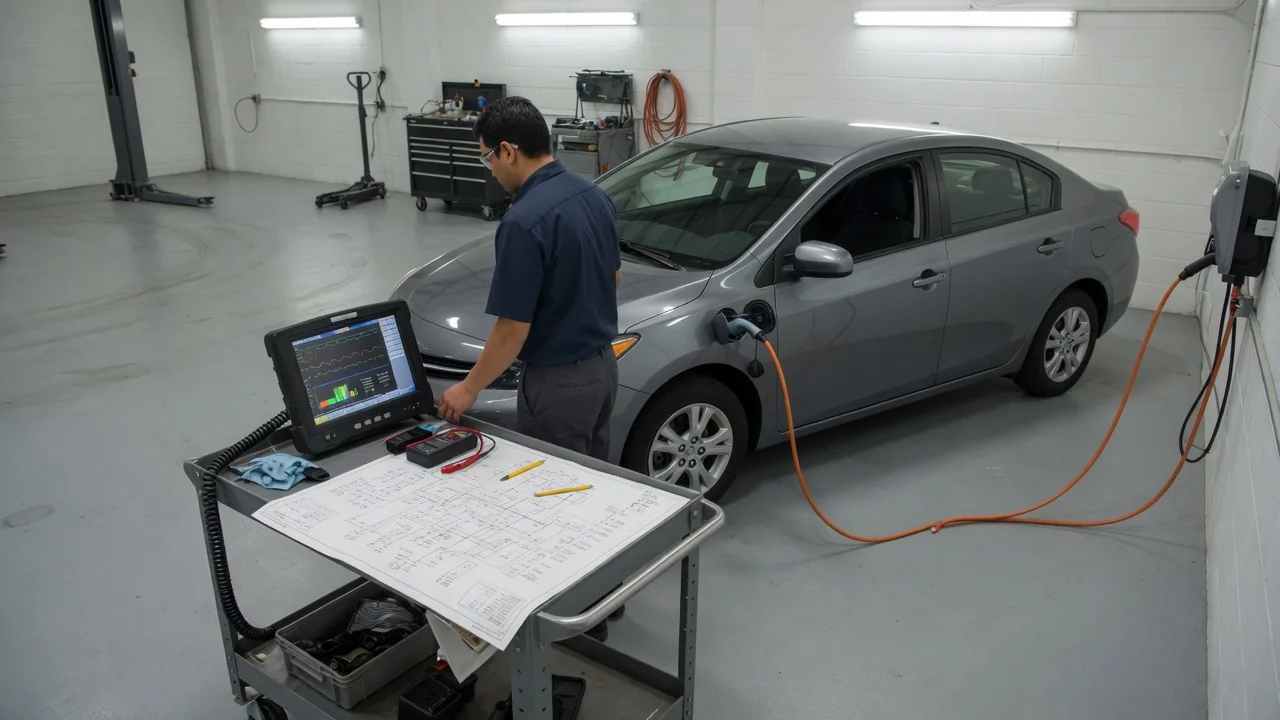
When a scan tool stores P2765 through P2769, P2781, or P2784, the first job is to treat each code as a monitored condition, not a parts list. These faults often involve an input/turbine speed sensor B circuit, a missing or intermittent transmission speed signal, A/B speed correlation, a torque converter clutch circuit, or a downshift switch circuit. Vehicle-specific service information decides what each description actually means before diagnosis begins.
Verify each code’s meaning for the vehicle
A useful reading of a P2765 code starts with the year, make, model, transmission family, and the module that set the fault. The same scan string can describe different circuits on different platforms, so an abbreviated tool caption is not enough. Confirm the full factory description, enable criteria, and related monitors in that vehicle's service information. P2765 through P2768 generally concern input/turbine speed sensor B monitoring, while a P2784 code concerns input/turbine speed sensor A/B correlation, but those labels still need local confirmation.
Keep P2769 and P2781 on separate paths after that confirmation. A P2769 code commonly identifies a torque converter clutch circuit-low condition, and P2781 commonly identifies a downshift switch circuit-high condition. Neither automatically belongs with sensor B circuit work. Mixing those procedures wastes time and can send diagnosis toward the wrong harness, switch, or clutch control path. Manufacturer-dependent wording is common in this range, so the printed definition and the reporting module always outrank a generic code chart.
What P2765 and P2766 indicate about sensor B
Once the vehicle definition is confirmed, P2765 typically points to an input/turbine speed sensor B circuit fault, while P2766 typically points to a range or performance problem in that same monitored signal. Circuit faults often involve opens, shorts, or implausible electrical behavior. Range and performance faults more often mean the controller saw a speed value that did not match expected operating conditions. The B designation does not identify a universal mounting location, transmission layout, or a single replaceable part across all designs.
A stored P2765 code records a detected condition, not proof that the sensor itself has failed. A damaged transmission wiring harness, connector corrosion, poor terminal tension, or reluctor damage at the signal target can distort or interrupt the transmission speed signal just as readily as an internal sensor fault. The controller only knows that the monitored circuit or value left its expected window. Replacement is justified only after the actual cause of that window violation is identified on that vehicle.
P2767 no-signal and P2768 intermittent-signal faults
When confirmed for the vehicle, a P2767 code usually means the controller saw no usable input/turbine speed sensor B signal during the monitor window. P2768 typically means that same signal appeared intermittent or erratic rather than continuously absent. Drivers may notice harsh or erratic shifting, delayed engagement, a warning lamp, or restricted transmission operation, though not every vehicle presents the same symptoms. The no-signal and intermittent-signal paths share possible wiring and sensor causes, but they are not interchangeable descriptions.
Notes about when the complaint appears matter more than a single parked scan. Record whether the issue shows up cold, after warmup, during a particular shift, or after road vibration, because those details help a technician reproduce an intermittent signal. A loose connector, flexed harness, or dropout that only occurs while moving can look normal on a stationary inspection. One healthy live reading does not clear P2767 or P2768; the monitor needs the conditions that originally lost or scrambled the signal.
P2784 input/turbine speed A/B correlation
A P2784 code concerns the expected relationship between the monitored A and B transmission speed signals, using the definition confirmed for that vehicle. Correlation is not the same as a simple circuit-open test. Before judging scan data, identify how that transmission arranges its sensors and what speed relationship the control strategy expects. A and B do not always report identical speeds; some layouts watch different shafts, elements, or calculated ratios. Interpreting two PIDs as if they must match can send diagnosis the wrong way.
A missing, distorted, or implausible transmission speed signal can produce A/B speed correlation trouble without proving which sensor, circuit, or target failed. Speed-ratio plausibility belongs in this comparison only as a check of whether the two monitored values make sense together under the current gear and operating mode. That does not convert every listed code into a speed-ratio fault, and it does not by itself prove internal mechanical damage. P2784 remains evidence of a relationship the controller did not accept, pending circuit and signal verification.
Safe observations and professional signal testing
Before any codes are cleared, save every transmission and related-module fault, its status, and available freeze-frame data. That snapshot shows load, speed, temperature, and gear context when the monitor failed. Owner checks should stay limited: record symptoms, note any visible leaks, and inspect readily accessible wiring with the vehicle parked and the engine off. Do not probe live connectors, lift the vehicle unsafely, or attempt internal transmission work from a driveway. The stored frame is often more useful than a later empty code list.
Professional diagnosis follows vehicle-specific procedures for connector condition, harness integrity, and the applicable power, ground, or signal circuits. Live-data capture and waveform testing can reveal dropouts or a distorted transmission speed signal that a static resistance check can miss. Reluctor inspection and internal access may require transmission-specific tools and experience. If P2769 is confirmed as a torque converter clutch circuit issue, or P2781 as a downshift switch circuit issue, those faults belong on their own clutch-control and switch diagnostic paths rather than defaulting to speed sensor replacement.
Driving decisions and confirming the repair
Whether the vehicle is safe to drive depends on actual transmission behavior, displayed warnings, and the manufacturer's guidance, not on the mere presence of a stored code. A P2765, P2767, or P2784 code by itself does not prove continued driving is acceptable. If drive is lost, engagement becomes unpredictable, or severe shifting or overheating appears, stop in a safe location and arrange professional assistance. Limited limp operation can still leave the vehicle difficult to control in traffic, so treat changing shift quality as a reason to stop evaluating on the road.
Repair should correct the demonstrated fault, which may be a connector, a section of the transmission wiring harness, the sensor, a damaged reluctor, or another confirmed component. After the work, verification means rechecking codes and operating the transmission under the conditions that originally set the monitor, not simply turning off a warning lamp. If P2768 was intermittent, a short parking-lot retest may not be enough. Successful repair is shown when the relevant monitors complete without return of the same circuit, range, no-signal, intermittent, or correlation condition.