P2700–P2711 and P2785–P2793: Transmission Fault Codes Explained
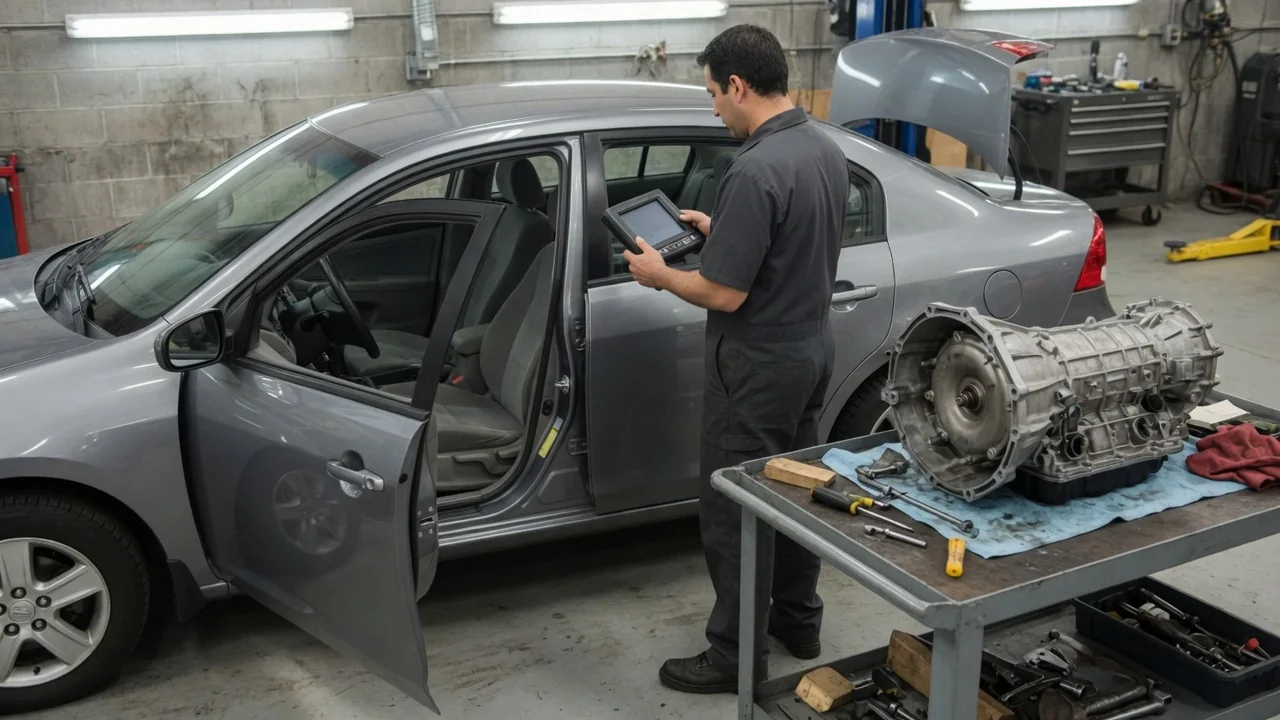
Codes from P2700 through P2711 and P2785 through P2793 show how a transmission control module judges clutch and shift behavior on conventional automatics, automated manuals, and dual-clutch units. They may flag friction element apply time, unexpected gear disengagement, clutch or gear-shift actuator temperature, clutch adaptive learning at its limit, or a gear shift direction circuit issue. A stored code is evidence to interpret, not proof a part has failed.
Confirm the Code Meaning and Transmission Before Interpreting Symptoms
Before interpreting any drivability complaint, verify each code’s definition, suffix, and diagnostic criteria for the vehicle’s year, model, and transmission. A P2700 code on one automatic is not automatically the same monitored event as the same number on another manufacturer’s dual-clutch or automated-manual unit. Manufacturer-dependent meanings cannot be treated as universal, so service information for that gearbox is the starting point. Establish whether the vehicle uses a conventional automatic, automated manual, or dual-clutch transmission, then identify which of the listed codes actually apply to that design.
Stored, pending, and active status describe different stages of detection, not different failed parts. A pending result may show a condition that has not yet matured, while an active or stored P2711 code records that the transmission control module already completed its test. Preserve the complete transmission scan and freeze-frame data before clearing anything, because temperature, gear, speed, and load at set are often more useful than the number itself. Stop safely and arrange assistance if drive is lost, disengagement is unpredictable, smoke appears, or a transmission overtemperature warning stays on.
P2700–P2704: Friction Element Apply-Time Faults
Verified apply-time definitions for a P2700 code, P2701 code, and P2704 code describe how long a commanded friction element takes to apply relative to the transmission control module’s expected window. Those lettered elements must be mapped using vehicle-specific service information; the same letter does not name the same clutch or brake on every automatic. Delayed engagement, engine-speed flare during shifts, harsh engagement, and reduced-function operation can appear, but they do not all occur with every apply-time fault. The code is a timing judgment, not a completed parts diagnosis.
Clutch wear, internal hydraulic leakage, pressure-control faults, or unsuitable transmission fluid condition can change how a friction element applies, especially on a conventional automatic that relies on hydraulic apply. Fluid that is degraded, overfilled, underfilled, or of the wrong type can slow apply or allow slip without a clutch pack being at the end of its life. Commanded operation, speed data, and applicable pressure tests belong in professional evaluation before concluding that a clutch pack or the transmission needs replacement. An apply-time code is a starting measurement, not authorization to replace hardware.
P2711: Unexpected Mechanical Gear Disengagement
After confirming the vehicle-specific P2711 definition and detection conditions, unexpected mechanical gear disengagement means the module saw a selected gear release while it still expected that gear to stay engaged. A P2711 code can coincide with an apparent shift into neutral, interrupted acceleration, a warning message, or restricted operation; record those observations in the order they happened. The event is a plausibility judgment from speed and command data, not proof of a broken tooth or failed clutch.
Investigation areas depend on the transmission design. On a conventional automatic, clutch engagement and hydraulic control can allow a ratio to collapse if apply pressure is lost. Automated manuals and dual-clutch units add gear-selection mechanisms that can unmesh or release a clutch without a hydraulic pack fault. Speed-signal plausibility also matters, because a faulty speed reading can look like unexpected gear disengagement when the mechanical ratio never changed. The code alone cannot identify a failed component. Repeated loss of drive calls for professional diagnosis without further road testing by the owner.
P2785–P2787: Clutch and Shift Actuator Temperature Faults
Confirm the individual P2785, P2786, and P2787 definitions, including which clutch actuator temperature, gear shift actuator temperature, or clutch temperature each code concerns on that vehicle. The monitored value may be measured by a sensor or calculated by the transmission control module from current, slip, and operating time, so a temperature code alone does not prove a particular sensor has failed. P2785, P2786, and P2787 can share similar wording across brands while pointing at different actuators, so the service information for that automated manual or dual-clutch layout is required before any part is condemned.
Sustained clutch slip, repeated engagement, actuator strain, or a cooling-related problem may contribute when those conditions exist on the design in question. Not every transmission uses a fluid-cooled clutch, so do not assume a cooler circuit is involved simply because clutch temperature is high. Record operating conditions and dashboard warnings, then follow the owner’s manual for an overtemperature event, which typically means reducing load and allowing the unit to cool rather than continuing to force engagement. Persistent or recurring warnings need professional testing of the actuator, its temperature path, and the conditions that produced the heat.
P2789: Clutch Adaptive Learning at Its Limit
Verify the vehicle-specific P2789 definition before explaining clutch adaptive learning. Depending on the vehicle, a P2789 code means a learned clutch value has reached its permitted limit, not that the module has finished diagnosing the clutch. Adaptation compensates for changes in clutch engagement behavior as friction material, actuators, and hydraulic response drift with use. Reaching that limit says the learned correction can no longer stay inside the allowed window. The limit code alone does not establish remaining clutch life.
Clutch wear, an engagement-mechanism fault, or unmet learning prerequisites can all push adaptation to its stop, and each possibility needs supporting diagnostic evidence. A manufacturer-specified relearn may be appropriate after diagnosis or repair if the procedure’s conditions can be met, but relearn cannot restore worn friction material or a binding actuator. Clearing learned values without resolving the cause can disrupt engagement, producing slip, harsh take-up, or another P2789 once the module relearns to the same limit. Professional service should confirm why the adaptive range was consumed before any reset is attempted.
P2793: Gear Shift Direction Circuit Diagnosis
Confirm the vehicle-specific P2793 gear shift direction circuit definition and identify the monitored input or assembly from the correct service information. On some automated manuals and dual-clutch units, that circuit reports requested or actual shift direction; on others it may involve a different selector or actuator sense path. Selection problems, rejected shift requests, or restricted operation can appear, but those symptoms are not proof of an electrical failure. A mechanical bind, hydraulic delay, or software inhibit can produce similar driver observations while the gear shift direction circuit itself remains intact.
Wiring, connectors, power supplies, grounds, and the relevant sensing or control assembly require systematic testing before parts are condemned. Owner observations should stay limited to recording selector behavior, warning messages, and any recent battery, body, or transmission work that could have disturbed a connector. Circuit measurements, actuator tests, and adaptation procedures belong with qualified service that has the correct pinouts and commanded-output tests. A P2793 result is a circuit-rationality flag from the transmission control module, not a completed finding that the shifter, actuator, or gearbox must be replaced.