P2680–P2683 Codes: Coolant Bypass Valve Circuit Diagnosis
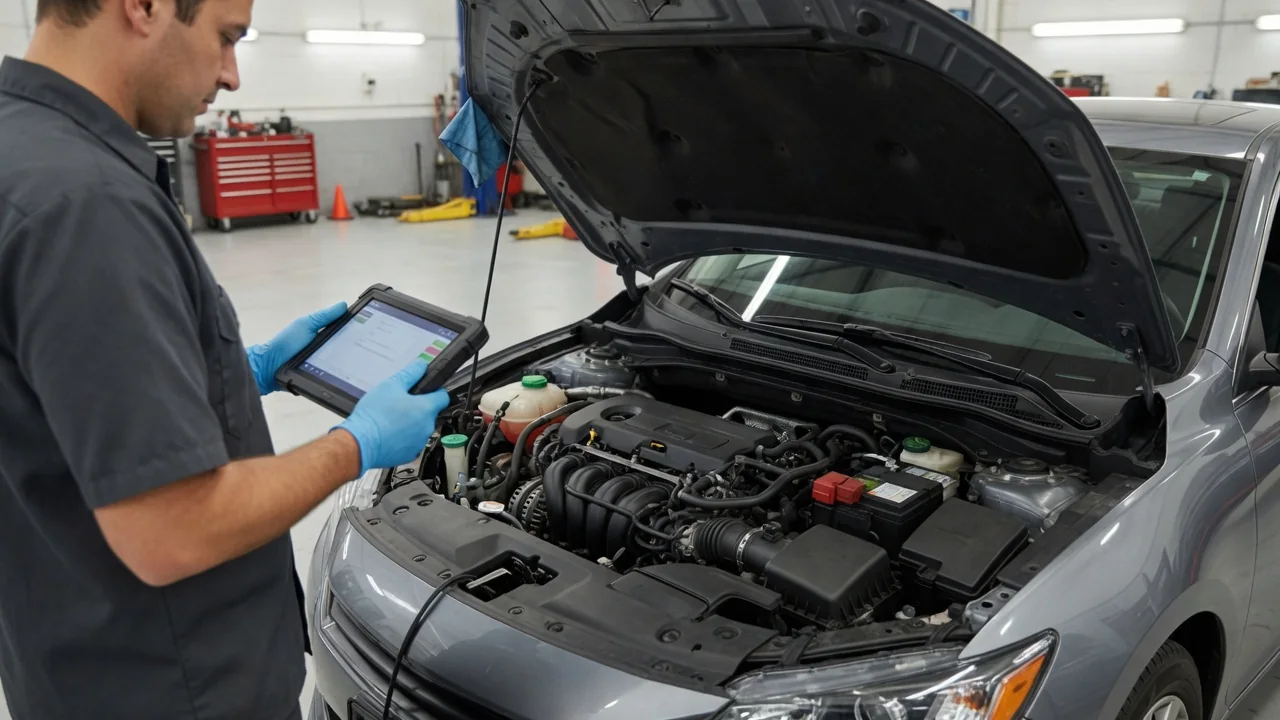
P2680, P2681, P2682, and P2683 often appear as a coolant bypass valve B control circuit family, covering open, low, high, and performance-style monitoring. In modern engine thermal management, that valve can change coolant routing so the powertrain reaches and holds a target coolant temperature more quickly. A stored code is electrical evidence to interpret, not proof that the valve actuator has failed. Confirm year, make, model, engine, and the scan-tool wording before any diagnosis.
Verify the Code Definition for Your Vehicle
Before treating any code in the P2680 through P2683 group as a coolant bypass valve B problem, record the year, make, model, engine, and the complete description shown on the scan tool. Vehicle-specific service information must confirm each definition. Do not assume the supplied valve B designation or the open, low, high, and performance labels apply to every vehicle. Manufacturers assign these numbers differently, so a P2681 or P2683 on one platform can describe a different circuit or even a different component than the same number on another.
Where a coolant bypass valve is used, it can help engine thermal management by directing coolant through or around selected passages so the engine warms at a controlled rate and later holds a stable coolant temperature. Layout, actuator type, and operating strategy still depend on the vehicle, so circuit names and expected behavior cannot be borrowed from a generic chart. A stored control circuit code identifies a detected electrical or monitoring condition. It does not establish which part needs replacement or prove that coolant is actually bypassing the wrong path.
P2680: Confirm the Meaning Before Investigating
Make verification of the vehicle-specific P2680 definition the first step. Do not assign a universal performance or valve B meaning to that number. If the confirmed description concerns coolant bypass control, interpret the monitored condition using that vehicle's terminology, whether it is a performance concern, a range or rationality check, or another labeled fault. Record whether P2680 is pending, stored, or permanent, and preserve freeze-frame data before clearing anything so coolant temperature, engine load, and operating state at the moment of detection remain available.
The code number alone cannot establish actual coolant flow, the mechanical position of the coolant bypass valve, or a failed valve actuator. Freeze-frame data can show whether the engine was cold, in closed-loop thermal control, or under load, which helps a technician decide whether the event matches a warm-up strategy or a later temperature-hold strategy. Clearing P2680 to see if it returns discards that snapshot. Until circuit tests and the manufacturer's monitoring criteria are applied, the stored condition remains an electrical or performance flag, not a parts list.
P2681: Investigating a Confirmed Circuit/Open Description
Verify that the vehicle-specific P2681 description identifies an engine coolant bypass valve control circuit/open condition before explaining it as an open path. An open electrical path means the control module did not see the expected continuity or signal on the control circuit. That finding is not proof that the coolant bypass valve itself has failed. A disconnected or damaged wiring connector, a broken conductor, a poor terminal fit, or an internal open in the valve actuator can all produce the same monitored result until tests separate them.
Locating an interruption requires the correct wiring diagram and the circuit tests prescribed for that vehicle, because power, ground, and control-line assignments are not interchangeable across engines. An open may sit in a harness that flexes near the thermostat housing, at a connector exposed to coolant residue, or inside the actuator windings. Without those tests, replacing the valve because P2681 is stored can leave the true open untouched. Confirming P2681 as circuit/open only narrows the search to electrical continuity, not to a single failed part.
P2682 and P2683: Understanding Confirmed Low or High Circuit Faults
Verify the vehicle-specific definitions before associating P2682 with a circuit-low condition or P2683 with a circuit-high condition. A confirmed low or high designation describes an electrical monitoring result on the control circuit, such as a voltage or signal that stayed below or above the module's expected window. It does not directly state coolant level, actual engine temperature, or how much coolant is being bypassed. Treat P2682 and P2683 as companion circuit flags that still require the same year, make, model, and engine confirmation used for P2680 and P2681.
Possible causes include shorted or high-resistance wiring, connector damage, missing power or ground, and actuator faults, but which of those apply depends on how the control circuit is designed. A low reading on one vehicle may point toward a short to ground, while a high reading on another may reflect an open reference or a short to voltage. Inferring valve position or selecting a replacement from P2682 or P2683 alone is not a diagnosis. Professional testing against manufacturer specifications is required before any part is condemned.
Symptoms and Temperature Warnings to Record
A malfunction indicator light may be the only early sign of P2680, P2681, P2682, or P2683. Some vehicles also show slow engine warm-up, inconsistent cabin heat, or coolant temperature that rises later than expected or swings after the engine should have stabilized. Those thermal symptoms are not specific proof of a bypass valve fault, because a stuck thermostat, air in the cooling system, a sensor issue, or recent cooling-system work can produce similar behavior. Record when symptoms occur, ambient conditions, recent service, and any accompanying codes.
Note whether the warning appeared during a cold start, after a short trip, or once the engine reached normal temperature, because engine thermal management strategies change across those phases. Weak heat and delayed warm-up help a technician correlate freeze-frame coolant temperature with owner observations, but they still do not identify the failed component. If the temperature warning indicates overheating, steam is visible, or there is substantial coolant loss, stop driving as soon as it is safe and arrange assistance. Never open a hot cooling system; pressure and heat can cause severe burns.
Safe Observations and Professional Diagnostic Testing
Owner checks should wait until the engine is off and fully cool. Look for visible leakage, confirm reservoir level only as the owner's manual directs, and note obvious damage to accessible wiring without unplugging the valve actuator or any other connector. Disturbed terminals can add a second fault on top of the original control circuit condition. Those observations support a shop visit; they do not substitute for circuit diagnosis. Do not add sealers, jump circuits, or force the coolant bypass valve to move based on a code number.
A technician uses the confirmed code context, live and freeze-frame coolant-temperature data, and vehicle-specific wiring information to choose appropriate tests. Prescribed circuit and actuator tests then determine whether the interruption, low reading, or high reading is in the harness, the connector, or the actuator. Valve position feedback is not available on every vehicle, so commanded state and electrical results may be the only evidence. Repair is confirmed through the manufacturer's verification procedure, appropriate temperature behavior, and checks for returning faults. Clearing codes alone does not demonstrate a repair.