P2651, P2654, P2659, P2660, and P2667: Meanings and Diagnostic Checks
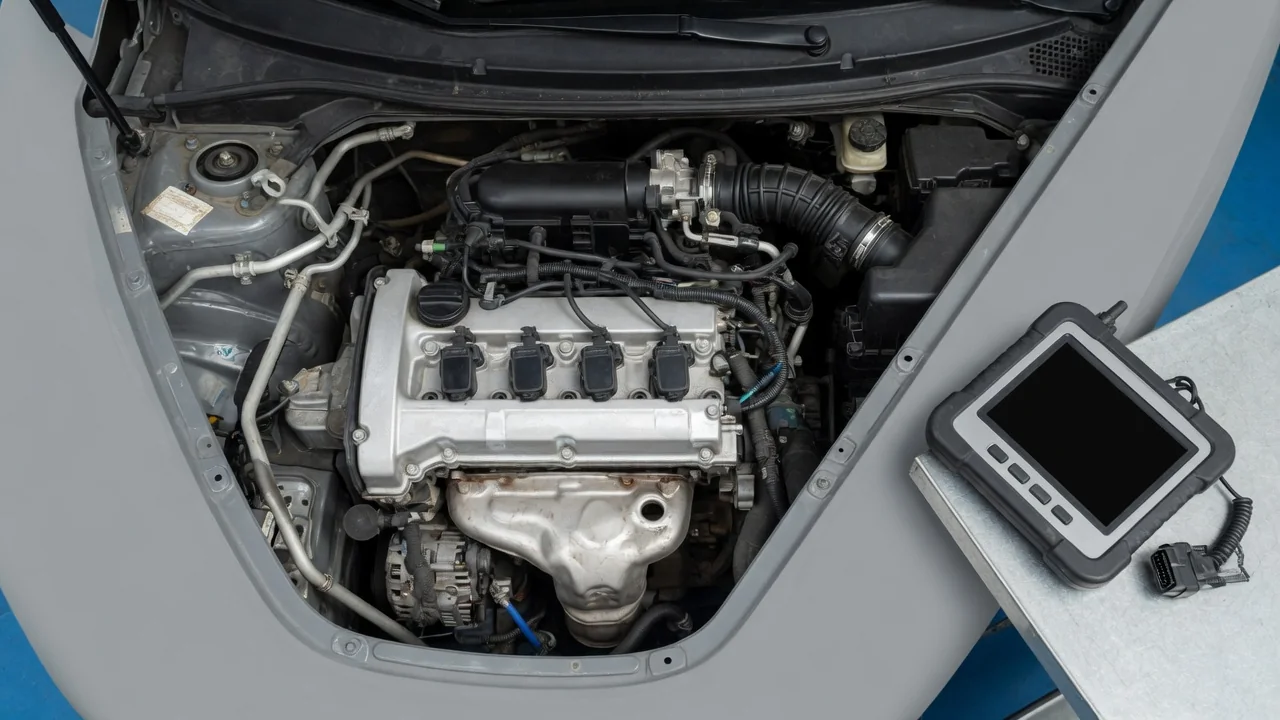
These diagnostic trouble codes belong to the variable valve rocker arm actuator family and can involve actuator control circuits, a rocker arm position sensor, bank identification, and performance or stuck conditions. P2651, P2654, P2659, P2660, and P2667 are not interchangeable, and none of them by itself proves a failed part. Confirm each definition in service information for the exact year, make, model, and engine before interpreting freeze-frame data or planning diagnosis.
Verify the Code Definitions and Engine Layout First
Before assigning meaning to P2651, P2654, P2659, P2660, or P2667, confirm each code definition in the vehicle’s service information for the exact year, make, model, and engine. This set spans actuator control circuit monitoring and rocker arm position sensor faults. It is not limited to a B actuator, bank 2, or a stuck-on condition. Manufacturer-dependent wording can differ, so a standardized label is a starting point rather than a substitute for the published description on that engine.
Bank identification follows the manufacturer’s cylinder numbering, not a universal driver-side or passenger-side rule. Service information is required to locate the designated A or B rocker arm actuator and to separate bank 1 from bank 2. Record all stored and pending codes, freeze-frame data, drivability symptoms, and recent service history before clearing diagnostic information. Those records preserve operating conditions that later circuit or variable valve operation tests will need, and they help a technician compare companion codes without assuming a single shared failure.
P2651: Confirm the B Actuator Performance or Stuck-Off Fault
The commonly standardized description for P2651 is B rocker arm actuator system performance or stuck off, bank 1, and that wording still requires vehicle-specific confirmation. A performance code records that variable valve operation did not meet an expected result during monitoring. It does not establish that the rocker arm actuator itself has failed, that it is mechanically stuck, or that oil pressure is the root cause. Treat P2651 as evidence to interpret against the engine’s published strategy, not as a parts-replacement instruction.
Some vehicles may show rough running, reduced power, or an illuminated malfunction indicator with P2651, but those symptoms are not guaranteed on every engine. Where the system uses hydraulic actuation, documented oil requirements, oil level, and engine oil condition can matter to professional diagnosis, along with electrical control and mechanical movement of the actuator. A technician compares commanded operation with observed response using the correct service procedure. Owner-level checks stop at oil level by the owner’s-manual method and a record of when the concern began.
P2654: Interpret the B Actuator Circuit-High Indication
Confirm P2654 against the vehicle’s service information. A frequent published wording is B rocker arm actuator control circuit high, bank 1. Circuit high is an electrical monitoring result on the actuator control circuit. It does not mean high oil pressure, and it does not prove the actuator is stuck on. P2654 therefore differs from a performance or stuck-off indication such as P2651: it reports how the control circuit was seen electrically, not how the valvetrain mechanically behaved.
Possible contributors include wiring damage, a connector issue, an internal actuator electrical fault, or a control-module monitoring problem. None of those possibilities should be ranked by likelihood, and none justifies immediate replacement. Professional circuit testing uses the correct wiring diagram and manufacturer specifications for that engine. Owners should not probe terminals, install jumper wires, or apply direct power to the actuator. Wiring connector inspection with the engine off and cool can note obvious damage, but electrical measurements belong with a qualified technician.
P2659: Locate the A Actuator Circuit on Bank 2
P2659 is frequently published as A rocker arm actuator control circuit high, bank 2, once the vehicle’s service information confirms that definition. Unlike P2654, which is commonly associated with the B actuator on bank 1, P2659 points to the A actuator control circuit on bank 2. Bank identification and A versus B designation must come from the manufacturer’s cylinder numbering and component maps. Do not name a driver-side or passenger-side location until service information verifies where that actuator sits on the engine.
Companion codes such as P2651, P2660, or P2667, together with freeze-frame data, can show whether the concern appeared on one bank, during a particular load, or after recent service. Those clues guide testing; they do not establish a shared root cause. Professional evaluation of circuit integrity, connections, and commanded variable valve operation should come before authorizing parts replacement. A circuit-high result on bank 2 can share wiring-harness routes with other actuators, so swapping a rocker arm actuator without confirmed circuit evidence can leave the original monitoring fault in place.
P2660: Check the B Actuator Circuit/Open Definition
Verify P2660 in applicable service information; a frequent published wording is B rocker arm actuator control circuit/open, bank 2. That code concerns the monitored control circuit for the B actuator on bank 2. An open-circuit indication does not independently establish a mechanical failure, a stuck rocker arm, or an oil-pressure problem. It reports that the control path did not look electrically complete during monitoring, which is a different finding from the performance character of P2651 and from the circuit-high character of P2654 or P2659.
A disconnected connector, a damaged harness, or an internal electrical fault in the actuator can produce an open-circuit result, but each possibility needs evidence. That is especially relevant when the concern follows recent engine or wiring work. With the engine off and cool, an owner may look for visible damage or a loose connection at the accessible connector. Electrical measurements, continuity testing, and commanded component activation belong with a qualified technician using the published diagram. Do not apply power directly to the actuator or disturb terminals in a way that can create a new open.
P2667: Verify the Position-Sensor Fault and Decide What to Do Next
P2667 requires vehicle-specific verification because its commonly standardized description is A rocker arm actuator position sensor circuit low, bank 1. That is a sensor-circuit indication, not a restatement of the B-actuator performance, circuit-high, or circuit-open codes on either bank. A low reading on the rocker arm position sensor circuit does not prove low oil pressure, a stuck rocker arm, or a failed actuator. It reports how the sensor circuit was monitored electrically and must be interpreted with the engine’s published sensor strategy and freeze-frame data.
For this code set, document symptoms, check engine oil only by the owner’s-manual procedure, and arrange professional diagnosis. An oil change or a code reset is not a confirmed repair. If the malfunction indicator flashes, or if severe rough running, stalling, loud mechanical noise, or an oil-pressure warning appears, stop safely and arrange assistance. Confirmation of repair for P2651, P2654, P2659, P2660, or P2667 requires the applicable professional verification procedure after the underlying circuit, sensor, oil, or mechanical condition has been identified with evidence rather than assumed from the code number alone.