P2635, P2636 and P2539: Fuel Pump Flow and Pressure Sensor Faults
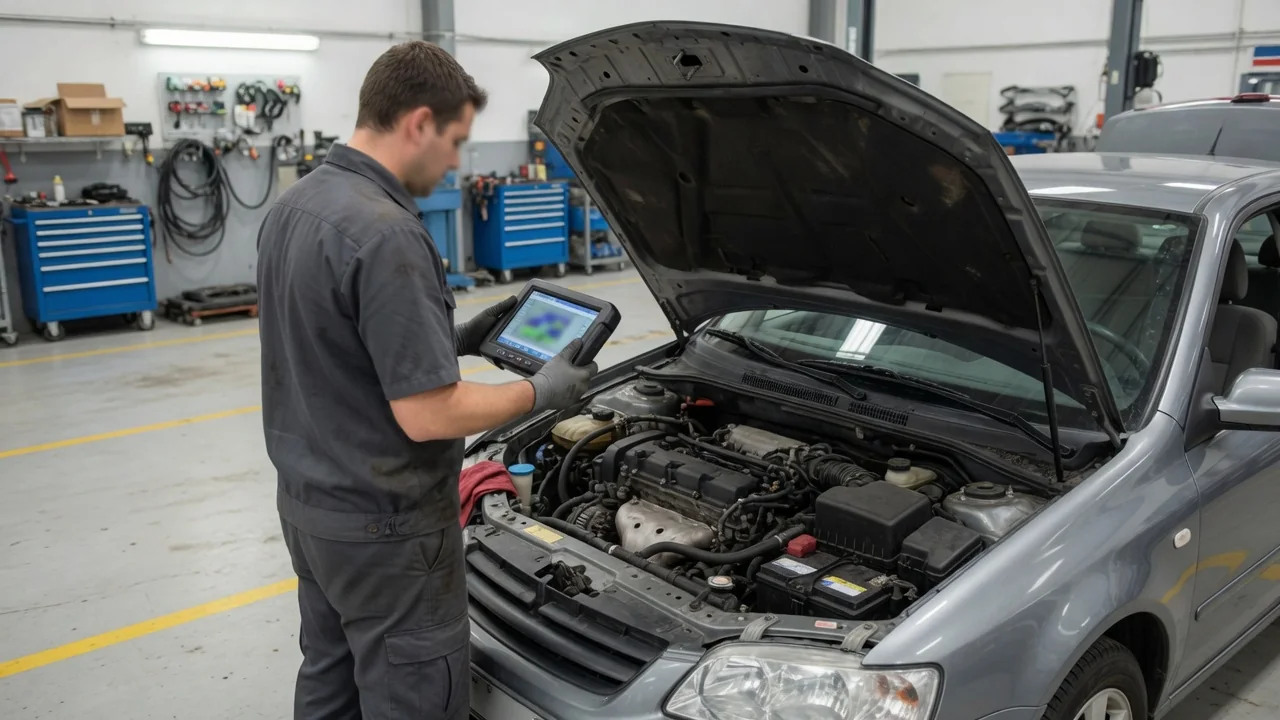
P2635, P2636, and P2539 are diagnostic trouble codes that point toward fuel delivery performance or a low-pressure fuel sensor circuit issue. A P2635 code typically concerns fuel pump A low flow or performance, while a P2636 code refers to fuel pump B. A P2539 code involves the low-pressure fuel sensor circuit range or performance. These findings describe monitored conditions, not a finished diagnosis, and they should be confirmed with vehicle-specific service information.
Verify What P2635, P2636 and P2539 Mean for the Vehicle
On many scan tools, P2635 is described as fuel pump A low flow or performance, P2636 as fuel pump B low flow or performance, and P2539 as a low-pressure fuel system sensor circuit range or performance fault. Those labels are useful starting points, not universal definitions. Diagnostic criteria, enable conditions, and wording can change with year, make, model, and engine, so the exact meaning of a P2635 code, P2636 code, or P2539 code must be verified in the service information for that vehicle before the result is interpreted.
The letters A and B are diagnostic designations. They do not, by themselves, tell you which physical pump, module, or circuit is involved, or where those parts sit in the tank, engine bay, or fuel rail. Vehicle-specific diagrams and component identification are required to map each designation to hardware. A stored code reports a detected operating or circuit condition under the control module's monitoring rules. It does not establish that a pump or sensor has failed or that replacement is the next step.
Symptoms That Affect Driving and When to Stop
A fuel pump low flow or sensor circuit range/performance concern can show up as hard starting, extended cranking, hesitation, reduced power, stalling, or a warning light. Some vehicles store the code with little or no noticeable drivability change, especially if the condition was brief or occurred under a specific load or temperature. Power loss and delayed starts are consistent with inadequate fuel delivery, but they can also appear with ignition, air-metering, or other control issues, so the symptom list only describes what a driver might notice.
Symptoms alone cannot identify whether a pump, filter, sensor, wiring fault, or another system is responsible. If the engine stalls repeatedly or power loss makes the vehicle difficult to control, stop in a safe location and arrange assistance rather than continuing to drive. A strong fuel odor or visible leakage is a separate reason to shut the vehicle down and seek professional help. Do not inspect, loosen, or open fuel connections; pressurized fuel can spray and ignite.
What Can Trigger P2635 Fuel Pump A Low Flow/Performance
Where the fuel system design supports it, a P2635 fuel pump A low flow or performance result can follow a restricted filter or pickup, inadequate fuel in the tank or supply line, a weak pump, or a restriction or leak in the delivery path. The control module is comparing observed delivery behavior with expected fuel delivery performance, so a clogged screen, collapsing hose, or underperforming pump can all produce similar monitored results. Those possibilities still have to be confirmed against the layout and service tests for that vehicle.
Inadequate fuel pump electrical supply, high resistance in power feeds, poor grounds, and pump-control faults can also reduce output without the pump itself being worn out. If the vehicle uses sensor feedback to watch fuel delivery, an inaccurate pressure or flow-related signal can make a healthy pump look as if it has low flow. Evidence of an actual delivery or control problem is required before recommending pump replacement. Do not assume the filter is a separately serviceable part; many assemblies combine the pump, pickup, and strainer.
How to Investigate P2636 Fuel Pump B Low Flow/Performance
A P2636 code should not be diagnosed until the component labeled fuel pump B is identified for that year, make, model, and engine. Pump B may be a second in-tank unit, a transfer pump, a stage within a module, or another designated circuit, depending on the manufacturer. Assuming it is the passenger-side tank pump, a high-pressure pump, or a universally interchangeable replacement part can send testing to the wrong hardware. Confirm its role and location from service information, then consider restrictions, inadequate supply, pump performance, and electrical control problems inside that confirmed layout.
Related codes and the conditions captured when the fault set help a technician choose the right path. Freeze-frame data can show engine speed, load, temperature, fuel level, and commanded fuel pressure at the moment the P2636 fuel pump B low flow or performance condition was detected. A companion P2539 code or other sensor-circuit results may shift attention toward signal quality rather than pump output. Matching those recorded conditions during testing is more useful than replacing parts based on the code description alone.
Why P2539 Calls for Sensor and Circuit Checks
A P2539 code is a sensor circuit range/performance fault. It concerns whether the low-pressure fuel sensor signal stayed within the plausibility window the control module expects under its monitoring criteria, not a simple open or short by itself. A failing sensor, damaged connector, corroded pins, wiring resistance, or a problem with reference voltage or ground can all push the reported value outside that expected behavior. Because the module is judging the signal, circuit integrity has to be considered before the sensor is condemned.
Actual fuel pressure problems can still belong in the investigation when the manufacturer's procedure says to compare the sensor report with a measured value or with commanded fuel pressure. A restricted supply, weak pump, or control issue may produce a signal that looks implausible even if the sensor is intact. Professional confirmation of signal accuracy and circuit integrity is required before attributing the fault to the sensor or the fuel pump. The code is evidence of a monitored mismatch, not proof that either part has failed.
Safe Observations and Professional Fuel Pressure Verification
Before clearing anything, record every stored and pending code, its status, available freeze-frame data, fuel level, and the conditions that produced hard starting or power loss. Owner checks should stay limited to scan-tool readings and accessible visual inspection with the vehicle parked and the engine off. Do not open fuel lines, bypass pump controls, or improvise a pressure test. Scan-tool pressure values are sensor reports. A reading that looks close to commanded fuel pressure does not, by itself, confirm adequate fuel flow or prove the low-pressure fuel sensor is accurate.
A shop should verify fuel delivery with vehicle-approved equipment, the published pressure specifications for that application, sensor-signal checks, and electrical testing of the fuel pump electrical supply and grounds. Pressure and flow are related but not the same: a system can hold pressure with restricted volume, or show flow while the sensor signal is wrong. After work is completed, the original symptoms and the conditions that set P2635, P2636, or P2539 must be confirmed as gone. A cleared warning light is not proof the fault is resolved.