P2568, P2570 and P2571: Ozone Catalyst Sensor Code Diagnosis
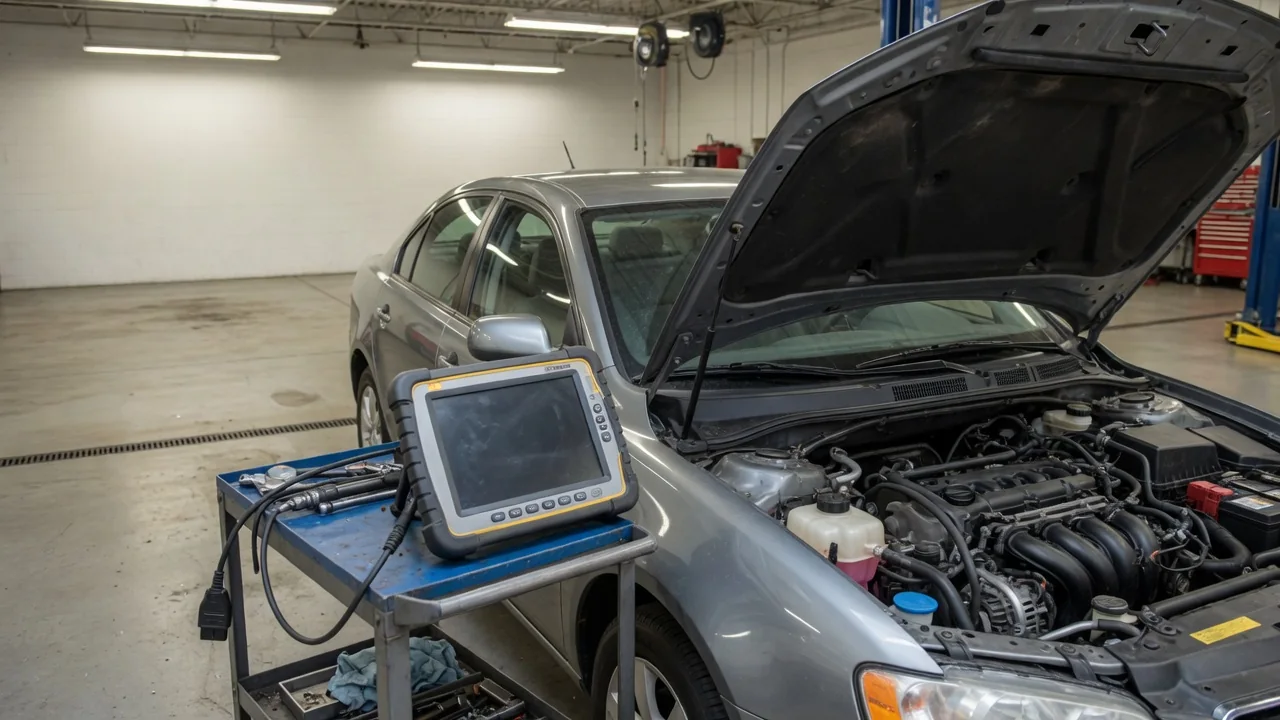
A P2568 code can appear on vehicles equipped with a direct ozone reduction catalyst, where a dedicated sensor monitors temperatures related to emissions performance. The scanner may also show P2570, P2571, or even a nearby P2580 code, each requiring its own definition. Before replacing any part, confirm the exact wording and vehicle application, because generic code readers can mislabel deterioration sensing as a conventional catalyst temperature sensor circuit.
Verify the Code Definition and Ozone Reduction Equipment
Start diagnosis by recording the year, make, model, engine, and full scan tool description for P2568, P2570, or P2571. Many OBD-II definitions are generic, but manufacturers may apply these codes only to vehicles with a direct ozone reduction catalyst. If the vehicle does not have that technology, the stored code could point to a different circuit, so matching the VIN and calibration is the first step.
The terminology matters: a catalyst temperature sensor can be a thermistor used by the engine controller, while a deterioration sensor may generate a signal based on catalyst chemistry or accumulated ozone exposure. Both can produce range, high-circuit, or intermittent findings. Confirm the component is actually present by checking the underbody catalyst assembly and consulting the factory service information before discussing sensor locations or test values.
P2568: Understanding a Range or Performance Finding
A verified P2568 finding generally means the monitored signal does not match the expected range or performance envelope. The controller may be seeing a voltage that is plausible in itself but inconsistent with exhaust temperature at that moment. Causes can include a sensor that has drifted, high resistance in a connector, or an operating condition such as a long idle that exposes a weak signal path.
Because this is a rationality test, no single code should be read as proof that the direct ozone reduction catalyst has deteriorated. A biased thermistor, a partly unplugged connector, or a wiring harness that changes resistance with heat can all create similar data. Replacing the catalyst or sensor without checking the circuit ignores the way range codes are set.
P2570: What a Circuit-High Finding Can Establish
Where the definition for P2570 is confirmed, a circuit-high code indicates the sensor signal voltage is above the upper limit expected by the control module. In many thermistor-based designs, high voltage corresponds to a cooler reading, which can be caused by an open circuit, a disconnected sensor, or high resistance in the wiring rather than an actual hot catalyst.
Connector corrosion, a broken ground return, or a wiring rub-through can produce the same electrical signature under different conditions. The correct next step is to compare live data against the manufacturer's wiring diagram and specified test points. Only after proving the harness and connector are sound should the sensor itself be considered.
P2571: Investigating an Intermittent or Erratic Signal
An intermittent or erratic P2571 requires careful record-keeping before clearing anything. A single inspection may show a perfectly normal signal, but the code may have been stored during a specific warm-up cycle, a wet road, or a momentary harness movement. Freeze-frame data is useful because it captures engine speed, load, and temperature when the fault was recorded.
The driver may notice only a warning light, with no change in power or fuel economy. That does not make the code harmless, but it means the vehicle can often be driven carefully to a repair facility while observing basic caution. Professional monitoring with a scope or a high-speed scan tool can catch short dropouts that a basic code reader misses.
Keep P2580 as a Separate Diagnostic Lead
P2580 may appear near P2571 in a scanner list, but it is a separate code with its own vehicle-specific definition. The numeric proximity does not imply a shared ozone sensor problem. Before grouping codes, preserve the exact stored description and verify whether P2580 is present on the same vehicle; different modules can set similar-looking faults.
If P2580 is stored alongside the P2568 family, a technician should test each circuit independently. A shared ground, a damaged connector, or a recent repair could set multiple codes, but only measurement can confirm that. Because P2580 falls outside the direct ozone reduction sensor scope, its full diagnostic tree is best left to the specific service manual.
Safe Observations and Professional Diagnostic Next Steps
Before any service, write down the warning light behavior, recent work performed, and the driving conditions when the light first appeared. Do not clear the codes or disconnect the battery until freeze-frame data has been captured or photographed, because that recording may show whether the fault occurred during warm-up, cruise, or a particular ambient temperature.
An owner inspection can be limited to visible damage under the vehicle with the engine off and cool. Do not reach near rotating fans, disconnect sensors, or probe electrical terminals. If the vehicle shows overheating, smoke, severe power loss, or a stop warning, pull over safely and arrange assistance rather than attempting to continue driving with a stored catalytic converter-related code.