P2533, P2534, P2535 and P2538: Ignition Run/Start and Accessory Circuit Codes
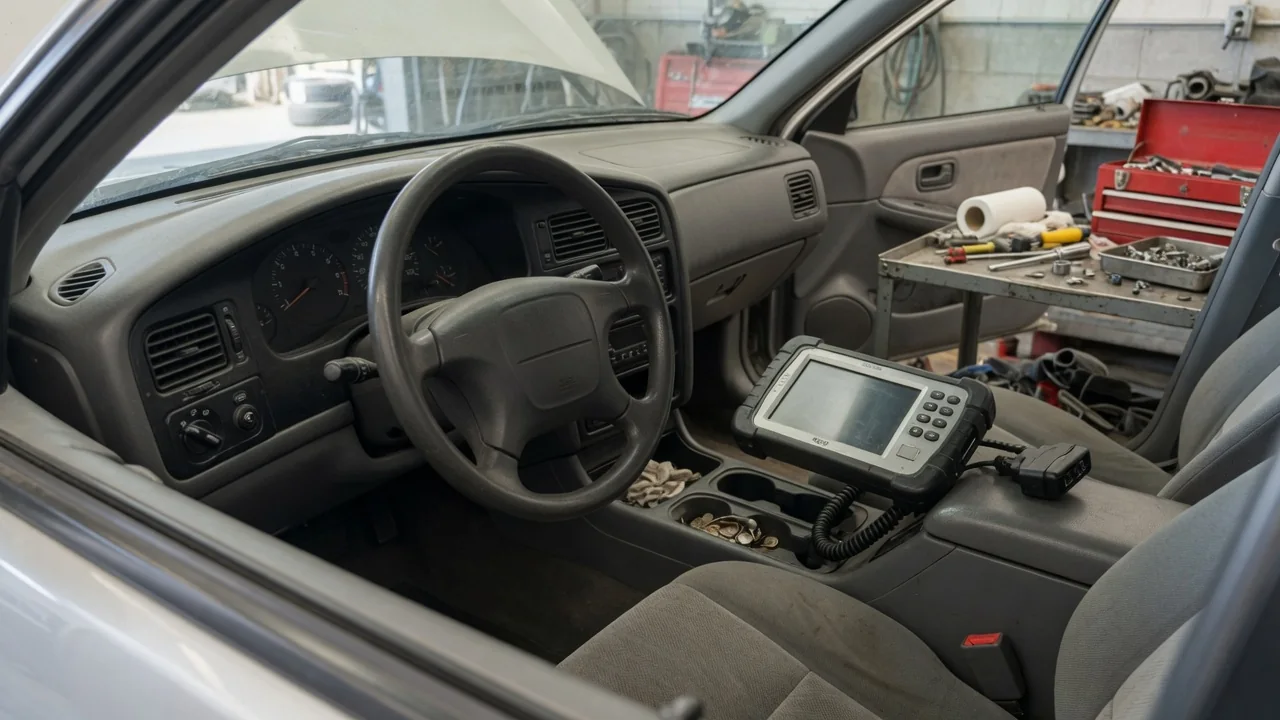
Codes P2533, P2534, P2535, and P2538 relate to ignition switch run/start and accessory position circuits. A stored code indicates a monitored electrical condition such as unexpected circuit voltage, not automatic proof that the ignition switch has failed. Symptoms can include a no-start condition, stalling, or lost accessory power. Diagnosis starts with vehicle-specific service information, freeze-frame data, wiring diagrams, battery connections, and fuse inspection before any parts are replaced.
Confirm the Vehicle-Specific Code Meaning Before Diagnosis
Before interpreting P2533, a P2534 code, a P2535 code, or P2538, confirm the exact definition and setting conditions in service information for that vehicle's year, make, model, and powertrain. Manufacturer-dependent codes describe a monitored signal that may be wired, labeled, or sampled differently from one platform to another. P2533 belongs in the run/start position circuit discussion, yet the monitored signal and circuit layout still require vehicle-specific confirmation. Treating a generic description as a universal meaning can send testing toward the wrong circuit or the wrong module.
A circuit code identifies a monitored electrical condition, such as voltage outside the expected range while the ignition is in a defined state. That finding does not establish that the ignition switch needs replacement, because open wiring, poor battery connections, a blown fuse, or an intermittent electrical fault can produce the same result. Record every stored and pending code, the reporting module, and available freeze-frame data before clearing anything. Those snapshots show switch state and circuit voltage when the fault was logged and keep later tests aligned with the actual event.
P2534: Understanding a Confirmed Run/Start Circuit Low Fault
After the vehicle-specific definition is confirmed, a P2534 circuit-low description means the monitored run/start position circuit signal fell below the module's expected threshold under specified conditions. The control module compares that signal with the commanded switch state and flags the code when the voltage stays too low long enough to meet the setting conditions. Supply problems, corroded connections, damaged wiring, and switch contact wear are diagnostic possibilities, not conclusions. Each of those paths can drop circuit voltage, so testing must separate a weak feed from a high-resistance ground or a switch that never completes the run/start path.
A low-circuit P2534 code alone cannot identify a failed battery, an open fuse, or a defective ignition switch. Freeze-frame data and the wiring diagram show whether the fault occurred during cranking, after the engine was already running, or during an intermittent loss of electrical power. Note whether other modules lost communication at the same moment, because a shared feed can pull several circuits low together. Those observations narrow the test plan to the actual supply, connector, or switch output that failed to hold the expected voltage.
P2535: Understanding a Confirmed Run/Start Circuit High Fault
Once the vehicle-specific meaning is confirmed, a P2535 code describes a circuit-high fault: the monitored run/start signal stayed above the module's expected range while the switch state indicated a different condition. Unexpected voltage can come from a short to another power source, a stuck switch contact, a connector that bridges adjacent terminals, or wiring that no longer follows the intended path. The circuit diagram determines which of those tests apply, because the run/start feed may be a simple switched battery line on one vehicle and a multiplexed input on another.
The P2535 code does not by itself establish excessive charging voltage or a defective control module. A technician compares recorded switch-state data with electrical measurements at the relevant terminals, looking for voltage where the diagram shows none should be present, or for a signal that never drops when the key leaves the run/start position. Only after those measurements locate the fault should parts be recommended. Replacing a module or an ignition switch without that confirmation often leaves the original unwanted voltage in the harness.
P2538: Checking the Accessory Circuit Definition and Symptoms
Verify the vehicle-specific P2538 definition before treating it as an ignition-switch accessory-position circuit fault or assuming a low-voltage qualifier. Some platforms use P2538 for an accessory circuit voltage condition; others apply a different label to a related input. The accessory position circuit tells modules that the switch has left off but has not yet commanded start or run, and the devices it actually powers depend on that vehicle's electrical layout. Do not assume radio, blower, or window circuits share that feed unless the diagram shows they do.
Record whether accessory power behaves unexpectedly during normal switch operation and whether starting or running symptoms occur at the same time. An isolated accessory malfunction, such as a dead outlet or an inoperative accessory relay, does not prove that the ignition switch caused the stored P2538. A blown accessory fuse, a damaged harness near the column, or an intermittent electrical fault on a shared feed can produce the same code while the run/start circuit still works. Matching the symptom to the freeze-frame switch state keeps diagnosis on the circuit that actually failed.
Starting Trouble, Stalling and When to Stop Driving
These codes do not each cause every symptom. A vehicle may show intermittent no-crank, crank without start, stalling after the engine is running, or a sudden loss of accessory power, depending on which circuit dropped out and when. Document whether the engine fails to crank or cranks without starting, which warning lights appear, and whether the event happened at key-on, during cranking, or while driving. That timing, together with freeze-frame data, distinguishes a run/start feed that never energizes from an accessory circuit that fails only after the engine is already running.
If the engine stalls or electrical power repeatedly drops out while driving, stop in a safe location and arrange professional assistance rather than continuing. Loss of the run/start signal can shut down fuel and ignition while the vehicle is in motion, and a repeating dropout is not a condition to drive through. Treat smoke, a burning smell, or unusual heat near electrical components as reasons to stop operating the vehicle immediately and seek assistance. Those signs can indicate a shorted feed or overloaded circuit that may worsen if the ignition remains on.
Safe Observations and the Tests That Establish the Cause
Owner checks should stay limited to accessible visual observations: obvious battery-terminal corrosion, visible cable damage, and notes about recent electrical work. Do not disturb wiring or steering-column components, and do not probe live circuits. Use the owner's manual to identify relevant fuses and inspect them, remembering that a fuse that looks intact cannot establish circuit integrity by appearance alone. Never bypass a fuse or fit a higher rating. A fuse that has opened is evidence of a problem downstream, not a reason to restore current without finding the cause.
Professional diagnosis uses the correct wiring diagram to check battery condition, power feeds, grounds, connectors, switch outputs, and voltage drop under load. Steering-column disassembly, live-circuit probing, and intermittent wiring diagnosis require appropriate equipment and expertise because a misplaced probe can damage modules or create a new short. After a verified repair, confirm normal operation through the switch positions that originally set the code and perform a follow-up code check. Clearing codes without that confirmation is not a fix; the same P2533, P2534, P2535, or P2538 condition will return if the circuit fault remains.