P2500–P2504: Charging Voltage and Generator Lamp Circuit Codes
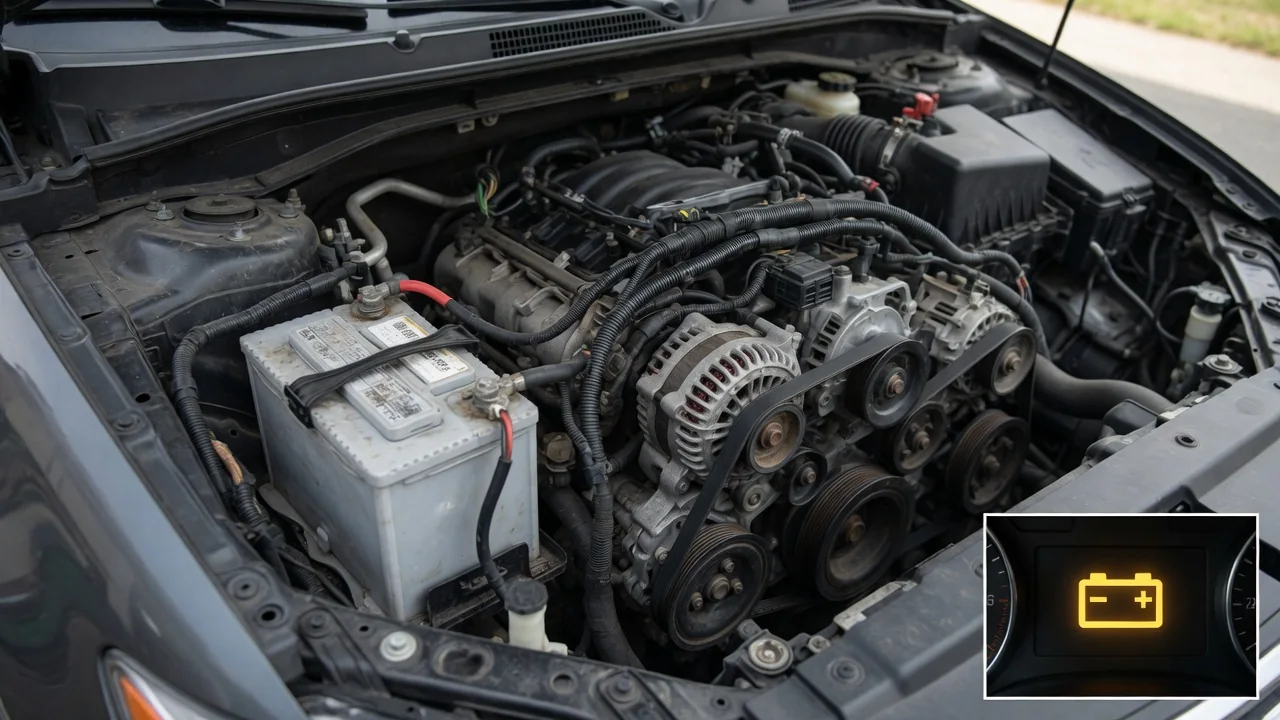
Codes P2500 through P2504 point to charging voltage and generator lamp circuit monitoring, not a ready-made parts list. Whether the scan tool shows a P2503 code, P2504, P2500, P2501, or P2502, each definition and threshold is vehicle-specific and may describe charging system voltage or a generator L-terminal concern. Treat these stored faults as evidence to interpret alongside battery state of charge, the battery warning lamp, and operating conditions before replacing the battery or alternator.
Verify the Vehicle’s Code Definitions and Interpret P2502
Before interpreting P2502, P2500, P2501, P2503, or P2504, confirm each code's definition and diagnostic criteria for the vehicle's year, make, model, and powertrain. Manufacturer-dependent charging monitors do not share one universal meaning, so a scan-tool label is only a starting point. P2502 is commonly described as charging system voltage, yet that title alone does not establish whether voltage was low or high and does not identify a failed voltage regulator, generator, battery, or wiring path.
Stored, pending, and history status, plus any accompanying codes, help show whether the P2502 code was a one-time event or a repeating charging concern. Freeze-frame data captures engine speed, electrical load clues, and battery-related values at the moment the monitor failed, which is more useful than a single later voltage reading. Modern computer-controlled charging varies commanded charging voltage with temperature, battery state of charge, and operating conditions, so expected charging system voltage is not a single number and must be compared with vehicle-specific specifications.
P2500 and P2501: Generator L-Terminal Circuit Faults
After vehicle-specific verification, P2500 is commonly described as generator lamp or L-terminal circuit low, and P2501 as generator lamp or L-terminal circuit high. A P2500 code or P2501 code reports a monitored signal that is low or high relative to that vehicle's circuit criteria. Circuit low or high describes the generator L-terminal signal the control module is watching; it does not independently prove that battery charging voltage itself is low or high, and it does not by itself confirm a failed alternator.
On many designs the L-terminal participates in the generator warning or control circuit that drives the battery warning lamp or communicates charging status, but circuit layout is not the same on every vehicle. Open wiring, corroded connectors, a missing circuit supply, a damaged voltage regulator, or a control-module input fault can all disturb the monitored signal. Electrical grounds and voltage drop on related circuits can also make the reading look abnormal. None of those possibilities should be assumed from the code number alone.
P2503: What Low Charging System Voltage Can Indicate
Once its application and setting criteria are confirmed for that vehicle, P2503 is commonly labeled charging system voltage low. A P2503 code means the monitor saw charging system voltage below the calibrated threshold under the conditions it was watching, not that a particular part has already failed. Drivers may notice a charging warning, weak cranking, dim lighting, odd electrical malfunctions, or, if the battery continues to discharge, eventual stalling. Symptoms can also be absent if the event was brief or if the battery still had enough reserve.
Low charging system voltage can follow reduced alternator output, an accessory drive belt that is slipping, missing, or damaged, a battery that cannot hold a useful state of charge, poor cable connections, faulty electrical grounds, or an electrical load that outruns available output. A discharged battery or one low voltage reading cannot identify the root cause without operating context. Idle versus higher engine speed, headlights and blower load, commanded charging voltage, and whether the fault occurred after a restart all change how the same number should be interpreted.
P2504: Investigating a High Charging Voltage Report
After the vehicle-specific definition and threshold are verified, P2504 is commonly described as charging system voltage high. The P2504 code indicates the monitor recorded voltage above that vehicle's high limit under the conditions it samples; it does not assign a universal cause. Possible contributors include regulation problems, a voltage-sensing error, damaged wiring, poor grounds that distort the sensed value, or a charging-control fault. The voltage regulator, generator, control module, and related harness can all participate, so the code is a reason to investigate rather than a parts verdict.
A high charging report may coincide with a battery warning lamp, unusually bright or fluctuating lights, a hot-smelling or overheating battery, or other electrical malfunctions, yet those symptoms are not diagnostic and can appear for unrelated reasons. Temperature, battery condition, the vehicle's charging strategy, and measurement accuracy all affect whether a reading truly represents overcharging. Commanded charging voltage can rise during recovery after a deep discharge, so a snapshot without freeze-frame data and specified test conditions can mislead anyone who treats one high number as proof.
Safe Observations Before Replacing the Battery or Alternator
Before any parts decision, record warning messages, starting behavior, which electrical loads were on, and whether symptoms followed a jump-start, battery replacement, or recent electrical work. Those notes later help a technician compare freeze-frame data with real-world conditions. With the engine off and cool, look from a safe distance for a cracked or leaking battery, obvious corrosion at terminals, damaged visible wiring, and an accessory drive belt that appears missing, frayed, or off the pulleys. Do not touch hot, moving, or energized components during this visual pass.
A charging warning lamp or battery warning lamp signals a system concern; it does not identify whether the battery, alternator, voltage regulator, generator L-terminal circuit, or wiring needs replacement. P2500 through P2504 can share similar dash indications while pointing to different monitored conditions. Disconnecting a battery with the engine running is unsafe because it can damage electronics and create an arc. Keep hands and tools away from belts and fans, and leave energized circuit probing, including L-terminal and voltage-drop measurements, to trained personnel.
When to Stop Driving and What Professional Testing Should Establish
If the vehicle stalls, shows severe electrical malfunction, produces smoke, or shows signs of an overheating or damaged battery, pull over safely and arrange assistance rather than continuing to drive. Do not handle a swollen, leaking, or hot battery. A vehicle with inadequate charging may stop running unpredictably once remaining battery energy is used up, so remaining driving distance cannot be inferred from a P2503, P2504, or related generator lamp circuit code. Treat those situations as a charging-system emergency, not as a wait-and-see dashboard message.
Professional diagnosis should establish battery condition, charging output under specified conditions, cable and ground voltage-drop results, and, when P2500 or P2501 is stored, vehicle-specific L-terminal or control-circuit integrity. Testing must compare actual charging system voltage with commanded charging voltage and freeze-frame data rather than guessing from a parked reading. Replacement is justified only when evidence links the fault to a component. After any repair, charging operation should be verified and the code checked to see whether it returns under the relevant load, speed, and temperature conditions.