P2452–P2456 DPF Pressure Sensor Codes: Meaning and Diagnosis
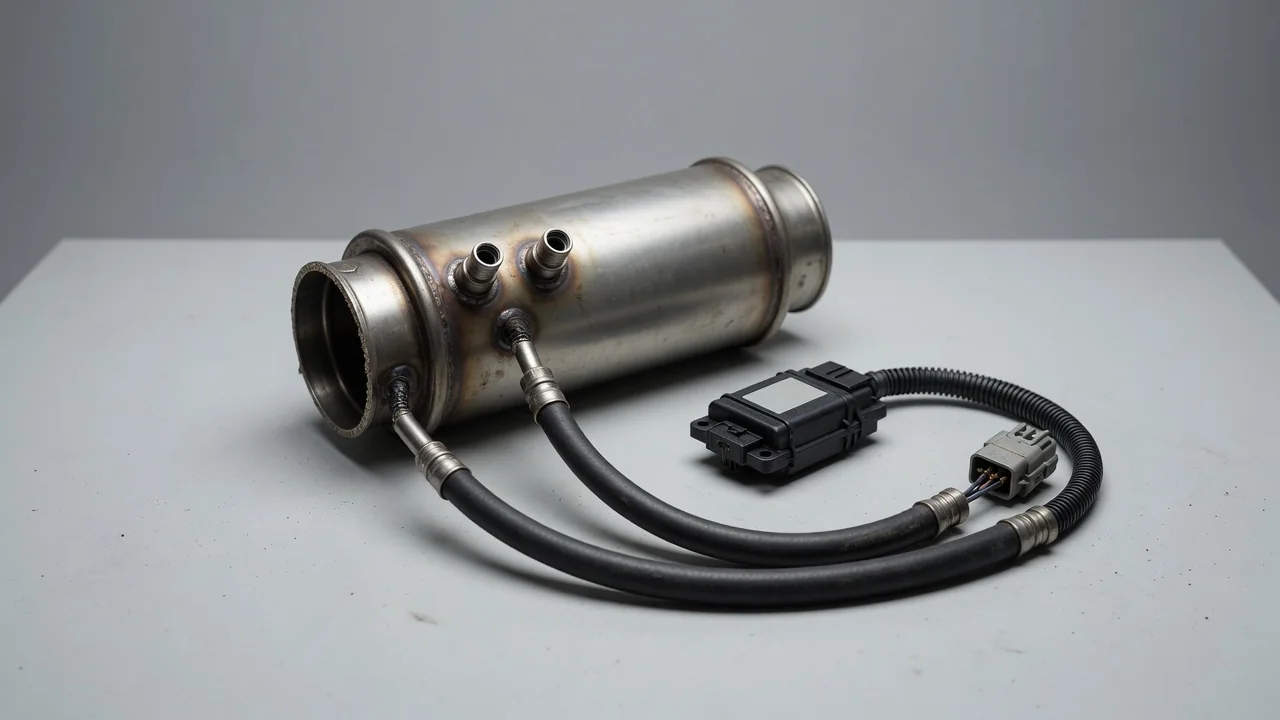
Diesel particulate filter pressure sensor codes P2452, P2453, P2454, P2455, and P2456 all point to how the engine controller reads pressure across the DPF. A stored p2453 code or related family entry is a diagnostic clue about the DPF differential pressure sensor, its pressure sensing hoses, or the electrical path, not a verdict that the filter is blocked or the sensor has failed. Vehicle-specific service information still decides what each code means.
What P2452–P2456 Say About the DPF Pressure Signal
Before interpreting any of these codes, confirm the exact description, sensor designation, and diagnostic criteria in service information for the vehicle's year, engine, and manufacturer. Layout of the DPF differential pressure sensor and its sensing connections varies by application. In general, the sensor and those connections help the engine controller compare pressure on either side of the diesel particulate filter so it can judge exhaust restriction and soot loading. That comparison supports decisions about DPF regeneration, but the hardware arrangement is not universal.
This family covers several electrical and plausibility categories. A circuit fault, a range/performance complaint, a low-input or high-input condition, and an intermittent or erratic signal each describe a different monitoring result. A stored pressure sensor code alone does not establish a failed sensor, excessive soot loading, or a blocked DPF. The controller has seen a signal it cannot accept under its programmed rules; distinguishing a wiring problem from a restricted filter still requires vehicle-specific tests rather than assuming the part named in the code is the failed item.
P2452: Understanding the Pressure Sensor Circuit Fault
The usual description for a p2452 code is diesel particulate filter pressure sensor A circuit, though that wording must be verified for the application. P2452 typically flags a problem in the electrical path rather than a finished conclusion about filter condition. Connector damage, broken or corroded wiring, a missing or unstable sensor reference voltage, a poor sensor ground, or an internal sensor fault can all disturb the signal circuit. Any of those faults can make the controller lose a usable reading even when exhaust flow through the DPF is normal.
Safe first observations stay limited to what can be seen with the engine off and the exhaust cool. Look at accessible harnesses and connectors for obvious damage, contamination, or loose fit without disconnecting components or probing terminals. Heat, vibration, and road splash around the aftertreatment area make those connections vulnerable, but visual clues are only a starting point. Professional circuit testing with the correct wiring diagram is needed before authorizing sensor replacement, because swapping the sensor will not repair an open, a short, or a missing supply that still sits in the harness.
P2453: Why a Pressure Reading Can Fail Plausibility Checks
A p2453 code is usually described as pressure sensor A circuit range/performance, meaning the reading did not stay within expected bounds under the manufacturer's test conditions. Those criteria must still be confirmed for the vehicle. Obstructed, leaking, kinked, damaged, or incorrectly routed pressure sensing hoses can distort what the DPF differential pressure sensor reports even when the sensor itself is intact. A hose that is pinched, melted, or disconnected changes the pressure the sensing element actually sees, so the controller may treat a plausible electrical signal as an implausible exhaust reading.
Sensor offset, electrical faults in the signal circuit, and genuine exhaust restriction from soot loading can produce similar complaints and must be separated by testing. A technician evaluates live pressure data under specified operating conditions and inspects the sensing path before concluding that the DPF is restricted. Range/performance monitoring exists because the controller expects the differential reading to change in a believable way with load and speed. If the value stays stuck, jumps without corresponding engine conditions, or disagrees with other exhaust information, P2453 can set without proving the filter itself is the failed part.
P2454 and P2455: Low and High Circuit Inputs
After confirming the application, the usual p2454 code description is pressure sensor A circuit low, and the usual p2455 code description is pressure sensor A circuit high. Those labels describe the monitored electrical signal, not independently proven low or high exhaust pressure. A circuit-low result can appear when the signal is pulled toward ground or lost, while a circuit-high result can appear when the signal is pulled toward the supply. Neither outcome, by itself, tells a technician whether soot loading is high or whether DPF regeneration is overdue.
Shorts, open circuits, faults in sensor reference voltage or sensor ground, and internal sensor failures can produce different signal behavior depending on circuit design. Some circuits fail high when the sensor is open; others fail low. Universal pin assignments, voltage thresholds, or conclusions based solely on the code are not reliable. Professional testing against manufacturer specifications is required to decide whether the wiring, the supply, or the sensor is at fault. Until those measurements match the vehicle's diagram and limits, replacing parts on the strength of P2454 or P2455 remains guesswork.
P2456: Tracking an Intermittent Pressure Signal
Intermittent monitoring produces a p2456 code when the pressure sensor A circuit is judged erratic, after vehicle-specific wording and criteria are verified. P2456 often appears when the signal drops out, spikes, or wanders rather than remaining steadily out of range. Loose connections, damaged wiring, moisture intrusion, or an internal sensor problem can cause that behavior. Because the fault may heal when the harness is moved, the engine is cold, or moisture dries, a stationary inspection can look normal even though the controller already stored evidence of an unstable reading.
Record when the warning appears, including weather, engine temperature, and driving conditions, without deliberately trying to reproduce a fault. Freeze-frame data captured at the moment the code set can show load, speed, and related sensor values that a later shop visit cannot recreate. Professional signal monitoring over time helps identify an intermittent problem that is absent during a parked inspection. That approach is more useful than wiggling wires at random, because an erratic DPF differential pressure sensor signal may only appear under heat, vibration, or wet-road splash that a bay inspection does not duplicate.
Symptoms, Driving Decisions, and Evidence Needed for Repair
Possible symptoms include a warning light, reduced power, and disruption of DPF regeneration, though controller responses vary and symptoms may be absent. Preserve stored codes, any accompanying codes, and freeze-frame data before clearing anything; those records show the conditions under which the pressure signal was rejected and help a technician decide whether the complaint is electrical, hose-related, or associated with exhaust restriction. Prompt assessment is appropriate. Follow the owner's manual for warning messages, and stop safely if there is severe power loss, overheating, smoke, or exhaust fumes entering the cabin.
Forced regeneration, sensor bypassing, work on a hot exhaust, and attempts to clear pressure sensing hoses without proper equipment are not appropriate responses to these codes. Regeneration should not be attempted on the strength of P2452 through P2456 alone, because a distorted or missing pressure reading can mislead the controller about soot loading. Repair verification should confirm credible pressure readings, proper sensing-path and circuit operation, and completion of the applicable fault-monitoring checks. Until the signal is stable and believable, treating the DPF as blocked or forcing a regeneration cycle risks the wrong repair.