P2430–P2435 Secondary Air Injection Pressure Sensor Codes
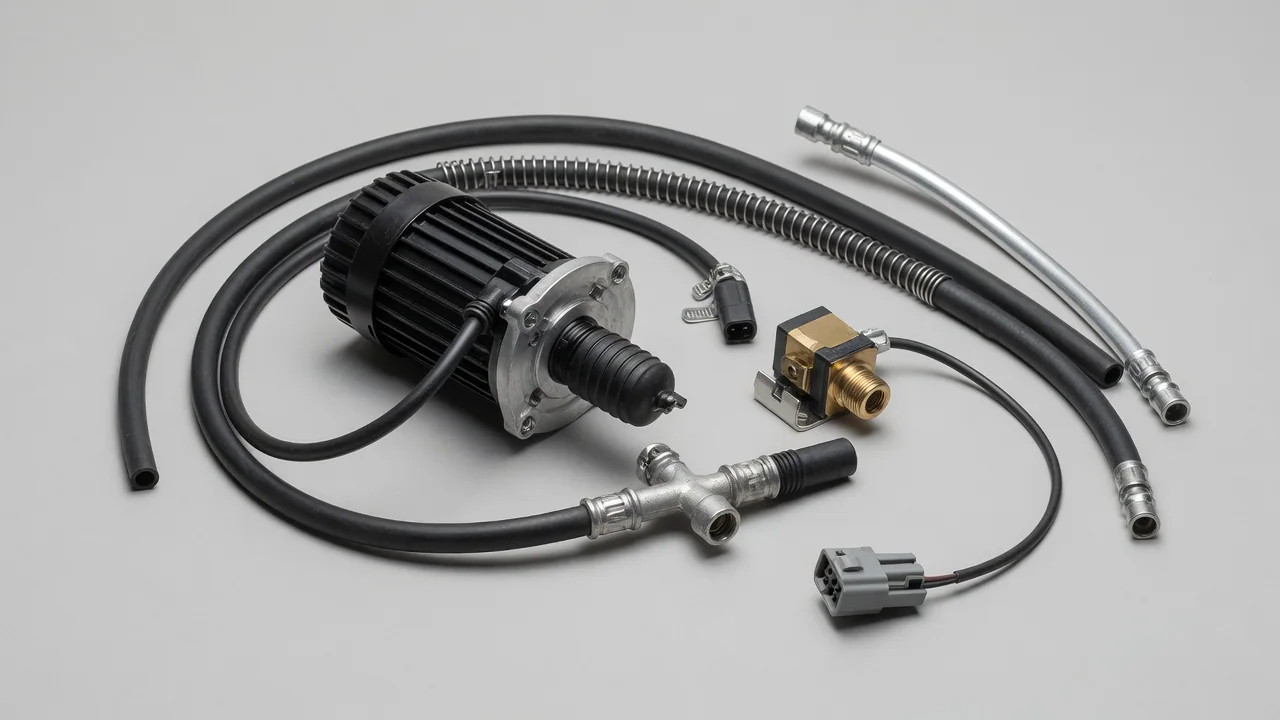
Codes P2430 through P2435 describe secondary air injection airflow and pressure sensor circuit, range, low, and high faults. Related entries such as a P2432 code, P2431, P2433, P2437 code, or companion air injection control circuit codes still require the exact vehicle description. A stored code is evidence to interpret, not proof that the sensor has failed, and bank identification must be confirmed before locating parts.
Verify P2430, P2435, and P2437 Before Locating Components
Before locating any secondary air injection hardware, confirm the exact P2430 code, P2435, and P2437 code text and the published diagnostic path for that year, make, model, and engine. Standard wording identifies P2430 as a bank 1 airflow and pressure sensor circuit fault, P2435 as the matching bank 2 sensor circuit fault, and a P2437 code as a low sensor circuit signal on bank 2. Those generic labels can still differ by manufacturer, so vehicle-specific confirmation is required before the circuit is interpreted.
The airflow and pressure sensor exists to report whether secondary air is being delivered as commanded, not to declare that the sensing element itself has failed. A stored circuit code can originate in wiring, the electrical connector, reference voltage, sensor ground, or an internal sensor problem, and none of those possibilities is proven by the code number alone. Bank identification and component layout also vary. Do not assume sensor location, harness routing, or whether the sensor is a separately replaceable part until the vehicle documentation identifies them.
P2431: Understanding a Range or Performance Fault
A P2431 code on bank 1 is a range and performance fault, meaning the airflow and pressure sensor response failed the controller's expected operating checks rather than simply reporting an open or shorted circuit. That implausible response can come from the sensor itself, from compromised electrical integrity on the signal path, or from actual air delivery that does not match the commanded secondary air injection event. System design determines which of those paths is even possible, so the same P2431 reading does not point to one failed part on every vehicle.
Freeze-frame data shows the engine speed, temperature, and load at which the range check failed, and those conditions should be compared with whether secondary air injection was actually commanded at that moment. A sensor that looks stable at idle can still fail a performance check during a cold-start air pulse, a pump-on event, or a valve transition. Sensor readings and air-system operation therefore need professional confirmation before a sensor, switching valve, or air pump is recommended. Replacing parts from the code description alone can leave the original range fault in place.
P2432: What a Low Sensor Circuit Signal Can Indicate
P2432 is the bank 1 circuit-low description for the secondary air injection airflow and pressure sensor. Low sensor signal voltage is an electrical condition, not a measurement of low air pressure, and it should not be read as proof that the pump is weak or that air is not reaching the exhaust. Possible sources include the signal circuit, a lost or reduced reference voltage, a sensor ground problem, a damaged electrical connector, or an internal sensor fault. No single cause applies to every vehicle that stores this circuit-low result.
An open circuit can pull the reported signal high, low, or out of range depending on how that vehicle biases the sensor circuit, so the effect of an open must be taken from the applicable service information rather than assumed. Owners can look for accessible, visible wiring damage or a loose electrical connector with the engine off and cool. Electrical measurements of sensor signal voltage, reference voltage, and sensor ground belong in qualified testing. Live probing near hot exhaust-mounted air injection parts is not an owner task and can create additional circuit damage.
P2433: Investigating a High Sensor Circuit Signal
A P2433 code identifies a bank 1 circuit-high condition on the secondary air injection airflow and pressure sensor. High sensor signal voltage is not, by itself, proof of excessive air pressure or of a pump that is over-delivering. Testable possibilities include a short to voltage on the signal circuit, a lost or high-resistance ground path, corrosion or pushed-back terminals in the electrical connector, and an internal sensor fault that drives the output toward the upper rail. Those paths must be distinguished with vehicle-specific checks rather than by replacing the sensor first.
Voltage thresholds that define a high circuit, expected sensor signal voltage during commanded air injection, and the pinout of connector terminals come only from the applicable service information. Guessing those values from another engine family can send diagnosis toward the wrong bank or the wrong wire. A technician can compare reference voltage, sensor ground, and the live signal against those published limits, then isolate whether the fault follows the harness or stays with the sensor. Establishing that source before parts replacement prevents a repeat P2433 after an unnecessary sensor change.
When P2257, P2258, or P2260 Appears Alongside Sensor Codes
When a P2257 code, P2258, or a P2260 code appears with P2430 through P2435, treat the group as one secondary air injection investigation rather than as separate failed parts. Those related entries are commonly air injection control circuit faults, but their exact wording, control-circuit designations, and physical locations must be read from vehicle documentation. Do not assume a control-circuit code identifies a particular pump, valve, relay, or engine bank. A control-circuit fault can prevent commanded air-system operation, which then changes the sensor response the controller expects during a system test.
A technician starts from wiring diagrams and code-setting conditions, looking for shared power paths, a common air injection control circuit, or a failed command that would make the airflow and pressure sensor look implausible. If the pump never runs because a control circuit is open, a P2431 range and performance result or a circuit-low or circuit-high reading can be a consequence of missing air rather than a second independent failure. The testing sequence should follow those shared conditions so the first confirmed open, short, or missing command is corrected before sensor replacement is considered.
Symptoms, Safe Observations, and Confirmation of the Repair
An illuminated check-engine light is often the only obvious sign of a P2430, P2431, P2432, or P2433 condition, and an emissions-test failure can follow if the related monitor is not ready or the fault remains stored. Unusual pump noise may be heard only while secondary air injection is commanded, typically during a cold start or a scan-tool activation, and noticeable drivability symptoms may be absent. Record every code, its stored or pending status, and available freeze-frame data before clearing anything. Clearing codes erases that evidence and can reset readiness monitors that an inspection later requires.
Professional diagnosis uses the applicable wiring information, scan data, controlled activation of the air system, and circuit or pressure testing rather than jumper-wire bypasses or live probing near hot exhaust components. Codes alone cannot determine whether the vehicle is safe to drive; severe rough running, a flashing check-engine light, smoke, or a burning smell warrants stopping safely and seeking assistance. After repair, verification must follow the vehicle's specified monitor conditions, including a check for returning P2430 through P2435 codes and readiness status. A warning light that goes out for one trip is not confirmation.