P2423, P2424 and P2425 Codes: Meanings and Diagnostic Next Steps
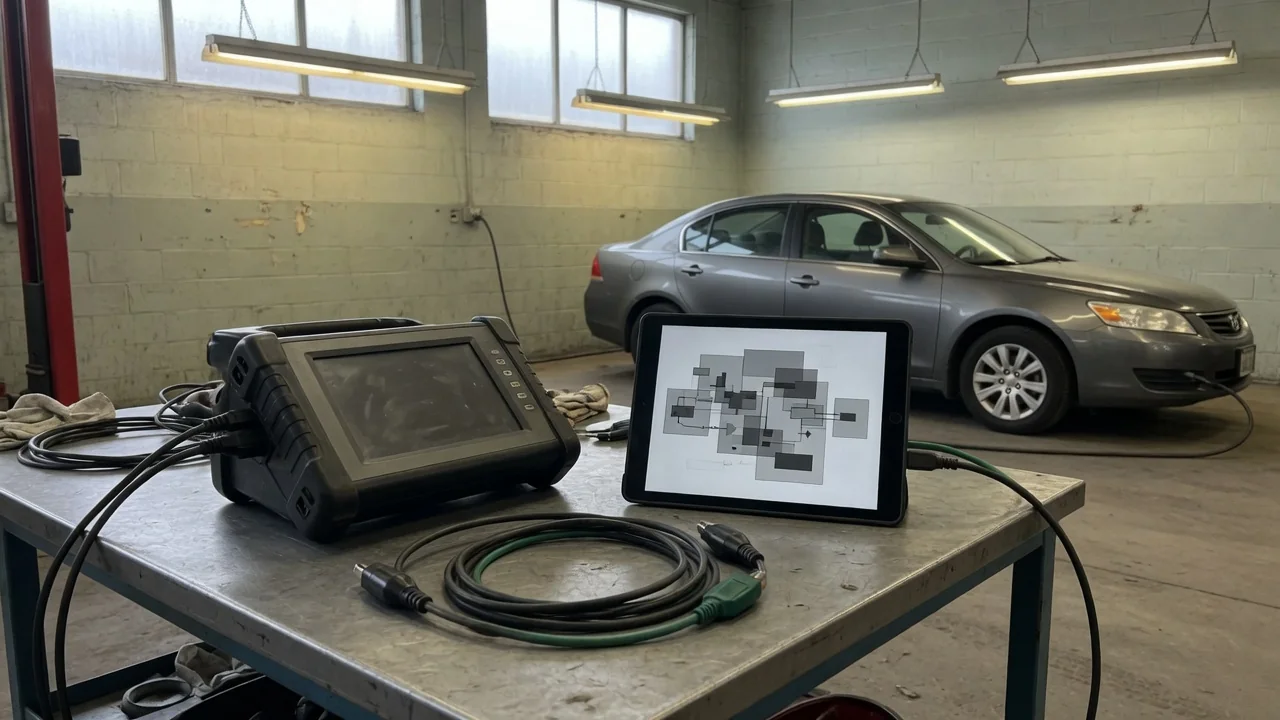
When a scan tool reports P2423, P2424, or a P2425 code, treat each stored number as evidence to interpret, not a parts list. A P2423 code or P2424 result often concerns hydrocarbon adsorption catalyst efficiency on PZEV emissions systems, while P2425 commonly describes an EGR cooling valve control circuit. Confirm the vehicle-specific definition, then use freeze-frame data before replacing hardware.
Verify Each Code’s Meaning for the Vehicle
Before interpreting a P2423, P2424, or P2425 result, confirm the year, make, model, engine, and emissions configuration, then read the service definition written for that vehicle. On many applications P2423 identifies hydrocarbon adsorption catalyst efficiency below threshold on bank 1, but bank labels and monitored hardware are not universal. PZEV is an emissions certification used on some vehicles that store these codes; it does not prove every example has the same catalyst, sensors, or ventilation hardware.
The three consecutive numbers also do not establish a shared ventilation-system fault. A technician who assumes P2423, P2424, and P2425 all describe hydrocarbon adsorption catalyst ventilation control can chase the wrong circuit. Manufacturer-dependent definitions require vehicle-specific confirmation, including which bank is monitored and whether the PZEV emissions system even uses a hydrocarbon adsorber. Until that service information is in hand, treat the scan-tool text as a lead, not a completed diagnosis.
What a Confirmed P2423 Efficiency Fault Can Establish
Where a hydrocarbon adsorption catalyst is fitted, it retains hydrocarbons during cold operation until the main catalyst can oxidize them. A confirmed P2423 efficiency fault means the catalyst efficiency monitor evaluated system behavior under specified conditions and found results below the programmed threshold on the identified bank. That outcome is not proof the catalyst itself has failed or needs replacement. Exhaust leaks, sensor or wiring faults, and engine operating problems can all distort the same monitor.
Follow the vehicle's service procedure rather than jumping to a converter. Plausible branches include exhaust leaks that dilute or add air to the sample, a failing oxygen or temperature sensor, damaged wiring, misfire or rich-running conditions, and genuine catalyst deterioration. Companion codes and freeze-frame data show engine temperature, load, and fuel status when the monitor failed, which helps decide which fault to investigate first. Clearing the light without that snapshot discards the best evidence of operating conditions.
Confirm P2424 Applicability and Bank Identification
P2424 commonly denotes hydrocarbon adsorption catalyst efficiency below threshold on bank 2, yet that wording still needs vehicle-specific confirmation. Service information must identify bank 2 and the monitored components; a universal physical location cannot be assumed from the code number alone. On some engines bank 2 is the bank opposite cylinder 1, while other layouts use different labeling. Until those details are confirmed, a P2424 result only indicates that the catalyst efficiency monitor failed on the bank the control module named.
An unexpected bank designation is a reason to check the scanner's translation, the vehicle identification, and the original code record rather than to replace parts on the wrong side. A tool that maps generic text onto the wrong bank can send diagnosis to sensors or a catalyst that the monitor never evaluated. Recommend a sensor or catalyst replacement only with evidence tied to the affected bank, such as bank-specific data, exhaust integrity findings, or a failed component test from the service procedure.
Why P2425 Needs Its Own Diagnostic Path
The commonly used standardized P2425 definition concerns the exhaust gas recirculation cooling valve control circuit or an open in that circuit, and that wording must be verified for the vehicle before it is applied. P2425 does not universally identify hydrocarbon adsorption catalyst ventilation control, even when it sits next to P2423 and P2424 in a scan report. Treating a P2425 code as an adsorber-vent problem can send testing into the wrong harness. Confirm whether the application even uses an EGR cooling valve.
A circuit code can involve wiring, connectors, an actuator, or its control path and does not alone prove a mechanical valve failure. Opens, high resistance, and control-module driver issues can all set the same P2425 result. Direct confirmed EGR cooling valve control circuit faults to the manufacturer's electrical diagnostic procedure, and use professional testing when access or circuit interpretation is required. Do not replace the valve until the specified checks show the actuator itself is at fault rather than the circuit feeding it.
Symptoms to Record and Signs That Need Prompt Attention
An illuminated malfunction indicator light may be the only noticeable symptom of P2423, P2424, or P2425, and normal drivability does not establish that emissions control is working correctly. Record rough running, reduced power, unusual exhaust odor, and whether those signs appear during cold starts or after the engine is warmed, without treating any symptom as diagnostic proof. A hydrocarbon adsorption catalyst concern can be most visible when the engine is still cold, while an EGR cooling valve circuit issue may appear under different operating conditions.
Save stored and pending codes plus freeze-frame data before clearing anything, and note recent repairs or battery disconnection that could have reset emissions readiness monitors. If the warning light flashes, the engine runs severely rough, the engine overheats, or exhaust fumes enter the cabin, stop safely and seek assistance. Avoid contact with hot exhaust components while inspecting for leaks. Those safety signs take priority over efficiency-monitor diagnosis and should not wait for a planned shop visit.
Evidence That Should Support Repair and Verification
Professional checks should match the confirmed code: exhaust integrity inspection when an efficiency monitor is involved, sensor data evaluation against the correct service specifications, or circuit testing for a confirmed EGR cooling valve control circuit concern. Repair options follow demonstrated faults, such as sealing an exhaust leak, repairing damaged wiring, correcting an engine operating issue that biased the monitor, or replacing a component shown to have failed. Guessing at a catalyst or valve without that evidence wastes parts and can leave the original cause in place.
Catalyst replacement still requires supporting evidence and attention to contributing faults that could damage the new part, including leaks, misfire, or rich operation. After a repair, verification means completing the prescribed monitor conditions, checking that the code does not return, and confirming emissions readiness monitors have run. Clearing the malfunction indicator light alone does not confirm a repair, because the catalyst efficiency monitor may not have executed yet. Drive only under the conditions the service information specifies so the control module can reevaluate the system.