P2309, P2310 and P2311: Understanding Ignition Coil D Codes
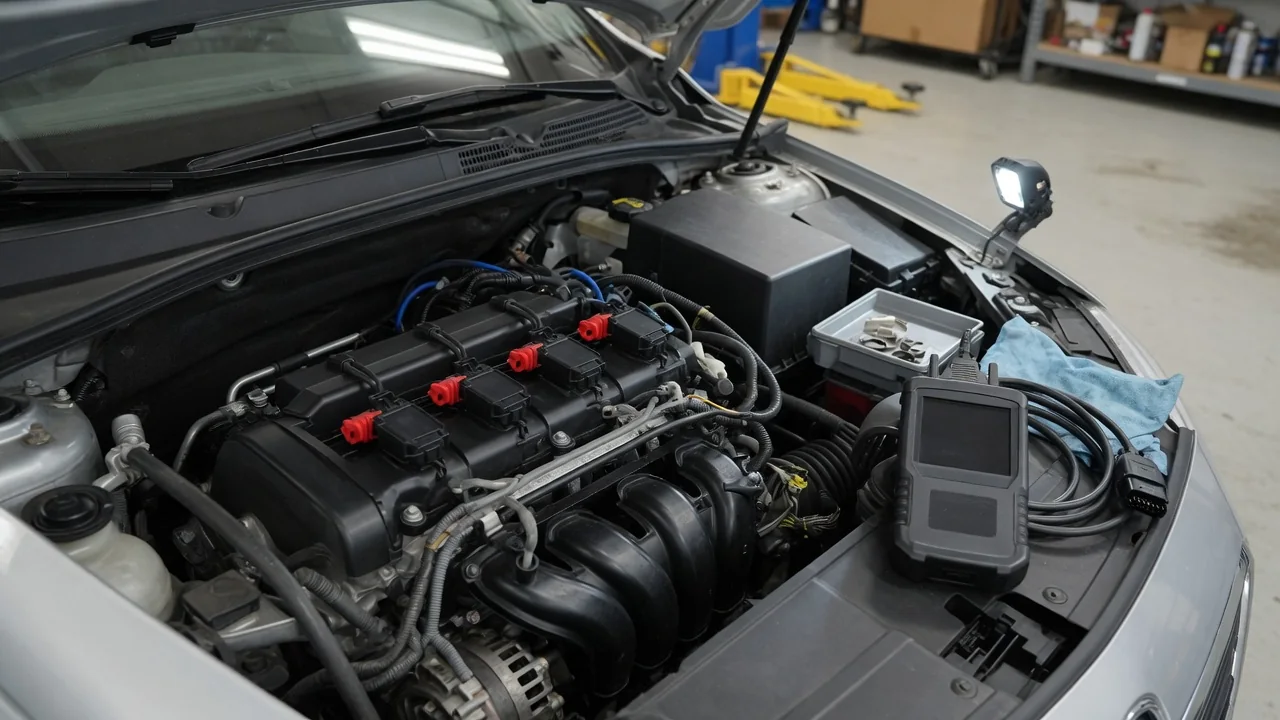
P2309, P2310, and P2311 all relate to ignition coil D, yet they describe different monitored circuit conditions. One typically reports a primary control circuit low reading, another a high reading, and P2311 commonly addresses the secondary ignition circuit that supplies the spark plug. None of these codes prove the coil has failed. Confirm the exact meaning, cylinder mapping, and diagnostic criteria for the vehicle’s year, make, model, and engine first.
P2309: Confirm the Coil D Control Circuit Low Definition
Before interpreting P2309, P2310, or P2311, read the exact code description and diagnostic criteria for that vehicle’s year, make, model, and engine. Manufacturers do not always share wording or detection thresholds, so a generic scan-tool label can mislead. P2309 commonly identifies ignition coil D primary control circuit low, where low describes a monitored electrical condition on the control side of the coil, not spark quality. Coil circuit voltage may sit below the expected range, or the engine control module may see an unexpected low-side state.
A stored P2309 is evidence of a circuit condition the engine control module did not expect, not proof that ignition coil D itself has failed. The fault may live in the wiring connector, a damaged harness, a poor ground or supply, the coil’s internal driver path, or the control output in the module. Until circuit-specific tests isolate the source, replacing the coil is a guess. Freeze-frame data and a related engine misfire help decide where to start, but they do not locate the open, short, or high-resistance point.
P2310: Understand a Coil D Control Circuit High Report
P2310 is commonly described as ignition coil D primary control circuit high, though that wording still needs confirmation against the manufacturer’s definition for the specific engine. High refers to the monitored electrical state of the primary control circuit under that maker’s detection criteria. It does not mean the coil is producing a stronger spark, nor does it measure secondary ignition energy at the plug. The engine control module may see coil circuit voltage remaining high when it commanded a different state, or a control line that does not drop as expected.
A high-side report on the primary control circuit can come from several places. A short to voltage, an open in a ground-switched driver, a corroded wiring connector, or internal coil electronics that hold the control pin high can all satisfy the same detection window. The engine control module’s own driver can also fail in a way that leaves the circuit high. Distinguishing those faults requires circuit-specific testing with the correct pinout, not a parts swap based on the code number alone.
P2311: Interpret the Coil D Secondary Circuit Code
P2311 is commonly listed as ignition coil D secondary circuit, and that meaning still must be confirmed in the manufacturer’s service information. The secondary ignition circuit is the high-energy path that delivers spark to the plug after the primary winding collapses. How the engine control module watches that path depends on the ignition system: some designs infer secondary activity from primary current, while others use ionization or other feedback. A P2311 therefore reports that secondary-side monitoring did not match expected behavior, not that a particular part has already been proven defective.
Where the layout uses a coil-on-plug boot, a cracked or carbon-tracked boot can leak energy to the valve cover instead of the spark plug. A worn plug, oil or coolant on the insulator, or insulation leakage inside the coil tower can produce the same kind of secondary-circuit complaint. Coil winding faults remain possible as well. None of those conditions is identified by P2311 alone, so replacing ignition coil D without supporting evidence is not justified. Primary codes such as P2309 or P2310 may appear with it, but each still describes a different monitored condition.
Locate Coil D Using the Correct Engine Information
The letter D in these codes is a manufacturer coil designation, not a guarantee that the fault sits on cylinder 4. Cylinder mapping varies with firing order, bank layout, and whether the engine uses coil-on-plug, wasted-spark, or another ignition arrangement. Treat coil D as unknown until vehicle-specific service information maps it. Confirm the engine identification first, including displacement, cylinder count, and any mid-year ignition changes, then match the cylinder numbering scheme used on that engine rather than assuming a left-to-right or front-to-back count.
Once the engine is identified, the manufacturer’s wiring diagram is what ties ignition coil D to a physical connector, a control pin, and a supply or ground path. The diagram also shows whether that coil shares a driver with another cylinder or has a dedicated circuit from the engine control module. Using the wrong diagram for a similar engine can send testing to the opposite bank. After the map is confirmed, a misfire on that cylinder supports the assignment, while a misfire elsewhere suggests coil D was still mapped incorrectly.
Recognize Symptoms and Decide Whether to Keep Driving
An ignition coil D fault may produce a rough idle, hesitation on acceleration, reduced power, hard starting, or an illuminated check-engine light, but not every vehicle shows those symptoms. Some engines hide a single-cylinder problem until load increases. An intermittent wiring connector or heat-related coil issue can store P2309, P2310, or P2311 even when the engine currently feels normal. Freeze-frame data from the detection moment is more useful than how the engine feels at rest, because it records speed, load, and temperature needed to recreate the event.
If the check-engine light flashes together with severe rough running, a sharp loss of power, or a strong fuel smell, stop safely and arrange assistance rather than continuing the trip. A flashing light typically indicates an active engine misfire that can dump unburned fuel into the exhaust. Continued operation in that state can overheat and damage the catalytic converter. A steady light with milder drivability changes still warrants prompt diagnosis, but it does not by itself require the same immediate shutdown.
Preserve Diagnostic Evidence and Arrange Targeted Testing
Record every stored and pending code, the freeze-frame data, current operating conditions, and recent repair history before clearing anything. Erasing memory too early discards the context that shows whether P2311, P2309, or P2310 set at idle, under load, or after a heat soak. With the engine off and cool, an owner can look for a loose wiring connector, obviously damaged wiring, or fluid around the coil area. Do not unplug running coils, perform exposed-spark tests, or probe energized ignition circuits; those actions involve high voltage and can damage components or cause injury.
A technician may need the manufacturer’s diagnostic procedure, wiring checks, and ignition waveform analysis to decide whether the fault involves supply, the primary control circuit, connections, or secondary ignition components such as the spark plug. Those tests separate a failed coil from a module driver, a harness fault, or a plug loading the secondary circuit. After any repair, follow the applicable confirmation steps and watch for returning codes or misfire symptoms. The issue is not resolved until the monitored circuit behaves correctly under the same conditions that originally set P2309, P2310, or P2311.