P2297 and P2298: Oxygen Sensor Codes During Deceleration
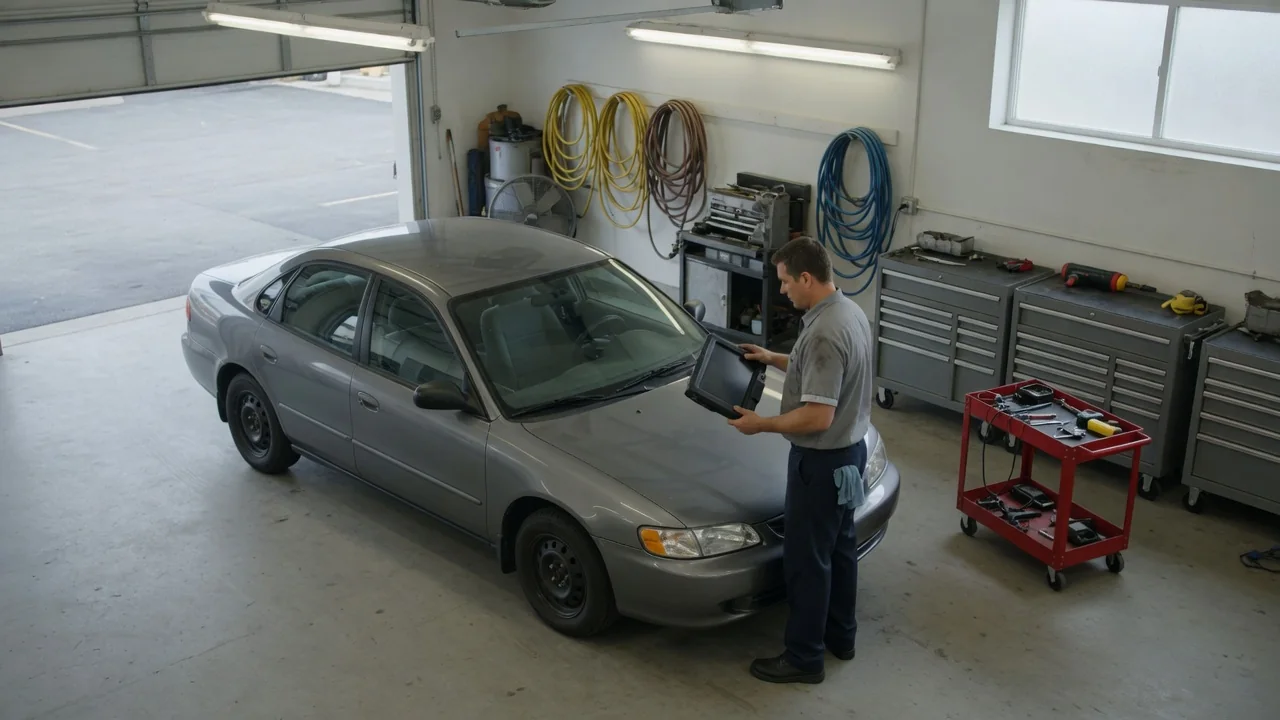
P2297 and P2298 point to an oxygen sensor reading that falls outside the expected range during deceleration. One code applies to Bank 1 Sensor 1 and the other to Bank 2 Sensor 1, but the stored definition, sensor assignment, and enable conditions still need vehicle-specific confirmation. A stored code is a failed monitor, not automatic proof that the sensor itself has failed.
What P2297 and P2298 Mean on Your Vehicle
P2297 is commonly described as an oxygen sensor signal outside the expected range during deceleration for Bank 1 Sensor 1, while P2298 is listed the same way for Bank 2 Sensor 1. Those summaries are a useful starting point, yet they are not a substitute for the exact wording in service information for the vehicle's year, make, model, and engine. Manufacturer-dependent wording can change which sensor is numbered Sensor 1, which cylinder bank is Bank 1, and which operating conditions must be met before the monitor even runs.
A diagnostic trouble code records that a monitoring condition was not met. It does not, by itself, establish that the oxygen sensor needs replacement. Bank identification and sensor numbering also need physical confirmation on the engine in front of you, because layout varies with engine design. Sensor 1 is typically the upstream sensor used for fuel control, but that convention still has to be verified. Until the published definition, pinout, and location are confirmed, treat P2297 and P2298 as a request to interpret evidence rather than as a parts list.
Why the Sensor Signal Is Monitored During Deceleration
During deceleration, many calibrations reduce fueling or command a deceleration fuel cut, so less fuel reaches the cylinders and exhaust oxygen content can rise. When the enable conditions are met, that change in exhaust chemistry is the event the control module uses to judge whether the oxygen sensor is still reporting within its expected window. The monitor is not asking whether the driver felt a problem while slowing down. It is asking whether the sensor output stayed inside the calibrated limits for that specific operating condition.
The control module compares the actual sensor response with the limits stored in that vehicle's calibration. Sensor technology matters here: a switching zirconia sensor and a wide-range air-fuel sensor do not present the same kind of signal, and expected readings are not a universal voltage number that applies to every engine. Because those limits are calibration-specific, published voltage thresholds from unrelated vehicles should not be used as proof of failure. The word deceleration in the code title simply names the monitored condition, even when slowing down feels completely normal.
Symptoms and When to Stop Driving
A check-engine light may be the only thing the driver notices when P2297 or P2298 is stored. The vehicle can still idle, cruise, and slow down without an obvious complaint because the failed condition is tied to a brief monitoring window rather than to a constant drivability problem. That does not mean the finding can wait indefinitely. Prompt evaluation still matters so freeze-frame data, pending codes, and related fuel-control information are not lost, and so a developing exhaust or wiring issue is not left to worsen.
Rough running, hesitation, or a change in fuel economy can appear alongside these codes, but those symptoms are not proof of a particular failed part. They only add context about how the engine is behaving while the oxygen sensor monitor is reporting an out-of-range deceleration reading. An otherwise normally running vehicle can usually be driven to a shop for diagnosis. Stop safely and arrange assistance if the check-engine light flashes, if severe misfiring or stalling occurs, or if exhaust fumes enter the cabin, because those conditions present an immediate safety concern.
Possible Causes That Need Supporting Evidence
A sluggish or biased oxygen sensor can fail to track the expected lean shift during deceleration fuel cut, but that is only one possibility. Damaged sensor wiring, a loose or corroded connector, or a circuit fault on the heater or signal side can produce the same stored result. Each of those causes needs supporting evidence from inspection and testing. Replacing the sensor because P2297 or P2298 is present skips that step and can leave the actual problem in place, especially when the code is documenting a monitoring failure rather than a confirmed component failure.
An exhaust leak near the monitored sensor can pull in outside air and change the oxygen reading the control module sees during deceleration. Fueling or air-metering faults can also disrupt the expected response when they alter mixture before the sensor, particularly if other codes and live data such as fuel trim support that direction. When both P2297 and P2298 set, shared operating conditions deserve a look: a common exhaust leak path, a shared power or ground issue, or a fueling event that affects both banks. Dual-bank codes still do not prove a single shared cause.
Safe Observations to Record Before Diagnosis
Before any codes are cleared, record every stored and pending trouble code, save available freeze-frame data, and note how the warning light behaves. Freeze-frame captures engine conditions at the moment the monitor failed and often shows whether the event occurred during a coast, a throttle lift, or another deceleration-related state. Clearing the memory first erases that snapshot. Also note whether any drivability complaint appears during warm-up, steady driving, or slowing down, using only observations from ordinary driving rather than attempts to force the fault to return.
Document recent repairs, especially work on the exhaust, oxygen sensors, or engine wiring, and write down any new exhaust noise, unusual odors, or changes in how the vehicle pulls or coasts. Owner inspection should stay limited to what can be seen with the vehicle parked and the engine off and cool: obvious connector damage, a disconnected harness, or a clearly displaced heat shield. Access beneath the vehicle and any electrical probing of sensor wiring belong with a qualified technician. Those notes still give the diagnostic process a cleaner starting point.
How Professional Testing Confirms the Cause
A technician should follow the vehicle-specific diagnostic procedure for P2297 or P2298 and address any companion codes that share the same freeze-frame or operating window. Scan data review typically includes oxygen sensor response, fuel-control status, and related parameters under the monitoring conditions named in service information. That comparison is made against the calibration for that engine, not against a generic chart. Companion codes for fuel trim, air metering, or misfire can change the order of testing and should not be ignored simply because the oxygen sensor codes were the first ones noticed.
Appropriate exhaust-leak checks, circuit testing, and sensor-response testing belong before any parts authorization. A sensor that tracks as expected once a leak or wiring fault is corrected was reporting a real mixture error, not failing as a component. After the repair, verification means completing the prescribed monitor and confirming that P2297 and P2298 do not return under the same deceleration conditions. Turning the check-engine light off with a scan tool only clears the display. It does not prove the underlying monitoring condition has been restored.