P2293–P2296 Codes: Fuel Pressure Regulator 2 Faults Explained
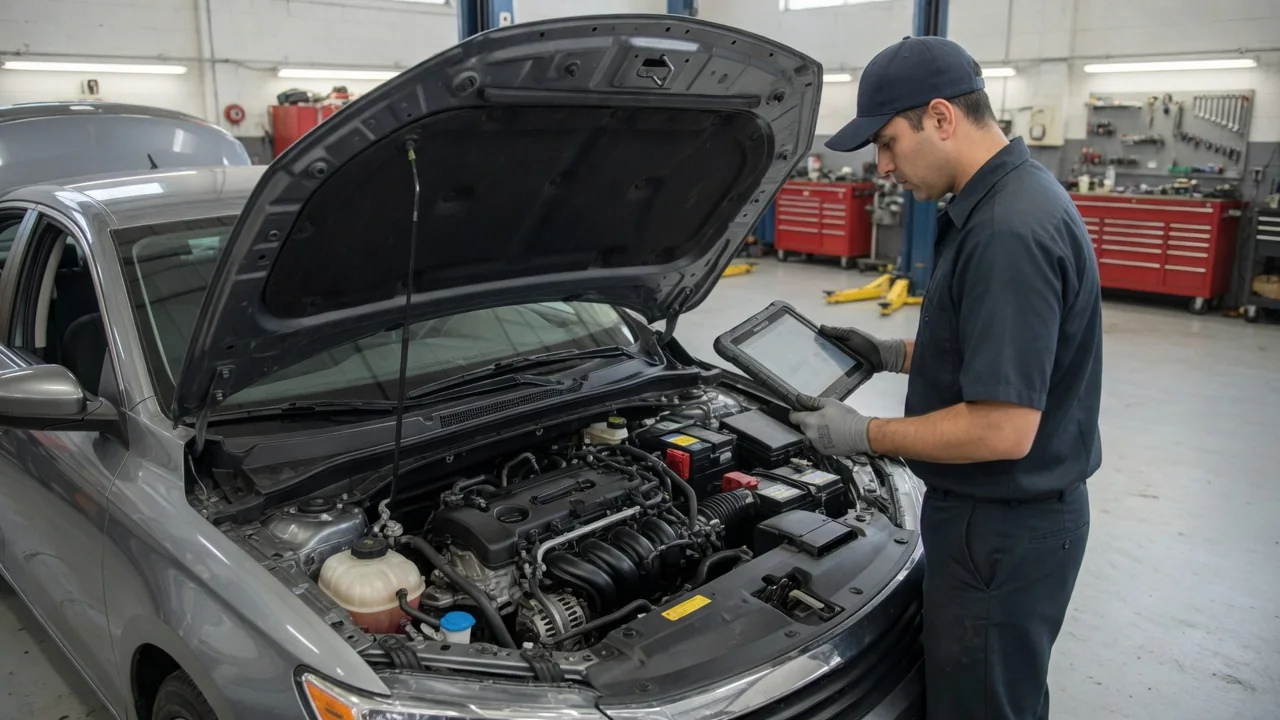
P2293, P2294, P2295, and P2296 codes relate to fuel pressure regulator 2 on many direct injection and diesel fuel systems. A P2293 code usually concerns regulator 2 performance, while a P2294, P2295, or P2296 code addresses the control circuit, including open, low, or high conditions. These readings are evidence to interpret, not proof a regulator failed, and they need vehicle-specific confirmation.
Confirm the Code Definition and Regulator 2 Location
Before treating a P2293, P2294, P2295, or P2296 code as a parts list, confirm the definition and diagnostic procedure for that vehicle's year, make, model, and engine. Manufacturer-dependent codes can share wording around fuel pressure regulator 2 while differing in monitoring logic, pinouts, and test limits. The same P2293 code on one engine may compare commanded fuel pressure with actual fuel pressure, while another application uses a different threshold or actuator.
Regulator 2 is a component designation in the control strategy, not a universal clue that the part sits on a particular cylinder bank or in a fixed spot on every engine. Direct injection gasoline systems often control rail pressure with a high-pressure pump metering valve or a rail-mounted regulator, while diesel fuel system layouts may use a pressure control valve on the rail, pump, or both. Because those arrangements differ, identifying which device the module labels as fuel pressure regulator 2 is essential before inspecting hardware or wiring.
P2293: Fuel Pressure Regulator 2 Performance
After vehicle-specific verification, a P2293 code is commonly listed as fuel pressure regulator 2 performance, meaning the control module saw fuel pressure regulation outside the behavior it expected. That judgment may rest on how actual fuel pressure tracks commanded fuel pressure, how quickly pressure changes when the fuel metering valve is driven, or whether regulation stays within a stored window. Contributors can include supply restrictions, a pressure-control fault, pump problems, inaccurate pressure feedback, or electrical issues that distort the actuator or sensor path, depending on the engine.
A stored P2293 result by itself cannot establish that the regulator or the high-pressure pump needs replacement. Performance monitoring can set when the supply is weak, the filter or lines restrict flow, a sensor reports incorrectly, or the module's command never reaches the actuator. Diagnosis should compare commanded fuel pressure with actual fuel pressure under the operating conditions the manufacturer specifies, using freeze-frame data to see load, temperature, and engine speed when the fault was recorded. Only that comparison, judged against the maker's criteria, supports a sound conclusion.
P2294: Fuel Pressure Regulator 2 Control Circuit/Open
A P2294 code is commonly listed as fuel pressure regulator 2 control circuit open, subject to confirmation in that vehicle's service information. In that context, the module did not see the expected electrical continuity or response on the control circuit, which can include a control circuit open condition. Possible sources include a damaged connector, broken or high-resistance wiring, an open actuator winding, a missing power supply, or a control-module driver that is not completing the circuit. None of those possibilities can be ranked by likelihood from the code text alone.
Detecting a circuit problem does not establish where the fault sits. The open or incomplete path may be at the regulator connector, along a harness that flexes near the engine, at a splice, at a fuse or relay feed, or inside the module. Professional circuit testing should follow the correct wiring diagram and the manufacturer's resistance, voltage, and continuity specifications before any component is condemned. Substituting a regulator because a P2294 code is stored skips the step that actually locates the open, short, or driver fault.
P2295 and P2296: Low and High Control Circuit Signals
A P2295 code is commonly described as a fuel pressure regulator 2 control circuit low condition, and a P2296 code as a control circuit high condition, with vehicle-specific verification still required. Low and high here describe an electrical condition under the applicable monitoring logic, not a direct reading of low or high fuel pressure. The module may be watching driver voltage, current, or a sense line against limits that indicate the circuit is pulled toward ground or toward source voltage. Fuel pressure regulation may still be normal, degraded, or unrelated until pressure data is reviewed.
Wiring faults, poor connections, actuator faults, or control-module driver problems can all move a circuit reading into the low or high range, and meaning depends on circuit design. A short to ground, a short to voltage, high resistance, or an internal winding fault can look similar until pin-level tests separate them. Professional testing should follow the manufacturer's diagnostic sequence rather than inferring a specific short or failed part from a P2295 or P2296 result alone. Those tests, not the code label, locate the defect.
Symptoms and Conditions That Require Stopping
A P2293 code, P2294 code, P2295 code, or P2296 code may appear with a malfunction indicator lamp, hard starting, rough running, hesitation, reduced power, stalling, or a no-start condition, but not every stored result produces every symptom. Some engines keep running with only a warning light if fuel pressure regulation remains close enough to demand. Others may struggle to start or lose power if the high-pressure side cannot meet injection needs. Those symptoms describe behavior, not which part failed or how severe the electrical or performance fault is.
Symptoms and code presence alone cannot establish whether continued driving is safe. If the engine stalls, power drops severely, fuel is visibly leaking, or a strong fuel odor is present, stop in a safe place and arrange assistance rather than continuing. A vehicle that still runs normally still needs timely diagnosis, because fuel pressure regulation can change with load, temperature, or a second electrical fault. Clearing a P2293, P2294, P2295, or P2296 code does not demonstrate a repair; it only erases evidence until the monitor runs again.
Safe Observations and the Professional Diagnostic Path
Before anything is cleared, record all stored and pending codes, available freeze-frame data, the symptoms noticed, and recent repair or refueling history. Freeze-frame data can show whether the fault set at idle, under load, during a cold start, or after the engine was already warm, which later helps a technician compare commanded fuel pressure with actual fuel pressure. Owner observations should stay limited to accessible external wiring damage or a visibly loose connector with the engine off and cool. Do not unplug components or disturb fuel plumbing, because those steps can add new faults or release fuel.
A professional evaluation should review related codes, electrical integrity of the control circuit, pressure feedback, fuel supply, and pressure-control operation using vehicle-specific procedures. Fuel systems can retain dangerous pressure after shutdown, so diagnosis must not include loosening fuel lines, releasing rail pressure without the approved method, bypassing controls, or directly energizing actuators. After a repair, verification requires the appropriate operating checks and a rescan to confirm that the original symptom and the monitored fault condition have been resolved, not merely that the lamp is off for one drive cycle.