P2290 and P2291: Low Injector Control Pressure Faults
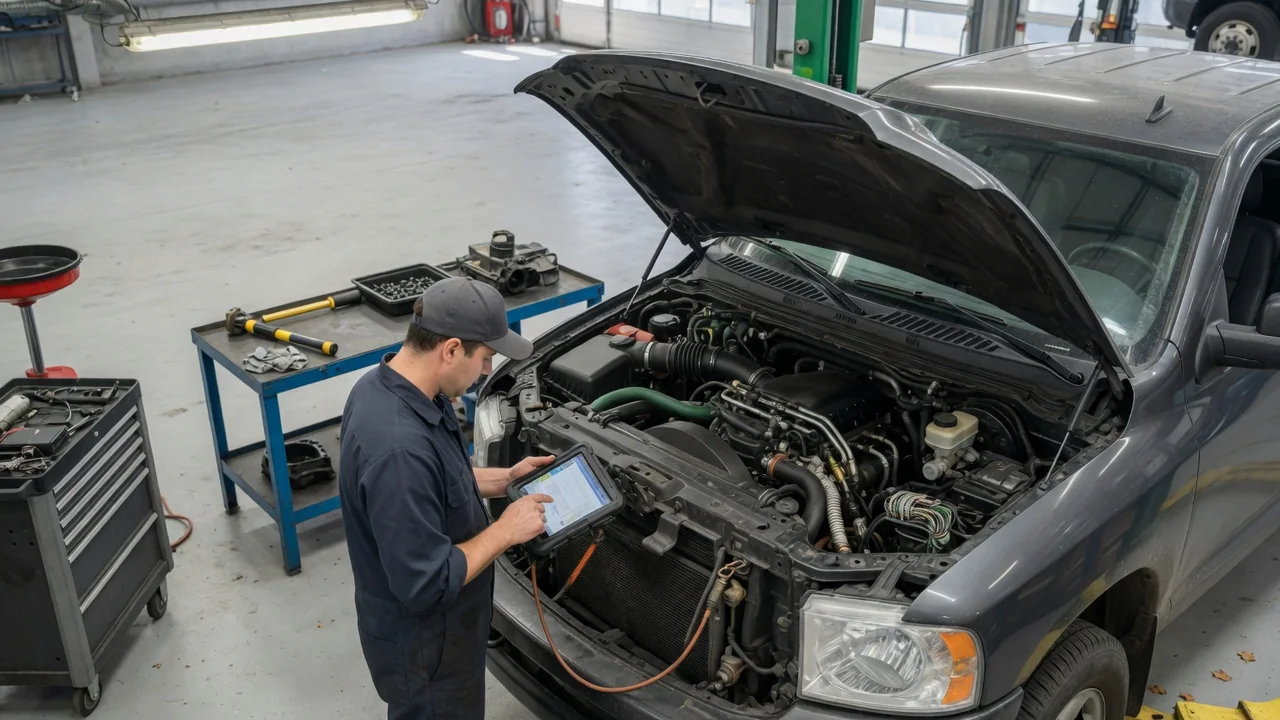
P2291 and P2290 both report injector control pressure that the control module judged too low, either during engine operation or while cranking. Neither identifier names a failed part on its own. The same code can describe different monitors by year, make, model, and engine, so the stored fault must be matched to that vehicle's description before discussing a high-pressure oil system, hard starting, or a no-start condition.
Verify What P2290 and P2291 Mean for the Vehicle
Before interpreting P2290 or P2291, confirm the exact code description and diagnostic procedure for the vehicle's year, make, model, and engine. Manufacturer-dependent codes require that vehicle-specific confirmation because wording and enable conditions are not universal. P2290 commonly describes injector control pressure too low during operation, while P2291 commonly describes injector control pressure too low during engine cranking. Those labels still must be checked against the applicable monitoring conditions, including whether the test runs only at a defined cranking pressure window, after a start, or while the engine is already running.
Identify the injection system architecture before discussing causes. High-pressure oil explanations apply only to engines that use oil-actuated injection, where pressurized oil, not fuel rail pressure, drives injector actuation. Other engines may use a different control strategy, so an oil-system story should not be applied automatically. In either architecture, these codes report a detected pressure-control problem: the module compared a pressure sensor signal with expected behavior and found actual pressure too low. That finding is evidence to interpret, not proof that a pump, valve, sensor, or injector has failed.
Starting and Running Symptoms to Record
A low injector control pressure fault may appear with extended cranking, a complete no-start condition, rough running, stalling, or reduced power, but not every vehicle will show each of those signs. Record whether the complaint happens on a cold start, a warm restart, or after the engine is already operating, and whether it is intermittent. Hard starting that only occurs after a long soak can point toward leakage or slow pressure build, while a warm-restart problem can point toward a different enable window. Those notes help a technician reproduce the original monitoring conditions.
A warning light or a no-start condition alone cannot establish why injector control pressure was inadequate. The light only reports that a monitor failed; it does not separate a supply problem from a control-valve issue or a misleading pressure sensor signal. If the engine stalls repeatedly, an oil-pressure warning appears, or a substantial fluid leak develops, stop safely and arrange assistance rather than continuing to drive or crank. Repeated stalling can leave the vehicle in traffic, and a leak or oil-pressure warning can indicate a condition that needs immediate professional attention.
Pressure Supply, Control, and Signal Faults That Need Testing
On engines that use oil-actuated injection, injector control pressure depends on a high-pressure oil system that must build and hold enough force to actuate injectors. Inadequate oil supply, poor oil condition, internal leakage, or a high-pressure pump problem can keep actual pressure from reaching the commanded pressure the module expects. Low level, aeration, or oil that is too thick or too thin for the current temperature can slow pressure rise during cranking. Internal leakage past injectors, fittings, or galleries can dump pressure as fast as the pump can make it, especially at the low engine speeds of a start attempt.
A pressure-control valve fault can also keep regulation from matching commanded pressure, but component names and locations belong to the verified engine's procedure rather than a generic list. Sensor, connector, or wiring faults can produce a misleading pressure sensor signal, so electrical testing is required before any hydraulic part is condemned. Fuel-pressure components should be considered only when the verified vehicle procedure connects them to P2290 or P2291. Applying an oil-system diagnosis to every engine is a common error; some injection architectures never use high-pressure oil for injector actuation and need a different test path.
Safe Observations Before a Shop Visit
Save all stored and pending codes and any available freeze-frame data before clearing anything. Freeze-frame information can show engine speed, temperature, and whether actual pressure lagged commanded pressure during the failed sample, which is far more useful than a later snapshot after the battery has been disconnected. With the vehicle secured and the engine off, check engine oil level according to the owner's manual. Do not add products or assume an oil specification that the manual does not call for; the goal is only to see whether the engine is low before a shop begins pressure testing.
Note visible fluid spots, recent oil or filter service, and unusually slow cranking, staying clear of moving or hot components. Slow cranking can starve a high-pressure oil system of the pump speed needed to reach cranking pressure, even when the injection hardware is intact. Do not perform repeated prolonged cranking, open high-pressure connections, disconnect pressure-control components, or use starting fluid. Those actions can mask the original fault, introduce air or contamination, or create an unsafe start attempt. Document what you observed and leave hydraulic and electrical diagnosis to a shop with the correct procedure.
Professional Tests and Repair Verification
A technician investigates P2290 or P2291 with vehicle-specific commanded and actual pressure data, engine speed, and electrical supply measurements rather than a single scan snapshot. Manufacturer-specific test conditions and thresholds apply; there is no universal minimum starting pressure that proves a pump has failed from one reading. The comparison of commanded pressure to actual pressure during the documented cranking or running window shows whether the system is slow to build, unable to hold, or reporting a sensor value that does not match hydraulic reality. Battery voltage and cranking speed matter because a weak supply can look like a pressure-control fault.
Professional work then checks the sensor circuit, pressure-control response, and internal leakage at a high level without opening live high-pressure lines as a first step. Circuit tests look for opens, shorts, and implausible voltage that would distort the pressure sensor signal. Control tests compare how actual pressure follows commanded pressure when the valve is driven under specified conditions. Leak checks look for pressure that falls faster than the procedure allows. Repair verification should confirm pressure response, successful starting and operation under the original fault conditions, whether cold, hot, or intermittent, and that P2290, P2291, and related codes do not return.