P2284–P2289 Codes: Injector Control Pressure and Sensor Faults
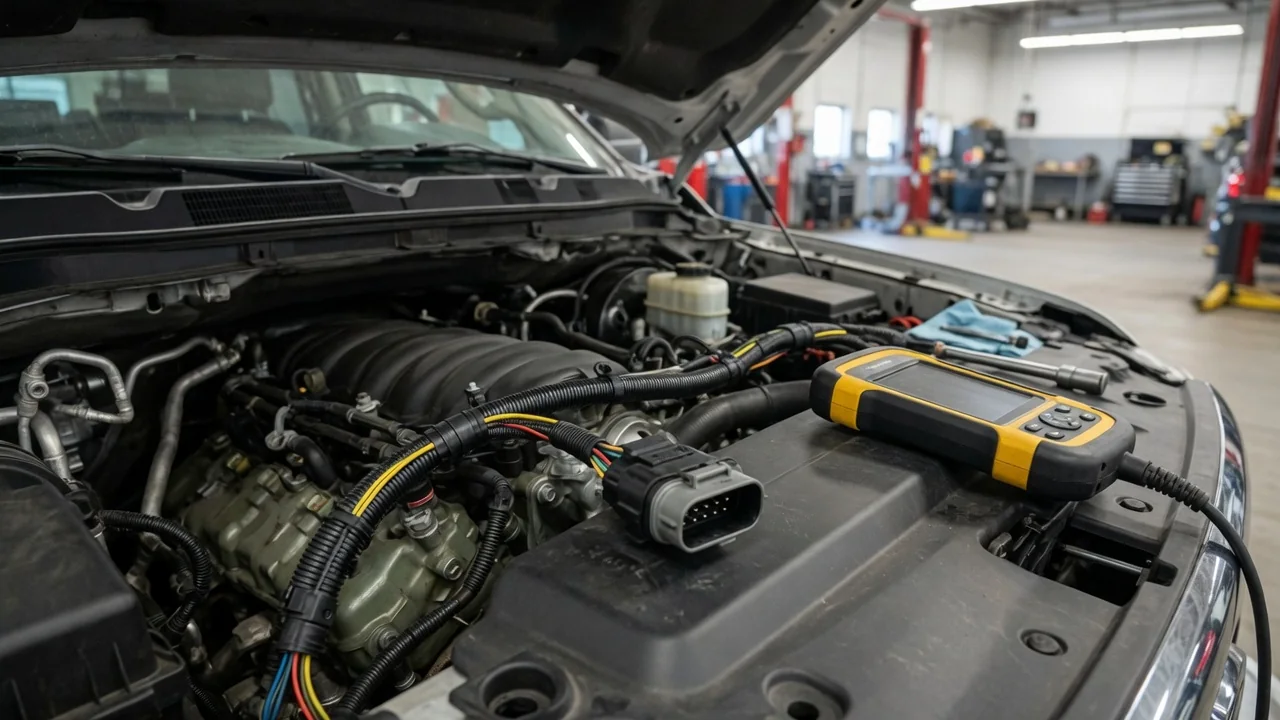
Codes P2284 through P2289 address injector control pressure and ICP sensor circuit faults on many HEUI diesel engines, while P2290 and P2291 belong to the same high-pressure oil system family. A stored p2285 code, p2288, or p2291 code is evidence to interpret, not proof a sensor or injector has failed. Confirm the manufacturer definition for the vehicle year and engine, then compare commanded pressure with reported actual pressure before replacing parts.
Verify the Code Meaning and Injection System First
Before treating any p2285, p2284, or p2286 result as a failed ICP sensor, confirm the full code definition for that vehicle year, engine, and manufacturer. HEUI injection uses high-pressure oil, not fuel pressure, to actuate the injectors. The control module commands oil pressure and needs a reliable ICP sensor signal so commanded pressure can be compared with actual pressure. If that feedback is missing or implausible, injection timing and fuel delivery can suffer even when the mechanical high-pressure oil system is intact.
This family includes sensor circuit faults and pressure-condition faults, so a stored code alone does not identify a failed sensor. Record every related result, including a p2287, p2288, p2289 code, p2290 code, or p2291 code, plus pending or history status and freeze-frame data, before clearing anything. Freeze-frame snapshots of engine speed, temperature, and injector control pressure help show whether the event happened at cranking, idle, or load. Clearing codes first erases that context and can send diagnosis toward the wrong circuit or hydraulic path.
P2284–P2287: Circuit, Low Signal, High Signal, and Intermittent Faults
After vehicle-specific verification, P2284 usually points to an injector control pressure sensor circuit fault, while a p2285 code typically means the circuit signal is low and P2286 means the signal is high. P2287 describes an intermittent circuit fault rather than a steady high or low reading. Those low and high labels describe electrical feedback from the ICP sensor, not independently proven low or high hydraulic pressure. A short to ground, open signal return, or lost sensor reference voltage can look like a pressure problem on a scan tool.
Sensor faults, damaged wiring, poor connections, and reference-voltage or ground problems therefore need separate tests. A corroded connector can drop the signal into the p2285 range, while a short toward reference voltage can produce P2286. An intermittent circuit fault may appear only when the harness flexes, oil temperature changes, or vibration loads a pin, but those patterns do not prove a particular failed part. Confirm continuity, sensor reference voltage, and signal return quality with the correct diagram before condemning the ICP sensor or the high-pressure oil system.
P2288 and P2289: Excessive Pressure Readings and Engine-Off Conditions
Subject to manufacturer confirmation, P2288 typically means injector control pressure is too high during operation, while a p2289 code usually means pressure is too high with the engine off. Operating state matters because residual oil pressure after shutdown is not the same as commanded pressure while the engine is running. A reading that looks excessive with the key on and engine off may be plausible residual oil, a biased ICP sensor, or a circuit that is stuck high. Without the correct enable criteria, that p2289 result can be misread as a stuck control valve.
Biased sensor feedback or circuit faults can create an apparent high-pressure problem even when the high-pressure oil system is not overshooting. A P2286-style high signal and a P2288 pressure-too-high result can therefore overlap in symptoms while pointing to different tests. Actual pressure-control faults remain possible, including a control device that does not relieve oil as commanded. Manufacturer procedures set the limits for residual pressure after shutdown and the conditions under which P2288 or p2289 is valid, so those criteria should be met before assigning a mechanical cause.
Related P2290 and P2291 Codes: Low Pressure and Cranking
After confirming applicability, P2290 typically means injector control pressure is too low, and a p2291 code usually means pressure is too low during engine cranking. Those related codes sit in the same diagnostic context as p2285 and P2288: the module is comparing commanded pressure with reported actual pressure and finding a mismatch. A no-start or hard start with a p2291 code still is not a complete diesel starting diagnosis. The question is whether cranking pressure at the ICP sensor is truly below specification or whether the sensor circuit is under-reporting oil pressure.
Inadequate pressure supply, pressure-control problems, internal leakage in the HEUI oil circuit, or misleading sensor feedback all require testing to distinguish. A low electrical signal that sets p2285 can look similar to a true p2290 low-pressure condition on a data list. Cranking speed, battery and starter electrical supply, and reported injector control pressure must be evaluated together using engine-specific specifications. Slow cranking reduces oil-pump output, so a weak battery can prevent cranking pressure from reaching the commanded value even when the ICP sensor and wiring are sound.
Symptoms and Safe Observations Before Testing
Hard starting, no-start, rough running, stalling, and reduced power can accompany injector control pressure faults, but those symptoms are not unique to an ICP sensor or a p2285 circuit problem. Fuel delivery, glow-plug or intake-air issues, and other oil-pressure problems can produce the same complaints. Note whether the trouble appears cold, hot, only during starting, or under load, using conditions already observed rather than forcing unsafe repeats. A p2291 code with a cold no-start points diagnosis toward cranking pressure and sensor feedback, while a hot stall with P2288 points toward a different operating-state check.
With the engine off and cooled down, inspect accessible ICP sensor wiring for chafing, loose connectors, corrosion, or fluid contamination. Visible damage supports further electrical testing but does not establish the full cause of P2284, p2287, or a p2289 code. Stop driving and stop repeated starting attempts if stalling is unpredictable, power loss is severe, oil is visibly leaking, or an oil-pressure warning is present. Those conditions can leave the high-pressure oil system and HEUI injection without usable control, and further cranking can add heat and wear without producing a useful diagnosis.
Professional Tests That Separate Wiring, Sensor, and Pressure Faults
A technician should check sensor reference voltage, signal return, signal integrity, and connector condition using the correct wiring diagram and manufacturer procedure for that engine. Live data showing commanded pressure versus reported actual pressure, plus operating state and companion codes, then guides the next step. Reported pressure is only as valid as the ICP sensor circuit, so a p2285 low-circuit result must be resolved before a p2290 low-pressure conclusion is trusted. Freeze-frame values already captured help recreate the original conditions without guessing which circuit or hydraulic path failed.
Hydraulic pressure testing and internal leakage diagnosis belong with equipped professionals and should not involve loosening pressure lines, bypassing circuits, or working around running machinery. Confirm the underlying fault before replacing an ICP sensor, harness, or oil-system component, then verify the repair under the original fault conditions when it is safe to do so. If P2284, p2286, p2287, P2288, or a p2291 code returns, the first repair did not address the true circuit, sensor, or pressure-control issue. Matching the retest to cranking, hot idle, or load keeps the confirmation meaningful.