P2261 Turbocharger/Supercharger Bypass Valve Mechanical Fault
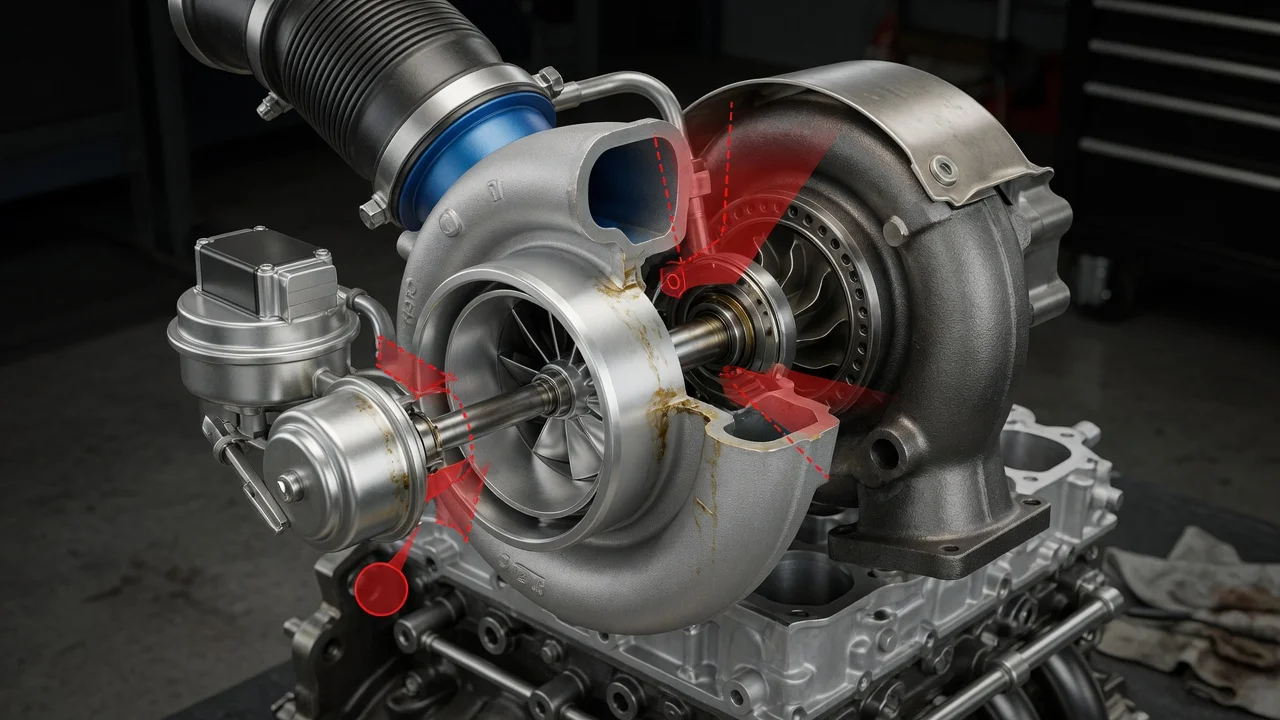
P2261 is a generic OBD-II trouble code. It means the engine control module has seen the turbocharger or supercharger bypass valve behave in a way it did not expect. The definition points to a mechanical problem rather than an electrical circuit fault. Even so, the code describes a monitored condition, not a confirmed failed part. This guide explains what the code means, how the system works, what changes the diagnosis, and how to move from possible causes to a confirmed finding.
What P2261 Means
The engine computer has decided that the bypass valve is not working correctly in a mechanical sense. Depending on the design, this valve may be called a diverter, recirculation or blow-off valve. It may be stuck open, stuck closed, leaking, or responding too slowly. In most systems the module does not watch the valve directly. It infers the fault from boost pressure readings that do not match what it commanded. Wiring and control circuit problems usually set separate codes, often in the P0033 to P0035 range. A stored P2261 without those codes therefore suggests the circuit looked acceptable at the time. The problem more likely lies in the valve, its actuation, or the air path around it.
The important qualification is that the code does not prove the valve itself has failed. A cracked charge pipe, a loose intercooler coupler, a split vacuum line or an inaccurate pressure reading can produce the same pattern the module is watching for. Owners commonly notice a check engine light, reduced power or a limp mode, hesitation, slow boost build-up, or a fluttering or hissing sound when lifting off the throttle. Some vehicles show no obvious symptom at all, especially when the fault is intermittent.
How the Bypass Valve Works
On a turbocharged engine under boost, lifting off the accelerator closes the throttle while the compressor is still spinning fast. Pressurized air gets trapped between the compressor and the closed throttle. The bypass valve opens at that moment to release the pressure. In a diverter or recirculation design, it routes the air back into the intake ahead of the compressor. In a blow-off design, it vents the air to the atmosphere. Relieving that pressure reduces compressor surge and stress on the turbocharger, and helps the engine respond when the driver gets back on the throttle. Many positive-displacement superchargers use a bypass valve differently. It stays open at idle and light load so air can circulate around the rotors, reducing pumping losses, and closes when boost is needed.
Older valves are usually spring-loaded diaphragms opened by manifold vacuum. Many newer engines use an electrically controlled valve, or a solenoid that controls vacuum to a diaphragm. The module commands the valve and compares readings from the boost or manifold pressure sensor, and sometimes the mass airflow sensor, with expected values. Pressure may drop when the valve should be sealed, or fail to fall when it should open. If that mismatch lasts long enough under the right enabling conditions, the module sets P2261. Those thresholds and conditions differ between manufacturers.
What Changes the Diagnosis
Several configuration details change where the fault most likely lies. A turbocharger system and a supercharger system use the valve at different times. A vacuum-operated valve and an electronically actuated one fail in different ways. A valve bolted into the turbocharger housing may be serviced differently from a separate valve mounted in the charge piping. Some manufacturers also apply their own wording or monitoring strategy to this code. On a few engines, particularly some diesels, the bypass label may refer to a slightly different component. That is why the vehicle-specific definition in the service information matters before any part is ordered.
Modifications and operating conditions also matter. An aftermarket blow-off valve that vents to the atmosphere on an engine with a mass airflow sensor releases air that has already been measured. That can upset fueling and trigger codes. A valve with a different spring rate may not seal at the pressure the module expects, and a tune that raises boost can push a factory valve beyond its design. Other stored codes change the priorities. An underboost code, airflow sensor codes or bypass valve circuit codes alongside P2261 point the diagnosis in different directions. The symptom conditions in the stored record also matter, such as whether the fault appeared at idle, under full load or on lift-off.
What the Owner Can Do
Start with a scan tool and record every stored and pending code before clearing anything. Save the freeze-frame data. Engine speed, load, boost pressure, vehicle speed and temperatures at the moment the code set show the conditions you will need to reproduce later. Next, with the engine off and cool, do a visual inspection. Check the hoses and vacuum lines at the valve for cracks, softness or disconnection. Inspect the charge pipes and intercooler couplers for loose clamps, splits or heavy oil residue. Make sure the valve's electrical connector is fully seated and free of corrosion.
If the valve is accessible and the service procedure allows it, remove it and inspect the diaphragm or piston. Look for tears, sticking, carbon buildup or a damaged seal. A vacuum-operated valve should hold vacuum from a hand pump and move smoothly as vacuum is applied. With a capable scan tool, you can watch live data during a road test and compare desired and actual boost. An actuation test often lets you hear or feel the valve respond to commands. A smoke test of the intake and charge side is the most reliable way to find small boost leaks, and it usually requires shop equipment.
Keep possible causes, test results and confirmed findings separate, and replace only what testing shows is faulty. After a repair, clear the code and perform a confirmation test. Drive under conditions similar to the freeze-frame record, then confirm that the related monitor has run and the code has not returned as pending or stored. A code that comes back quickly after a new valve is installed usually means the real cause was elsewhere in the air path or control system.
Limitations and Next Step
Generic code definitions cannot tell you the exact thresholds, enabling conditions or test values your vehicle uses. Those come from the manufacturer's service information. Some manufacturers have also issued revised parts or software for related concerns, and the service information will show whether anything applies to your vehicle. Accurate diagnosis often needs a bidirectional scan tool, a smoke machine and sometimes a boost gauge. If you do not have that equipment, or the valve is buried under other components, a professional diagnosis is usually cheaper than replacing parts on suspicion.
Many vehicles with this code remain drivable, but often with reduced power. Avoid hard acceleration until the cause is found. Stop driving and have the vehicle inspected promptly if you see blue or heavy smoke, notice rising oil consumption, hear loud whining or grinding from the turbocharger or supercharger, or the engine stays in a limp mode. Those signs point to a problem larger than the bypass valve. The practical next step is the same in every case: save the freeze-frame data, look up the vehicle-specific definition and procedure, and test before replacing parts.