P2259, P2260 and P2261: Air Injection and Turbo Bypass Fault Codes
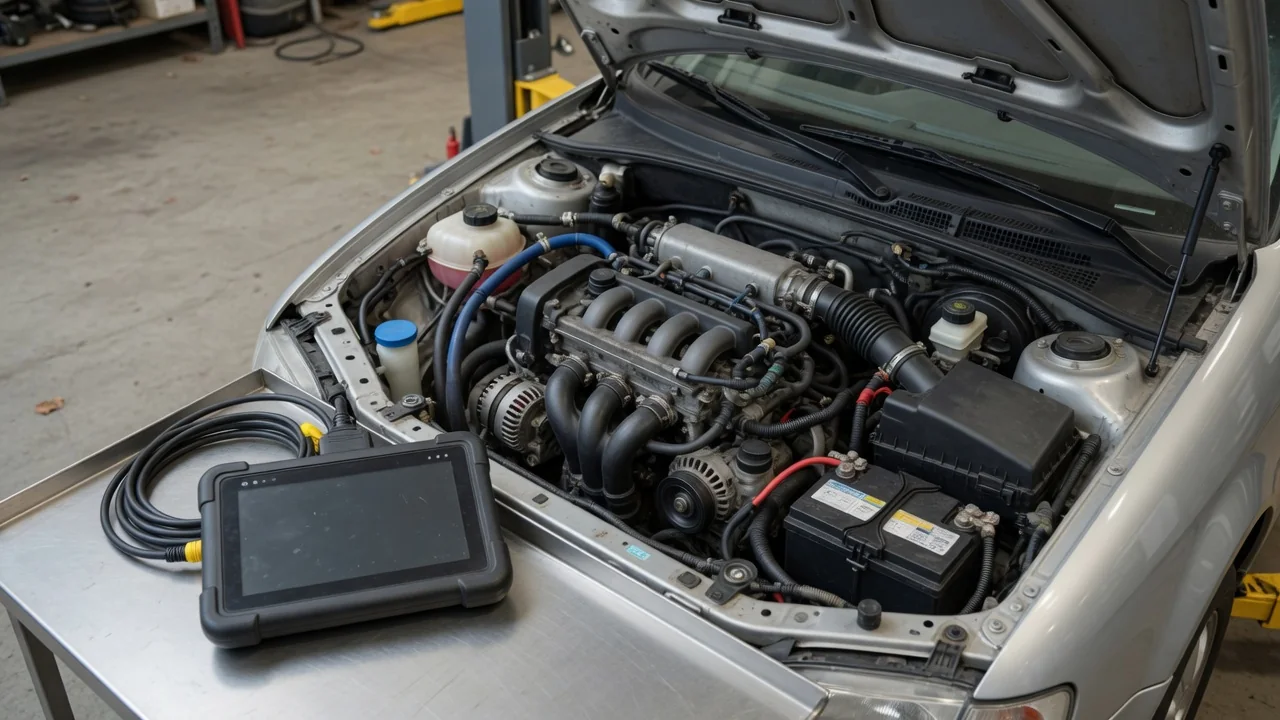
P2259, P2260, and P2261 often appear together in search results, but they do not describe one shared failure. On many vehicles the first two codes report a secondary air injection control circuit voltage problem, while P2261 typically points to a turbocharger or supercharger bypass valve mechanical check. Each definition is manufacturer-dependent, so the year, make, model, and engine must be confirmed before any part is blamed.
P2259: Verify the Secondary Air Injection Circuit Low Definition
The standard description for P2259 concerns secondary air injection system control B circuit low, not a turbocharger bypass valve. That distinction matters because grouping P2259 with P2261 as if both were boost-control faults can send diagnosis toward the wrong system. Before interpreting the code, compare the stored definition in service information for the exact year, make, model, and engine. Some manufacturers assign different meanings, so the generic label is a starting point, not a confirmed circuit map.
Circuit low describes a monitored electrical condition, usually a control circuit voltage that is below the expected range. It does not establish low secondary airflow and does not prove that an air pump has failed. Wiring and connectors, a missing supply, a grounded control wire, or a problem in the commanded control component can all produce the same finding. The meaning of control B and how that circuit is laid out still require vehicle-specific diagrams, because the pump, valve, relay, and module arrangement is not universal.
P2260: Understand the Circuit High Finding
Confirm the vehicle-specific definition before treating P2260 as a secondary air injection problem. The usual description is secondary air injection system control B circuit high, which is an electrical monitoring result rather than a statement about airflow volume. Circuit high does not mean excessive secondary airflow, and it does not mean excessive boost. The powertrain control module has compared the control circuit voltage with its expected window and found the signal too high for the current command.
Depending on how the circuit is designed, that high reading can come from a short to voltage, an open control path that leaves the sense line pulled high, or a failed driver inside a relay, valve solenoid, or control module. Those possibilities cannot be sorted by the code number alone. Professional circuit testing is needed before recommending a pump, relay, valve, or module, because replacing the most expensive part first often leaves the original wiring fault in place and the same P2260 stored after the next drive cycle.
P2261: Interpret the Bypass Valve Mechanical Fault
P2261 is the code in this group that most often refers to a turbocharger or supercharger bypass valve mechanical fault, but that standard description still has to be confirmed against the vehicle's detection criteria. The bypass valve manages airflow and pressure by opening a path around the compressor when boost should be reduced or when the throttle closes quickly. On a turbocharged engine it can dump compressor outlet pressure; on a supercharged layout it can recirculate or relieve charge air. The diagnostic looks for a mechanical response that does not match the command.
Where the vehicle's design uses a vacuum or electronic actuator, a sticking valve mechanism, a weak actuator, a split hose, or a control-solenoid problem can all prevent the valve from reaching the expected position. Those causes apply only when that hardware is actually present. A mechanical-fault code records a failed diagnostic check; it does not by itself prove which component needs replacement. Boost control may feel off afterward, yet the same stored P2261 can also follow an incomplete actuator stroke that later frees itself, so parts should not be swapped on the code number alone.
Symptoms to Record and Reasons to Stop Driving
A malfunction indicator light can appear for P2259, P2260, or P2261 with no obvious drivability change. Secondary air injection usually operates for a short period after a cold start, so a control circuit voltage fault may leave daily driving feeling normal once the engine is warm. Symptoms alone cannot identify the faulty circuit or valve. When a bypass-control fault is confirmed, some vehicles show reduced power, a whoosh or flutter from the charge-air path, or a throttle response that no longer matches pedal movement, but none of those signs is guaranteed.
Note when the light first appeared, how the engine behaved during cold start, whether power changes after the engine is fully warm, and whether any other warning lights came on at the same time. Those details help a technician decide which monitor actually failed. Stop safely and arrange assistance if there is severe power loss, smoke, overheating, or a flashing malfunction indicator light. Continued driving under those conditions is unsafe because a flashing light can indicate misfire that may damage a catalytic converter, and smoke or overheating can signal a more urgent mechanical problem.
Safe Checks and the Information a Technician Needs
Before clearing anything, record every stored and pending trouble code, capture freeze-frame data, and note recent repair history. Freeze-frame data shows engine speed, load, temperature, and related sensor readings at the moment the monitor failed, which is often the only way to tell a cold-start secondary air injection event from a boost-control event. Owner inspection should stay limited to accessible hoses, wiring, and connectors with the engine off and cool. Do not touch hot, moving, or energized components, and do not use jumper wires, forced valve operation, emissions-system bypasses, or improvised pressure tests.
A technician uses vehicle-specific wiring diagrams, commanded-operation checks, and electrical or pressure testing to isolate whether the fault sits in the harness, an actuator, a pump circuit, or the bypass valve itself. Those tests follow the published diagnostic path rather than guessing from the code title. Repair is verified only when the relevant monitors complete successfully on subsequent drive cycles. An erased warning light does not confirm a repair, because P2259, P2260, and P2261 can remain pending until the same operating conditions return and the control module repeats the check.