P2243, P2244 and P2247: Air/Fuel Sensor Reference Voltage Codes
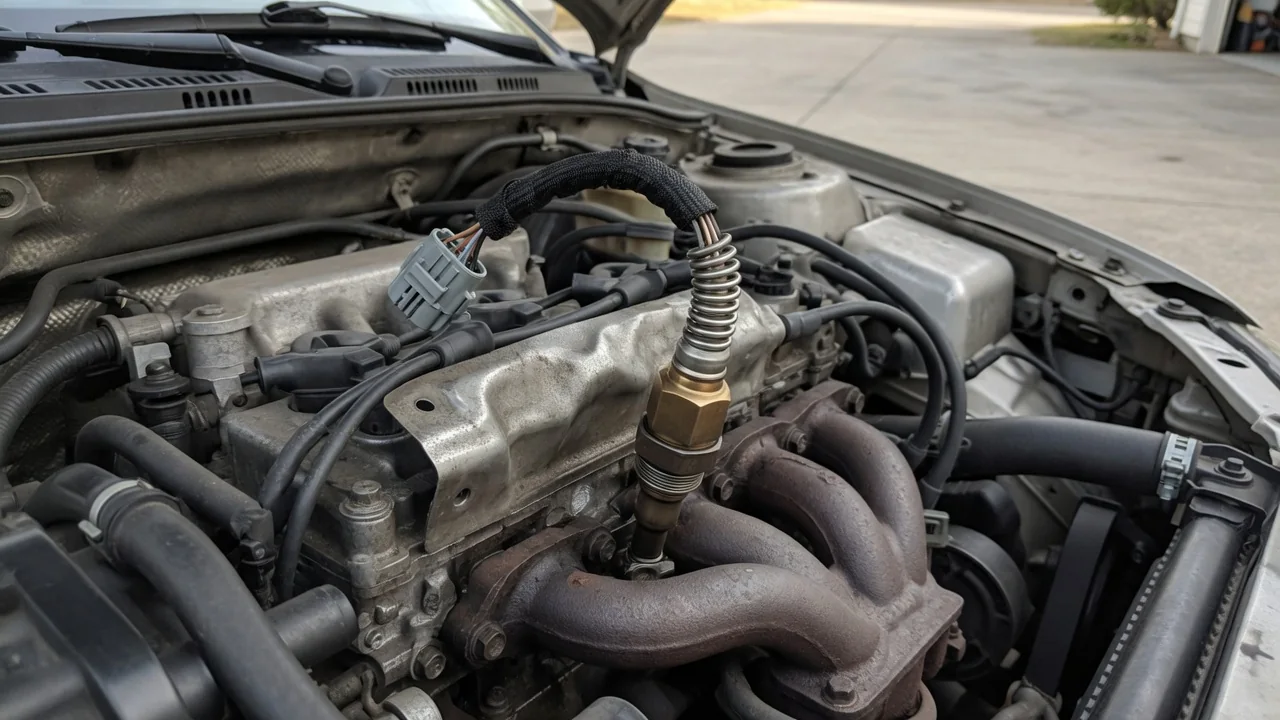
P2243, P2244, and P2247 are diagnostic trouble codes that typically point to a monitored concern in an air/fuel ratio sensor reference voltage circuit. These findings often involve a wideband oxygen sensor, an open circuit, or circuit performance that falls outside expected controller criteria. Because sensor terminology, bank identification, and wiring layout vary by vehicle, each code should be confirmed in service information before any part is blamed or replaced.
Verify the Vehicle-Specific Code Meaning First
Before interpreting P2243, P2244, or P2247, confirm each code's published definition in service information for the vehicle's year, make, model, and engine. Air/fuel ratio sensor and wideband oxygen sensor labels are not interchangeable across every brand, and a reference voltage circuit may use different terminal assignments, connector layouts, and diagnostic criteria from one manufacturer to another. Treating a generic code description as universal can send diagnosis toward the wrong sensor or the wrong bank.
A reference voltage circuit code reports that the controller detected an electrical condition it was programmed to monitor. That finding is evidence to interpret, not proof that the air/fuel ratio sensor itself has failed. Open wiring, a damaged sensor connector, harness chafing, or an internal sensor fault can all produce similar stored results, and manufacturer-dependent codes require vehicle-specific confirmation. Diagnosis should start from the documented circuit and the freeze-frame data captured when the code set, not from an assumption that the part is bad.
P2243: Confirm the Bank 1 Sensor 1 Reference Circuit
P2243 is commonly listed as an oxygen sensor reference voltage circuit/open code for Bank 1 Sensor 1, but that wording still needs confirmation for the specific vehicle. Bank 1 is typically the bank that contains cylinder one, and Sensor 1 is usually the upstream air/fuel ratio sensor or wideband oxygen sensor ahead of the catalytic converter. Engines differ in how banks are arranged, so the physical location should be identified from the vehicle's layout rather than from a habit of looking at one side of the engine first.
When P2243 is stored, the controller has flagged a concern consistent with an open circuit in that reference voltage path. Interrupted wiring in the harness, poor contact at the sensor connector, a broken terminal, or an internal sensor fault can each interrupt the reference circuit, and none of those possibilities is confirmed by the code alone. Freeze-frame data can show the operating conditions at the moment the monitor ran, which helps a technician decide whether the concern appears continuous or only under certain loads, temperatures, or after a recent repair.
P2244: Understand the Reference Circuit Performance Finding
P2244 is commonly listed as an oxygen sensor reference voltage circuit range/performance code for Bank 1 Sensor 1, again subject to vehicle-specific confirmation. Unlike an open-circuit listing, a circuit performance finding means the controller saw signal or circuit behavior outside the criteria it uses for that monitor. There is no single voltage number that applies to every air/fuel ratio sensor or wideband oxygen sensor, so assumed values should not be used as a pass-or-fail standard. The published test procedure for that engine is the only reliable source for what the controller considers in range.
A performance code can be produced by intermittent connections, extra resistance in the wiring harness, a weakened reference path, or a sensor that no longer behaves as the controller expects. Those conditions may appear only at the temperature, load, or idle-versus-cruise state captured in freeze-frame data. Recreating the recorded conditions matters, because a connector that looks intact can still drop out when heat, vibration, or harness movement is present. The stored P2244 result remains a monitored finding until those conditions are tested and the circuit meets specified criteria.
P2247: Locate the Specified Bank 2 Reference Circuit
P2247 is commonly listed as an oxygen sensor reference voltage circuit/open code for Bank 2 Sensor 1, and that identification still requires the vehicle's service information. Bank 2 is the opposite bank from cylinder one on a V-type or opposed engine, and Sensor 1 is typically the upstream air/fuel ratio sensor on that bank. Cylinder numbering, exhaust routing, and sensor placement are not the same on every engine, so a driver-side or passenger-side assumption can point to the wrong wideband oxygen sensor. Confirm the designated location from the published layout before inspecting any connector or harness.
An open-circuit listing for P2247 does not locate the break. The interruption can sit in the wiring harness, at the sensor connector, inside the sensor, or farther toward the controller, and the code does not name which of those points failed. Replacing every air/fuel ratio sensor, or swapping Bank 1 and Bank 2 units because P2243 and P2247 can appear in related families, is not justified by the stored result alone. Bank identification tells which monitored circuit to test; it does not establish that the sensor itself failed.
Symptoms and Safe Observations Before Diagnosis
A check-engine light is the most common reason these codes are noticed. Some vehicles may run roughly or use more fuel, while others show no obvious drivability change even with P2243, P2244, or P2247 stored. Symptoms do not prove the cause, because fuel trim, ignition, or unrelated exhaust issues can produce similar driving complaints. Before anything is cleared, record all stored and pending codes, freeze-frame data, and recent repair history, including work on the sensor connector or wiring harness. That record preserves the conditions the monitor used and prevents a later guess about what was present.
Owner inspection should stay limited to readily visible wiring or connector damage with the engine off and the exhaust cool. Do not reach under an unsupported vehicle or disturb heated exhaust parts. Look only for obvious harness abrasion, a disconnected plug, or melted insulation near the upstream sensors. Severe running problems, stalling, a flashing check-engine light, or a strong fuel odor are not DIY diagnosis cues; they warrant stopping safely and arranging professional help. Those conditions can involve misfire or a rich condition that is unsafe to continue driving through while codes are still being interpreted.
Professional Circuit Testing and Repair Verification
A technician assesses a wideband oxygen sensor reference voltage circuit with the correct wiring diagram, live scan data, and the manufacturer's test procedure for that engine. Wideband air/fuel ratio sensor circuits are not generic three-wire oxygen-sensor layouts, and they require the specified methods rather than assumed voltage values, jumper wires across terminals, or applied power that the procedure does not call for. Scan data can show whether Bank 1 Sensor 1 or Bank 2 Sensor 1 is the monitored circuit in question, but the diagram is what identifies which wires belong to the reference path.
Sensor replacement or control-module diagnosis should wait for evidence. That includes inspecting the sensor connector for damage, checking circuit integrity along the harness, and following the published steps that distinguish an open circuit from a circuit performance problem such as P2244. Repair verification means confirming code status and relevant sensor data under the manufacturer's specified conditions, not simply clearing the warning light. If P2243 or P2247 returns after a part is changed, the original open-circuit concern was never isolated. A completed repair is shown by a monitor that runs as specified and no longer stores the same finding.