P2237–P2242 Air/Fuel Sensor Positive Current Circuit Codes
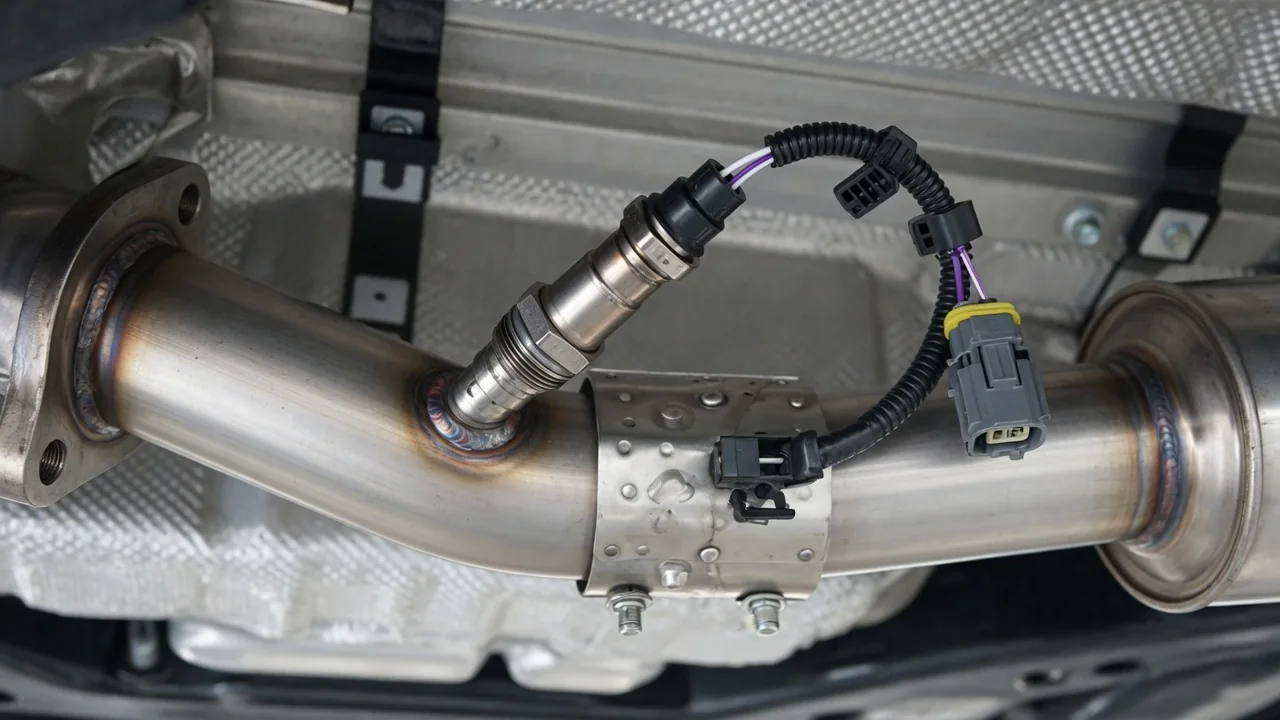
When a scan tool reports P2237 or a related wideband air/fuel sensor current-circuit code, the first task is to identify the exact circuit the powertrain control module is monitoring. These codes concern positive pumping current or related control wiring on an upstream oxygen sensor, and they describe an electrical condition rather than a confirmed failed part. Bank identification, freeze-frame data, and the vehicle’s service description decide how the rest of diagnosis should proceed.
Confirm the Exact Code and Vehicle-Specific Circuit Description
A P2237 code, P2238 code, or any neighbor in the P2237–P2242 family should be matched to service information for that vehicle’s year, make, model, and engine before the printed label is treated as final. These entries concern the upstream oxygen or wideband air/fuel sensor positive current control circuit, yet terminology and the diagnostic path still need vehicle-specific confirmation. The same caution applies to a P2243 code or P2247 code, which concern a sensor reference voltage circuit rather than the positive pumping current path.
A P2234 code needs the same identification step: confirm sensor location and circuit description in factory information, then follow the procedure written for that circuit rather than assuming it belongs with the positive current group. A stored code identifies a monitored electrical condition such as an open, low, or high reading. It does not establish which component failed. Wiring harness damage, a connector, the sensor, or a control-module circuit can all produce the same reported condition until testing separates them.
P2237, P2238, and P2239: Bank 1 Sensor 1
After that vehicle-specific check, the standard labels for Bank 1 Sensor 1 are useful orientation: P2237 is positive current control circuit/open, P2238 is circuit low, and P2239 is circuit high. Bank 1 contains cylinder 1, so the engine layout in service information is required to find its physical position. Sensor 1 is the upstream oxygen sensor, typically the wideband air/fuel sensor ahead of the catalyst, but left or right placement is not universal and must come from the exhaust layout.
Circuit low and circuit high describe how the module sees the positive pumping current path, not a direct lean or rich mixture diagnosis. A P2238 code can appear while fuel trim still looks ordinary if the fault is electrical, and a high-circuit P2239 can exist without proving the engine is running rich. Freeze-frame data stored with the code show load, temperature, and operating mode and help decide whether the condition was present at idle, during warmup, or under load.
P2240, P2241, and P2242: Bank 2 Sensor 1
On a two-bank engine, the matching Bank 2 Sensor 1 labels after verification are P2240 for positive current control circuit/open, P2241 for circuit low, and P2242 for circuit high. Service information identifies Bank 2 as the bank that does not contain cylinder 1 and locates its upstream oxygen sensor on that exhaust path. A P2240 code or P2241 code therefore points at that bank’s positive pumping current circuit, not a universal left-side or right-side connector.
If a scan tool reports Bank 2 on an inline engine that has only one cylinder bank, recheck code transcription, scanner interpretation, and vehicle identification before any parts are ordered. A P2242 entry that does not fit the engine is often a misread code or the wrong vehicle profile in the tool. Even when bank identification is correct, the code alone cannot justify ordering a sensor or choosing a connector to inspect. Circuit continuity through the wiring harness, terminal fit, and the module’s monitoring path remain open until the manufacturer sequence is followed.
Related P2251–P2255 Negative Current Control Codes
P2251 through P2255 are related negative current control circuit codes, and each definition still needs confirmation in the vehicle’s service information. After that check, the usual Bank 1 Sensor 1 labels are P2251 circuit/open, P2252 circuit low, and P2253 circuit high. A P2251 code or P2252 code belongs to the negative pumping-current side of the same wideband air/fuel sensor, not to the P2237–P2242 positive current pins. Mixing those paths during testing can send diagnosis to the wrong wire.
On Bank 2 Sensor 1, the verified standard labels are P2254 circuit/open and P2255 circuit low. A P2254 code or P2255 entry should be routed with those negative-current procedures after the factory description is confirmed. Positive current pinouts or tests written for P2237 through P2242 must not be applied to P2251–P2255 without service information that maps those checks to the negative current control circuit. Shared connectors do not make the circuits interchangeable.
Symptoms and When to Stop Driving
Possible symptoms include an illuminated check-engine light, rough running, hesitation, or increased fuel consumption, though none has to appear with every current-circuit fault. An electrical open, low, or high condition on a wideband air/fuel sensor can set P2237 or a related code while drivability still feels normal if the module substitutes a default strategy. Symptoms alone cannot identify the sensor, the bank, or which circuit component is at fault.
Prompt diagnosis is still warranted because an upstream oxygen sensor that cannot report pumping current correctly can leave fuel control less accurate than designed, even when the driver notices little change. A flashing check-engine light, severe misfire, stalling, or substantial power loss warrants stopping safely and seeking assistance. Those conditions can damage a catalyst or leave the vehicle unable to keep traffic speed. A steady lamp with a P2238, P2240, or P2252 code does not prove that urgency, but the circuit still needs identification.
Possible Causes and Safe Visual Observations
Damaged wiring, connector corrosion, loose terminals, an internal sensor fault, and a control-module circuit fault are all possible sources of a current-circuit code, and each needs evidence rather than assumption. Recent exhaust or engine work is useful context because a disturbed connector or rerouted harness can lose circuit continuity without the sensor having failed. That history does not prove causation; it only suggests where to look first when P2237, P2241, or a related current-control code appears after service.
Owner observations should stay with accessible wiring and connectors, engine off and exhaust fully cooled, without reaching near hot parts or going under an unsupported vehicle. Visible chafing, melted insulation, or a loose connector on the wiring harness are clues to report, not confirmation of the full fault. Replacement based only on the code can leave an unresolved wiring or control-circuit problem, so a new wideband air/fuel sensor may not clear P2239 or P2242 if the open or short remains in the harness or module path.
Professional Testing and Repair Verification
Before any diagnostic information is cleared, record all codes, their status, and freeze-frame data, including companion entries such as a P2243 code, P2247 code, or P2252 code that may share the same snapshot. A technician then uses the correct wiring diagram, connector identification, and manufacturer diagnostic sequence to narrow the fault. Professional checks of circuit integrity and specified sensor or controller signals belong in that sequence. Pin-level probing, jumper wires, or applied external voltage are not owner procedures and can damage a wideband sensor circuit.
Wideband sensor data also require compatible scan-tool support and vehicle-specific interpretation, so universal voltage or current thresholds should not be used as pass-fail limits. After repair, verification must follow the prescribed operating conditions: confirm the original code does not return, related current-circuit codes stay clear, and the applicable monitor can complete. A P2237, P2240, or P2254 repair that looks successful at idle may still fail when the module retests the current control circuit at a different load or temperature.