P2195–P2198, P2231 and P2234: Upstream Oxygen Sensor Faults
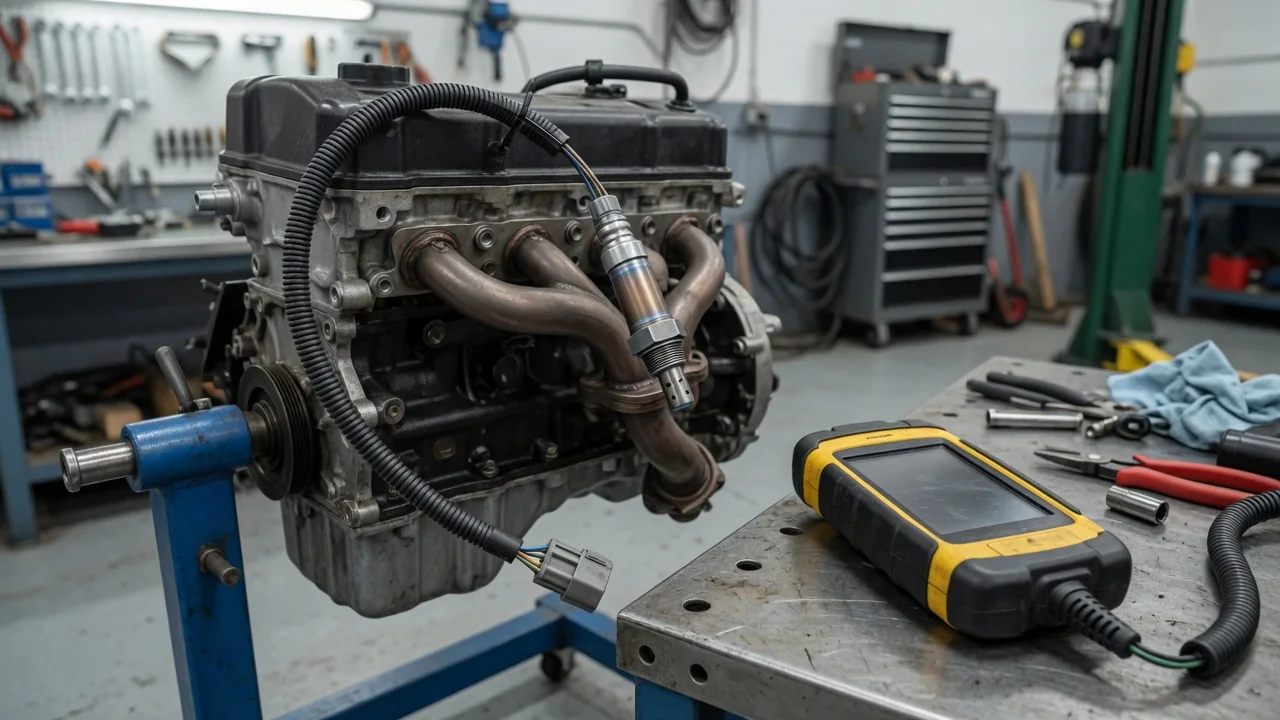
Codes P2195, P2196, P2197 and P2198 mean an upstream oxygen sensor or air-fuel ratio sensor signal looks biased or stuck lean or rich. P2231 and P2234 point to a sensor signal circuit shorted to the heater circuit. Each code shows where the engine computer saw a problem, but none of them names a failed part. Knowing what the sensor measures helps you tell real mixture faults from electrical ones.
Confirm the code definition and locate the affected upstream sensor
Before you interpret a P2196 code or any related fault, look up the full description in service information for the vehicle's year, make, model and engine. The wording and the conditions that set the code vary by manufacturer. Bank 1 is the side of the engine that contains cylinder 1, and sensor 1 is the upstream sensor ahead of the catalytic converter. On a V-type engine, bank 2 sensor 1 sits on the opposite cylinder bank. Use the engine layout and cylinder numbering to find it rather than assuming it's on the driver or passenger side.
Many vehicles use a conventional switching oxygen sensor upstream. Others use a wideband air-fuel ratio sensor that reports the mixture differently, often as a current or a calculated lambda value. A reading that looks normal for one type can look faulty for the other, so compare live data against the correct specifications. A stored code only describes a condition the computer detected during a self-test. It doesn't prove the sensor needs replacement, because fueling problems, air leaks and wiring faults can produce the same result.
P2196 and P2198: Upstream signal biased or stuck rich
P2196 generally means the bank 1 sensor 1 signal is biased or stuck rich. A P2198 code describes the same condition for bank 2 sensor 1. Both need vehicle-specific confirmation. The computer has seen the upstream signal stay on the rich side longer or more consistently than expected. You may notice a check engine light, rough running, higher fuel consumption or a fuel smell from the exhaust. Many vehicles set P2196 or P2198 without any obvious change in how they drive.
A truly rich mixture can come from excessive fuel pressure, from injector leakage that lets fuel drip after shutoff, or from other fueling faults such as a purge valve that stays open or an inaccurate airflow reading. The sensor itself may also be the source. A contaminated or slow sensing element, or a wiring fault that skews the voltage, can make the signal read rich while the mixture is fine. The code alone can't tell these cases apart, which is why fuel trims and supporting tests matter.
P2195 and P2197: Upstream signal biased or stuck lean
A P2195 code typically means the bank 1 sensor 1 signal is biased or stuck lean. A P2197 code identifies the same condition on bank 2 sensor 1, again subject to vehicle-specific confirmation. A true lean mixture often traces back to unmetered intake air, meaning air that gets past the airflow sensor without being measured through a cracked hose, loose duct or vacuum leak. Not enough fuel delivery from a weak pump, a restricted filter or low pressure can also starve the cylinders. So can injectors whose flow is restricted by deposits.
Some faults make the upstream sensor report lean when the mixture isn't lean. An exhaust leak ahead of the sensor can draw outside air past the sensing element. A misfire sends unburned oxygen into the exhaust stream. A worn-out sensor or a wiring problem can also bias the signal. Symptoms can include hesitation when accelerating, an uneven idle or a loss of power. None of these proves that a particular part has failed, because several different faults cause nearly identical driving complaints.
P2231 and P2234: Sensor signal shorted to the heater circuit
P2231 is commonly defined as the bank 1 sensor 1 signal circuit shorted to the heater circuit. A P2234 code describes the same fault on bank 2 sensor 1, once the definitions are confirmed for the vehicle. Unlike the biased codes, a P2231 code points to an electrical connection between two circuits that should stay separate. The heater and signal circuits share a connector and harness, so the unwanted path can be in the wiring or inside the sensor itself. When a sensor breaks down internally, heater voltage can leak into the signal.
Possible causes include insulation damaged where the harness rubs or sits near exhaust parts, heat that hardens and cracks wire coverings, and connectors contaminated by moisture or oil. Poor earlier wiring work, such as a bad splice or a mismatched replacement connector, can also be to blame. Confirming the fault takes vehicle-specific wiring diagrams and professional circuit testing with the right equipment. Wire colors differ between vehicles and even between model years, so don't rely on them. Jumper tests or probing powered circuits can damage the engine computer.
Use scan data and safe observations to narrow the fault
Before clearing anything, write down all stored and pending codes and any available freeze-frame data. Freeze-frame data records engine speed, load, coolant temperature and fuel trims at the moment the fault set. Those conditions show whether the problem appeared at idle, while cruising or under load. Short-term and long-term fuel trims show whether the computer is adding or removing fuel. Read alongside sensor data and any related misfire or fuel-system codes, they point the diagnosis in a direction, but they don't prove a single cause.
Owners should limit themselves to visual checks with the engine off and cool, such as looking for loose intake connections, disconnected vacuum hoses or visibly damaged wiring. Stay away from hot exhaust parts, and never work under a vehicle that isn't properly supported. Fuel-pressure, injector, intake-leak, exhaust-leak and electrical tests belong with a professional. After a repair, confirm the fix by driving under the right conditions and checking that the relevant monitors (the computer's self-tests) run and pass. A warning light that goes out doesn't by itself mean the fix will last.
Decide when to stop driving and what to tell the shop
Whether the vehicle is safe to drive depends on its symptoms and how it runs, not just on the code number. A steady light with normal performance often allows careful driving to a shop. Stop safely and arrange assistance if the check engine light flashes, the engine shakes severely, the engine stalls or you lose a lot of power. Misfires can overheat the catalytic converter. If you smell strong raw fuel or see fuel leaking, shut the engine off safely, don't restart it and get help.
When you contact a shop, give the exact codes rather than a summary. Say whether P2196, P2198 or a heater-circuit code such as P2231 or P2234 appeared, and which bank was affected. Describe the symptoms, when they started and the driving conditions at the time. Mention recent repairs, especially work on the intake, exhaust, fuel system or sensor wiring. Sharing the freeze-frame information lets the technician find the actual cause before recommending parts, so you're less likely to pay for a sensor you didn't need.