P2176 Code: Idle Position Learning and Diagnostic Next Steps
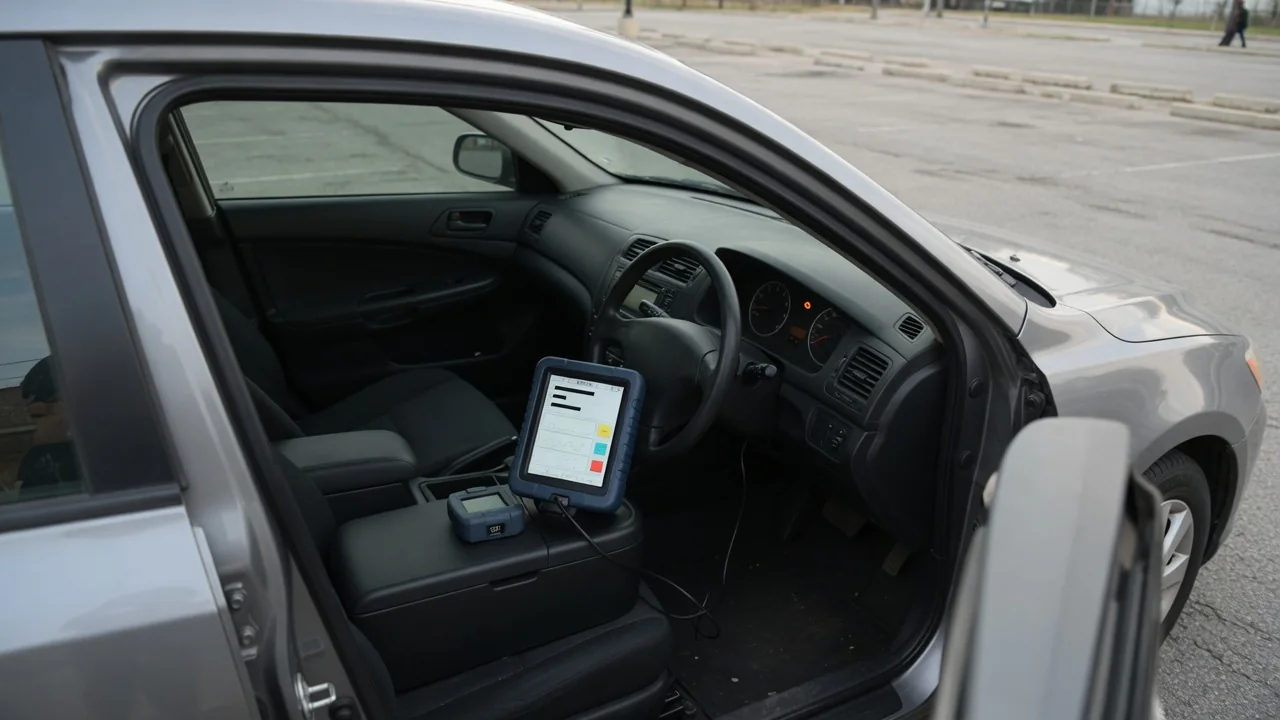
When P2176 appears after a battery disconnection or throttle body cleaning, the control module is often reporting that idle position learning has not finished rather than naming a failed part. Electronic throttle control depends on a stored idle reference that can be lost or outdated when power is interrupted or airflow changes. Confirm the vehicle-specific definition before replacing the throttle actuator or assuming idle will stabilize.
What P2176 Means for Your Vehicle
P2176 is manufacturer-dependent, so the first useful step is to look up the definition and diagnostic procedure for the exact year, make, model, and engine. On many vehicles the description points to idle position learning that has not been completed, but wording and enable conditions differ, and a similar number can describe a different electronic throttle control issue on another platform. Treating the code as a universal throttle-body failure label leads to parts replacement that the stored information never justified.
Where the documented definition identifies an idle position that has not been learned, the control module is saying it does not yet have a reliable throttle position to use as the idle reference. Electronic throttle control holds the plate with a throttle actuator rather than a cable, and idle airflow is managed by commanding a small opening that must be known after each successful learn. The presence of P2176 is evidence to interpret, not proof that the throttle body, actuator, or control module has failed and must be replaced.
Why the Code May Follow Battery or Throttle Work
A battery disconnection can erase or interrupt learned electronic throttle values, depending on how that vehicle stores idle position learning in keep-alive memory. After power returns, the control module may need a successful idle relearn before it will treat the throttle actuator command as a valid idle reference. Low voltage during a difficult start or a weak battery can also prevent learning from finishing even when the battery was never fully disconnected, which is why recent electrical work is useful context rather than automatic proof of the cause.
Throttle body cleaning can change how much air passes at a previously learned plate angle, so the old idle reference may no longer match actual airflow. Adaptation then becomes relevant because the module is comparing commanded position against the idle it expects, and a mismatch can set P2176 even when the actuator itself still moves. Record whether unstable idle, stalling, or a warning light began before the cleaning or only afterward; the timeline helps a technician decide whether the work interrupted learning or merely coincided with an existing fault.
Idle Symptoms and Reasons to Stop Driving
When idle position learning is incomplete, some vehicles show an unstable idle, stalling at stops, an unusually high or low idle speed, or reduced engine response as the throttle actuator hunts for a usable opening. Severity varies by year, make, model, and how the electronic throttle control strategy handles a missing idle reference. Other vehicles may only illuminate a warning light while the engine still idles, so the absence of roughness does not confirm that learning has finished or that P2176 can be ignored.
A warning light without obvious drivability complaints still warrants diagnosis because freeze-frame data and pending codes can show that the module never completed idle relearn. Conversely, a smooth idle after a battery disconnection or throttle body cleaning does not prove the stored idle position is valid. Stop driving and arrange professional assistance if stalling, unpredictable engine response, or reduced power makes vehicle control unsafe, especially in traffic or at intersections where a sudden loss of idle can leave the vehicle without the response the driver expects.
Useful Checks Before Clearing P2176
Before clearing P2176, preserve stored and pending codes, freeze-frame data, and any dashboard warning messages. Freeze-frame data captures engine speed, load, temperature, and related conditions at the moment the code set, which is far more useful than a blank history after a scan tool erase. Write down recent battery disconnection, charging, jump-starts, starting difficulties, and throttle body cleaning, along with whether the warning appeared at idle, during warmup, or only after accessories were switched on.
With the engine off, a brief visual check can note obviously loose intake tubing, an unseated air duct, or wiring that looks disturbed near the throttle actuator after recent work. Do not dismantle the throttle body or move the electronic throttle plate by hand, because forcing the plate can damage the actuator and is not a diagnostic step. These observations belong in the same record as the codes; they explain why idle position learning might have been interrupted without proving that any particular part has failed.
What an Idle Relearn Generally Involves
An idle relearn is a vehicle-specific service procedure, not a generic pedal or ignition sequence copied from another model. The documented method typically sets prerequisites such as battery condition, engine temperature, and accessory settings so electronic throttle control can sample a stable idle. On some vehicles learning occurs once those operating conditions are met; on others a compatible scan tool must command idle position learning. Guessing a sequence can leave the throttle actuator without a valid idle reference even if the engine appears to run.
When the procedure succeeds, the control module establishes or updates the idle position it will command through the throttle actuator. Completion must be checked against the documented criteria, which may include a status flag on a scan tool, the absence of P2176 after the required operating conditions, or a stable idle within the conditions the procedure names. Clearing the code is a separate action from completing the relearn; erasing P2176 without a successful idle position learning cycle does not show that the underlying problem has been resolved.
When Relearning Fails or the Code Returns
If idle relearn fails or P2176 returns, the result can mean prerequisites were not met, battery voltage was too low, the engine was not at the required temperature, or another fault still prevents learning. That outcome does not by itself identify a defective throttle body, throttle actuator, or control module. Professional diagnosis following the vehicle procedure may include supply-voltage checks, intake inspection for unmetered air, wiring evaluation at the actuator connector, and comparison of throttle command with actual position data.
Bring the technician the preserved codes, freeze-frame data, warning-message notes, and the timeline of battery disconnection or throttle body cleaning so diagnosis starts from what actually happened rather than from a blank module. Confirm both that idle position learning status meets the documented criteria and that stalling, unstable idle, or reduced response has stopped before considering the repair complete. A scan tool that no longer shows P2176 is useful only when those two checks agree; otherwise the idle reference may still be missing and the code can return.