P2138 Code: Pedal Sensor Correlation, Symptoms, and Safe Checks
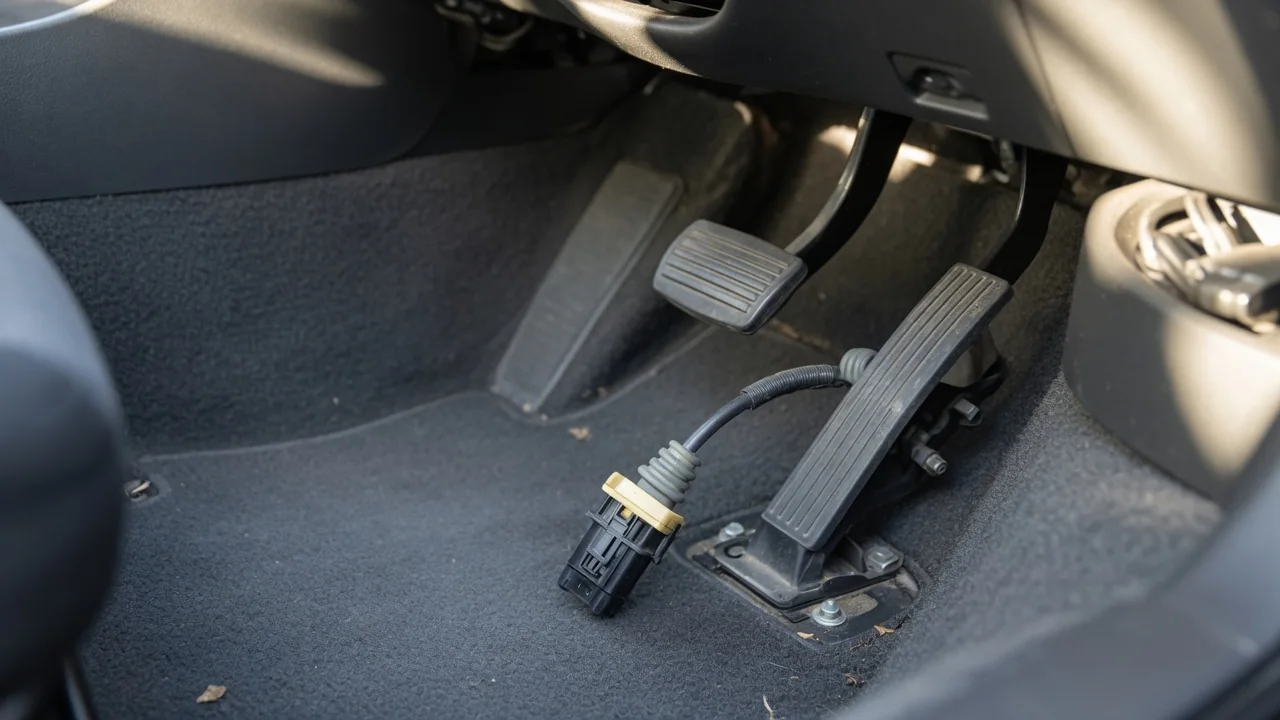
A P2138 code usually appears when the engine control system decides that two accelerator pedal position signals no longer agree the way they should. The result can range from a warning light to reduced engine power. It helps to know what the code and its close relatives, P2139 and P2140, can indicate, which symptoms call for caution, and what evidence to keep. That way the technician can confirm the real fault instead of guessing.
Verify What P2138 Means for the Vehicle
Before you interpret a P2138 code, confirm its definition and diagnostic procedure for the exact year, make, model, and powertrain. Generic code lists commonly describe P2138 as a throttle/pedal position sensor or switch D/E voltage correlation fault. The letters D and E are labels, though, not universal part names. On some drive-by-wire vehicles they may refer to two signal tracks within the accelerator pedal position sensor. Only the manufacturer's service information can confirm which components and circuits those labels identify on a given vehicle.
Signal correlation means the control module compares related position signals and checks whether they move together in their expected relationship. A pedal sensor may report position on more than one circuit so the module can cross-check them. If one signal rises while the other lags, jumps, or drifts outside its allowed window, the module can flag a mismatch. That is different from a throttle body correlation fault. A throttle body fault involves the throttle plate sensors and follows its own diagnostic path.
Confirm the Pedal Circuit Applications of P2139 and P2140
P2139 and P2140 are often discussed alongside P2138 as related correlation codes. Their exact meaning and circuit assignments still have to come from vehicle-specific service information. Each code may compare a different pairing of signals, and the manufacturer decides which sensor tracks, connector cavities, and wires belong to each label. Don't assume a code points to a particular pin, harness branch, or sensor location just because a chart or another vehicle described it that way. The same number can refer to different physical circuits across applications.
Once the verified application is known, a P2139 or P2140 can be explained within that specific pedal circuit, never as a universal diagnosis. Record every accompanying code along with its status, whether stored, pending, current, or history, because the combination can say more than any single number. A correlation code that appears alongside circuit-voltage codes may call for a different testing path than one that appears alone. The code number by itself does not establish which component has failed. It only shows the technician where to start looking.
Recognize Pedal Response and Reduced-Power Symptoms
Possible P2138 symptoms include limited acceleration, a pedal that responds slowly or inconsistently, a lit check engine or electronic throttle warning light, and a reduced engine power message on the dash. Not every vehicle shows all of these, and some drivers notice only a warning lamp with no obvious drivability change. Limp mode is a protective strategy. When the module cannot trust the pedal signals, it may limit throttle opening or engine output. That restriction confirms the module saw a problem, but it does not identify the failed part.
If accelerator response becomes unreliable or available power feels inadequate for the traffic around you, signal, move to a safe location, and stop. A vehicle that cannot merge or hold highway speed puts its occupants and other drivers at real risk. Call roadside assistance or a tow if reduced power returns after a restart, if the pedal behaves erratically, or if the route to a shop involves highways or heavy traffic. Avoid road tests meant to reproduce a loss of response. That evidence is better gathered in a controlled setting.
Understand What Can Disrupt Pedal Signal Correlation
One possibility is a fault inside the accelerator pedal position sensor or pedal assembly, such as worn internal sensing elements or a sensor that no longer tracks smoothly. Even so, the code alone does not prove the pedal needs replacement. The pedal wiring harness deserves equal suspicion. Chafed insulation near the pedal bracket, loose terminal tension in a connector, moisture from a leaking windshield or wet carpet, and corrosion on terminals can all interrupt or distort the expected signals. Any of these can produce the same correlation complaint as a failing sensor.
Reference-voltage and ground problems are other possibilities. If a shared sensor reference voltage sags or a ground connection develops resistance, the signals can shift enough to break their expected relationship even when the sensor itself is sound. Confirming this takes circuit-specific testing, not assumption. An intermittent signal fault makes things harder. A vehicle that recovers after a restart, or runs normally for days, has not repaired itself. Temporary recovery neither establishes the cause nor confirms that an earlier repair worked.
Gather Useful Evidence Without Disturbing the Circuit
Before anyone clears codes, save the stored and pending codes, any available freeze-frame data, and a photo of the dashboard messages. Freeze-frame data may capture conditions at the moment the fault set, such as engine speed, load, and pedal readings. That snapshot is lost once the codes are erased. Also note when the symptom happened: the weather, whether the car was recently washed or out in heavy rain, whether the floor was wet, and any recent work near the footwell, such as carpet, stereo, or pedal-area repairs.
A simple visual check is reasonable once the vehicle is parked securely and switched off. Look for a bunched or stacked floor mat touching the pedal, any object that could block pedal travel, and obvious damage to wiring you can see without removing panels. Stop there. Do not disconnect connectors, probe terminals, flex the harness with the engine running, or try to bypass pedal circuits. Those actions can create new faults, erase useful evidence, or cause unexpected throttle behavior.
Use Professional Testing to Confirm the Repair
A technician starts with the correct wiring diagram and the manufacturer's diagnostic procedure for the specific vehicle. The procedure guides evaluation of each pedal signal through its range, circuit integrity between the pedal and the module, reference voltage, and grounds. Scan data must be interpreted against the manufacturer's expected signal relationships. An isolated reading, such as one track showing a particular voltage, means little without knowing how it should compare with the other track at the same pedal position. Correlation is about the relationship between signals, so the diagnosis has to be too.
Evidence should come before any recommendation to repair wiring or replace the pedal assembly. If replacement is justified, the technician should check whether the vehicle needs a relearn, calibration, or other setup step afterward. Confirming the repair then means running appropriate functional checks, reviewing monitor or readiness status where relevant, and making sure the fault does not return under the conditions recorded earlier. Clearing the code alone proves nothing. An intermittent fault may stay quiet for days before it resets and reduced engine power comes back.