P2109 Code: Throttle Minimum Stop Performance and Diagnosis
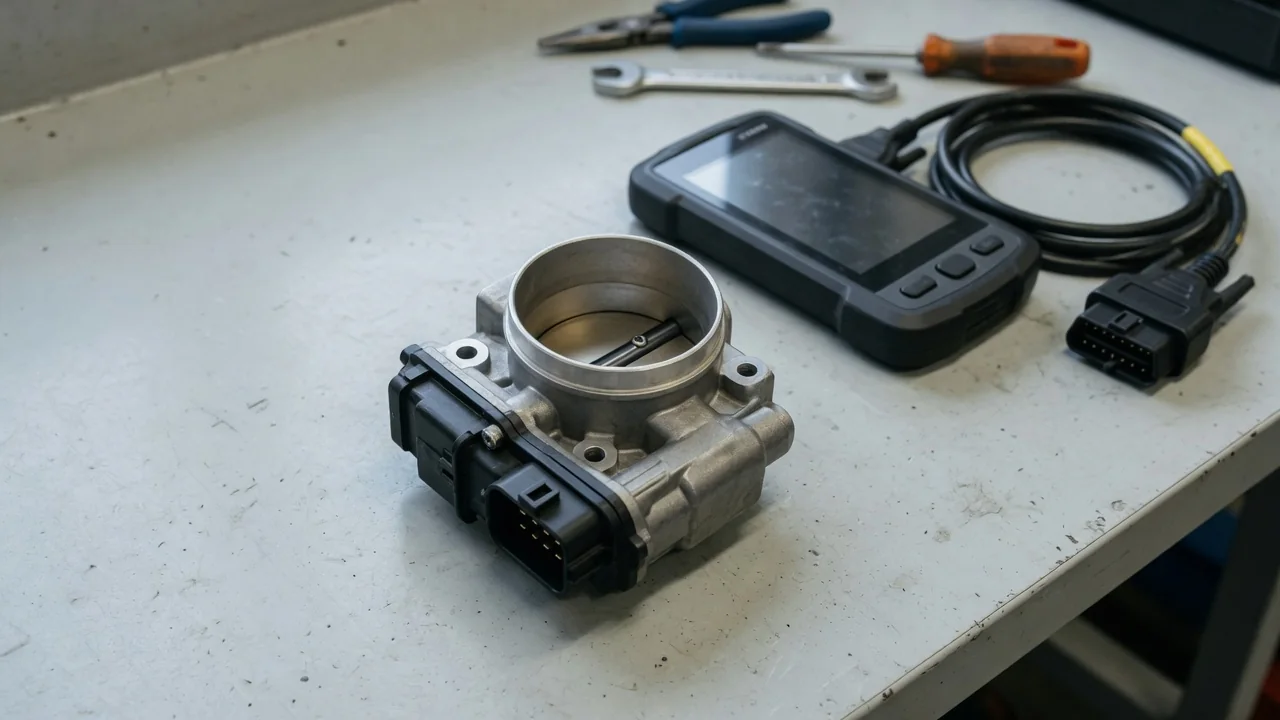
P2109 is a diagnostic trouble code often tied to electronic throttle control and how the module checks throttle position near the intended minimum stop. Many scan tools label it as throttle or pedal position sensor A minimum stop performance, yet the official definition and enable conditions still depend on the vehicle. The code is evidence of a monitoring result, not proof that a sensor, actuator, or throttle body has failed.
What P2109 Means for Throttle Position Monitoring
On many vehicles P2109 is described as throttle or pedal position sensor A minimum stop performance. That common label is a starting point, not a substitute for the factory definition. Before drawing conclusions, confirm the code description, enable conditions, and failure criteria for the exact year, make, model, and engine. Electronic throttle control strategies differ, so a reading that looks familiar on a generic scan tool can still mean something different on a particular powertrain.
Minimum stop monitoring typically compares reported position feedback with the throttle's intended minimum opening while the control module runs its electronic throttle strategy. How that check is performed, when it is enabled, and what counts as a failed result are determined by the vehicle, not by a universal rule. A stored P2109 does not identify a failed throttle position sensor A, locate that sensor in the assembly, or prove the throttle body must be replaced. It only shows that the monitored minimum stop performance did not match expected behavior.
Symptoms and When to Stop Driving
P2109 may be accompanied by a check engine light, reduced engine power, limited accelerator response, an unstable idle, or stalling. None of those symptoms is guaranteed, and some vehicles store the code with little more than a warning lamp. Driveability can also remain acceptable until the electronic throttle control strategy limits output. Additional messages, limp-mode behavior, and how the accelerator actually feels matter more than the presence of the code when judging how urgent the situation is.
A stored P2109 by itself cannot establish whether continued driving is safe. Urgency depends on what the vehicle is doing, not on the code number. If accelerator response becomes unpredictable, the engine repeatedly stalls, or reduced engine power prevents merging, climbing, or keeping pace with traffic, pull over when it is safe and arrange assistance. Unreliable throttle response is a control and safety issue, not a problem to diagnose while moving.
Deposits, Wear, and Other Possible Causes
Throttle body deposits near the plate can change airflow and mechanical rest behavior at the minimum stop position, so the reported position may not match what the control strategy expects. Carbon or residue is a possible contributor, not a diagnosis. Visible deposits do not prove they caused P2109, and a clean-looking throttle bore does not rule out a position-feedback or actuation problem. The code still has to be interpreted against the vehicle's diagnostic path.
Wear, binding in the throttle mechanism, actuator faults, and inconsistent throttle position sensor A feedback can all produce a minimum-stop performance concern, but each possibility needs confirmation. Connector fit, wiring integrity, supply voltage, and throttle adaptation issues belong in the investigation only when the vehicle's procedure supports those checks. Ranking carbon, wear, or a sensor as the most likely cause without that evidence overstates what P2109 can show.
Useful Observations Before a Shop Visit
Before a shop visit, note when symptoms appear, any reduced-power or throttle warnings, and recent battery, intake, or throttle-related work. Those details help a technician decide whether the concern is intermittent, follows a power loss, or started after service that could affect throttle adaptation. Record idle quality, stalling, and whether accelerator response changes with temperature or after a restart. The goal is a useful history, not an owner diagnosis of P2109.
Save all stored and pending codes plus available freeze-frame data before anyone clears the memory. Freeze-frame data can capture engine speed, load, coolant temperature, and related values at the moment P2109 set, which is often more useful than a later snapshot. Limit physical inspection to accessible external damage or a visibly disconnected connector with the vehicle off. Do not touch the throttle plate, probe live circuits, or disassemble the electronic throttle assembly.
How Professional Testing Identifies the Fault
A technician should start with vehicle-specific diagnostic information and review related codes before attributing P2109 to one part. Companion faults involving electronic throttle control, throttle position sensor A, actuator circuits, or power-supply issues can change the test path. Interpreting minimum stop performance without that context risks replacing a throttle body or sensor that still meets specification. Manufacturer-dependent criteria also decide which monitors, adaptations, and comparisons are valid for that engine.
Professional testing typically compares commanded and reported throttle position, checks whether position signals stay consistent near the minimum stop, and evaluates electrical integrity and mechanical movement with the correct equipment. A live-data reading or a look at throttle body deposits is not enough by itself, because a plausible scan-tool value can still hide binding, a weak actuator, or an unstable reference. Actuator tests and circuit measurements belong in a controlled shop setting, not as improvised checks on a running vehicle in traffic.
Repairs and Checks That Confirm Recovery
Repairs should follow verified findings rather than the code number. If testing confirms deposits are interfering with minimum-stop behavior, use only an approved cleaning method for that throttle body. Wiring or connector repair, correction of a supply-voltage problem, or replacement of a confirmed faulty sensor, actuator, or assembly may be appropriate when those faults are proven. Guessing at a throttle body replacement because P2109 is present skips the confirmation the electronic throttle system needs.
Cleaning chemistry, whether the position sensor is serviceable separately, and any throttle adaptation or relearn steps depend on the vehicle. There is no universal cleaning or relearn procedure that applies to every electronic throttle control system. After the correct work, confirmation means the throttle operates normally through its commanded range, relevant monitors complete as required, and P2109 does not return under the conditions that previously set it. Clearing the code without those checks does not prove the minimum stop performance concern is resolved.