P2104, P2105, P2106 and P2110: Forced Throttle Control Modes
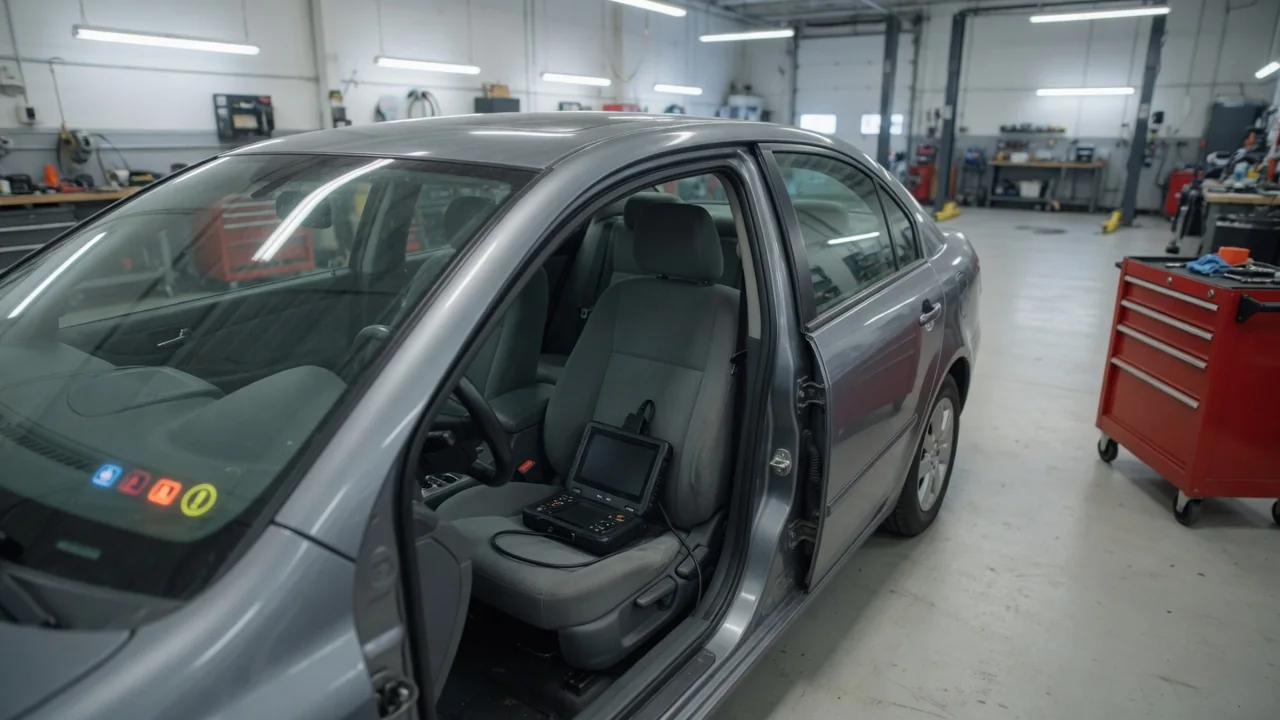
When electronic throttle control cannot guarantee reliable torque, the powertrain control module can command a protective operating mode instead of allowing unrestricted accelerator response. Diagnostic trouble codes P2104, P2105, P2106, and P2110 report those forced idle, shutdown, limited power, or limited RPM strategies. Each code is evidence of a restriction the module chose, not proof that the throttle actuator or pedal has failed, and the exact meaning must be confirmed for the vehicle.
What a Forced Throttle Operating Mode Means
P2104, P2105, P2106, and P2110 belong to a family of throttle actuator control system codes that describe how the engine was constrained, not which part broke. Before treating any of them as interchangeable, confirm the published definition, enabling conditions, and diagnostic flow for that year, make, model, and powertrain. Manufacturer-dependent wording and enable criteria can change what the same number means, so a generic code lookup is only a starting point.
Electronic throttle control depends on coherent accelerator pedal position and throttle position signal data so the module can deliver requested torque. When those inputs, the actuator, wiring, or related monitors no longer support that calculation, the module can force a protective operating mode rather than trust driver demand. Companion fault codes, the order in which they set, and freeze-frame data from the moment of the event often reveal whether the restriction followed a signal disagreement, a power-supply problem, or another monitored failure.
P2104: Understanding a Forced Idle Command
On many vehicles P2104 is described as throttle actuator control system—forced idle, a label that still requires confirmation in that model's service information. In this protective operating mode the module holds engine speed near idle and may ignore further accelerator pedal position changes so it does not add torque it cannot control. Drivers often notice little or no response to the pedal, a warning lamp or message, and an engine that will not climb off idle even though it continues to run.
A stored P2104 does not establish that the throttle body, throttle actuator, or accelerator pedal has failed. Forced idle is the module's chosen response after it lost confidence in torque control; the initiating problem may be a companion code, a wiring or power issue, or another monitored system. Note whether the restriction appeared at startup or while driving and which messages were displayed, but do not try to recreate the event. Those observations, plus freeze-frame data, guide diagnosis toward the trigger instead of the idle command itself.
P2105: Understanding a Forced Engine Shutdown Command
P2105 is commonly defined as throttle actuator control system—forced engine shutdown, again subject to vehicle-specific confirmation. That description means the module commanded the engine to stop, or prepared a shutdown strategy, because it judged continued running unsafe or uncontrollable. A stored P2105 by itself does not prove shutdown is happening at the moment of the scan, nor does it reconstruct whether the driver felt a stall, a no-start, or a brief cut that later recovered.
Record any actual engine stoppage, cranking that would not catch, and warning messages together with the full scan, including companion fault codes and freeze-frame data. If the engine stops in traffic, move the vehicle out of the travel lane if it can still be steered and stopped safely, then secure it and arrange assistance rather than continuing when operation is unreliable. Do not bypass electronic throttle control or force a restart cycle as a test; those steps can hide the original trigger and create a new hazard.
P2106: Understanding Forced Limited Power
P2106 is the code most often associated with throttle actuator control system—forced limited power, a reduced-output strategy that still must be confirmed for the vehicle. In that mode the module allows the engine to run but restricts torque so acceleration feels muted and throttle response is no longer proportional to pedal travel. There is no universal speed or power cap that applies to every make; the actual limit depends on how that control strategy was written and on the conditions captured when the code set.
The fault that initiated P2106 may sit inside electronic throttle control, or it may come from another monitored system that the module treats as a reason to limit power. Companion codes, freeze-frame data, and the throttle position signal versus accelerator pedal position comparison usually matter more than P2106 itself. The presence of this code does not justify replacing or cleaning the throttle body, nor does it by itself call for a throttle relearn. Those actions address a suspected mechanical or adaptive problem only after testing shows that problem exists.
P2110: Understanding Forced Limited RPM
P2110 is typically listed as throttle actuator control system—forced limited RPM, pending verification in the applicable service information. Rather than shutting the engine down or pinning it at idle, the module caps engine speed so rpm cannot rise as the driver requests. How high that cap sits, and whether it changes with gear, temperature, or other conditions, is vehicle-specific; assigning a single rpm ceiling across all applications would be unsupported.
Useful evidence is what already happened: restricted engine response, the speed or load when a warning appeared, and any companion fault codes stored with P2110. Do not rev the engine or run a road test to discover the rpm limit; that exercise adds little diagnostic value and can be unsafe if torque control is already compromised. Diagnosis should stay with freeze-frame data, the throttle actuator and pedal signals, and the triggering fault that caused the module to impose limited RPM in the first place.
Preserve Evidence and Diagnose the Triggering Fault
Before clearing codes or disconnecting the battery, save the complete scan report, code status, and freeze-frame data. A basic reader may show only P2104, P2105, P2106, or P2110 and miss companion fault codes that identify the actual trigger. Vehicle-specific procedures then rank those codes and the recorded operating data to reconstruct sequence; listing order on the scan tool does not by itself prove which failure came first. Owner checks should stop at written symptoms and a visual look for obvious damage with the engine off.
Do not pry the throttle plate, probe live circuits, or bypass protective controls; those actions can injure, damage the actuator, or erase the evidence needed to interpret the forced mode. Professional testing is appropriate when power supplies, wiring, accelerator pedal position and throttle position signals, actuator operation, or module data must be measured against factory criteria. A key cycle may temporarily restore response without proving a repair. If shutdown, stalling, or inadequate acceleration returns, stop safely and arrange recovery rather than continuing to drive a vehicle that cannot deliver reliable torque.