P2088–P2095: Camshaft Actuator Control Circuit Low and High Codes
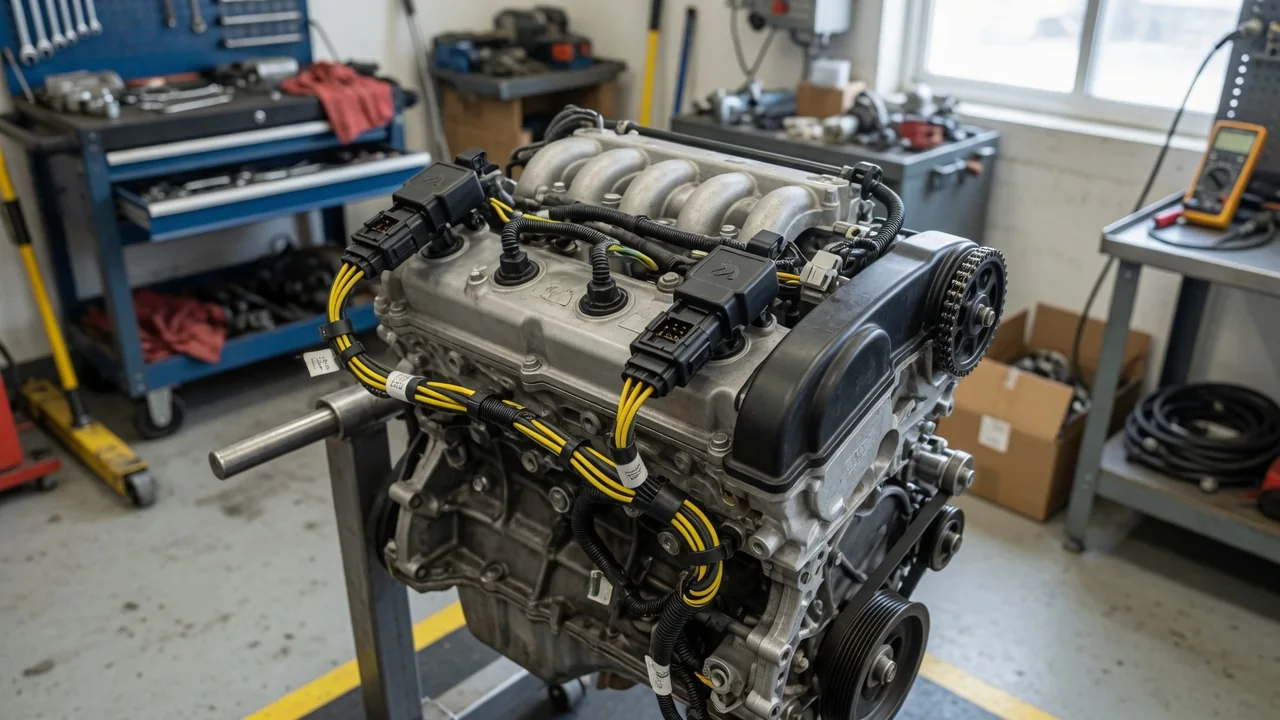
A P2088 code and related codes from P2089 through P2095 report a camshaft actuator control circuit the powertrain control module sees as electrically low or high. These apply to actuators A and B on bank 1 and, on two-bank engines, bank 2. They monitor variable valve timing circuit conditions, not oil level, cam position, or timing advance. Confirm each definition on the vehicle.
Verify the Code Definition and Locate the Correct Actuator
A P2088, P2089, or P2090 code and the rest of this range are manufacturer-dependent. Service information for the vehicle's year, make, model, and engine must define each code and supply the matching diagnostic procedure before the reading is interpreted. Circuit low and circuit high describe monitored electrical conditions on the camshaft actuator solenoid control circuit, not oil level, camshaft position, or cam advance.
Bank identification marks bank 1 as the bank that contains cylinder 1; bank 2, when present, is the other cylinder bank. An inline engine has only one bank, so a bank 2 reading should prompt a check of scan-tool interpretation and vehicle identification. Actuator A and B identities are engine-specific. Do not assume A is intake and B is exhaust, or that either sits on a fixed side of the engine. Locate both from service information before inspecting any electrical connector.
P2088 and P2089: Actuator A Circuit on Bank 1
Subject to vehicle-specific confirmation, P2088 identifies actuator A control circuit low on bank 1, and P2089 identifies that circuit high. The P2088 code is the low-side counterpart of the P2089 code; both refer to actuator A on the bank that contains cylinder 1. Those labels show which solenoid circuit the powertrain control module was monitoring, not that the actuator itself has failed. Either code requires diagnosis of wiring, the connector, the solenoid, and the module driver.
On a V-type engine, bank 1 actuator A is one of several camshaft actuator solenoids. Its location may be at the front of the head, in a valley assembly, or elsewhere, depending on the engine family. Following the wiring harness from the correct connector is more reliable than guessing from a similar engine. Because P2088 and P2089 only report an out-of-range electrical condition, a seized phaser or timing-chain concern would need other evidence.
P2090 and P2091: Actuator B Circuit on Bank 1
The same confirmation rule applies to actuator B on bank 1: P2090 identifies actuator B control circuit low, and P2091 identifies that circuit high. A P2090 code is the bank 1 actuator B counterpart of P2088, and a P2091 code is the high-circuit counterpart of P2089. Actuator B on bank 1 is a second solenoid circuit, not another name for the same part. Locate the correct bank 1 actuator B connector before evaluating damage or authorizing a repair.
Additional circuit codes and their stored status help a technician decide whether shared electrical components need testing. If P2090 or P2091 appears with P2088 or P2089, the two bank 1 actuator circuits may share a supply, ground, or harness run. A common power or ground fault then becomes more plausible than two independent solenoid failures. Pending versus confirmed status, and whether codes return after a clear, also shape the test plan. Those clues still require measurement.
P2092 Through P2095: Actuator Circuits on Bank 2
On engines with a second cylinder bank, P2092 through P2095 cover the matching actuator circuits on bank 2. Subject to vehicle-specific confirmation, P2092 is actuator A control circuit low on bank 2, and P2093 is that circuit high. P2094 is actuator B control circuit low on bank 2, and P2095 is that circuit high. A P2092 code is the bank 2 analog of P2088, and a P2094 code is the analog of P2090. Confirm descriptions and locations before drawing conclusions.
A bank 2 label that does not match the verified engine configuration is a reason to check scan-tool interpretation and vehicle identification, not a reason to hunt for a second head on an inline engine. When bank 2 is present, actuator A and B still need engine-specific locations. Heat shields and intake plumbing often hide the bank 2 connectors. A P2093 or P2095 code remains an electrical-circuit finding until testing shows which part of that circuit is out of range.
Symptoms and Signs That Require Stopping
An illuminated malfunction indicator is the usual notice that a P2088 code or related actuator-circuit code has stored. Rough idle, hesitation, reduced power, or stalling can appear if variable valve timing is not commanded as intended, yet symptoms may be absent when the cam follows a default path. Symptoms alone cannot identify which connector, wire, solenoid, or control-module circuit is responsible. Two vehicles with the same P2091 code can feel different if one circuit is open and the other is shorted.
Severe shaking, repeated stalling, pronounced mechanical noise, a flashing malfunction indicator, or an oil-pressure warning are reasons to stop safely and arrange assistance. Those signs can indicate a problem no longer limited to a control-circuit reading, including a timing or lubrication concern. Do not rely on a promised safe driving distance; next steps should follow the symptoms, warning indicators, and vehicle-specific owner guidance. A steady malfunction lamp with otherwise normal running still warrants diagnosis, but it is not the same urgency.
Possible Causes and Safe Initial Observations
Possible causes include damaged wiring, a loose or corroded electrical connector, a solenoid electrical fault, a missing supply or ground, and a powertrain control module driver fault. Each remains a possibility until evidence supports it. Circuit design determines how an open or short produces a low or high code; the label alone cannot pinpoint the electrical failure. A short to ground on one design may set a circuit-low code, while an open on another design may set the same label. Record all codes, status, freeze-frame data, and recent repair history before anything is cleared.
Owner inspection should stay with safely visible wiring harness and connector areas, with the engine off and cool. Do not probe terminals, install jumper wires, apply battery power to a solenoid, or work near belts, fans, or other moving parts. An owner-manual oil-level check can provide useful variable valve timing context, but an electrical circuit code does not establish an oil-related cause. Low oil may affect VVT and store other codes, yet P2088 through P2095 still need an electrical explanation.
Professional Testing, Repair Decisions, and Verification
Professional diagnosis uses the correct wiring diagram, circuit measurements, connector checks, and manufacturer-specified actuator tests. A technician compares commanded versus actual circuit behavior, inspects terminal condition, and tests the camshaft actuator solenoid to the published electrical limits for that engine. Those results can support a wiring repair, a terminal repair, or solenoid replacement. Control-module conclusions belong after the circuit has been shown to be intact, because a module driver fault is easy to misdiagnose if the wiring and solenoid are skipped.
Clearing codes or replacing a solenoid without testing does not demonstrate that the underlying fault has been repaired. A new camshaft actuator solenoid will not fix a pinched wiring harness, a spread terminal, or a powertrain control module driver that cannot control the circuit. After a documented repair, verification should follow the prescribed code-monitoring procedure, a review of the original symptoms, and a check for returning or related faults. If the same P2088 or P2095 code returns, the circuit diagnosis is incomplete.