P2061 to P2064 Codes: Reductant Supply Control Circuit Faults
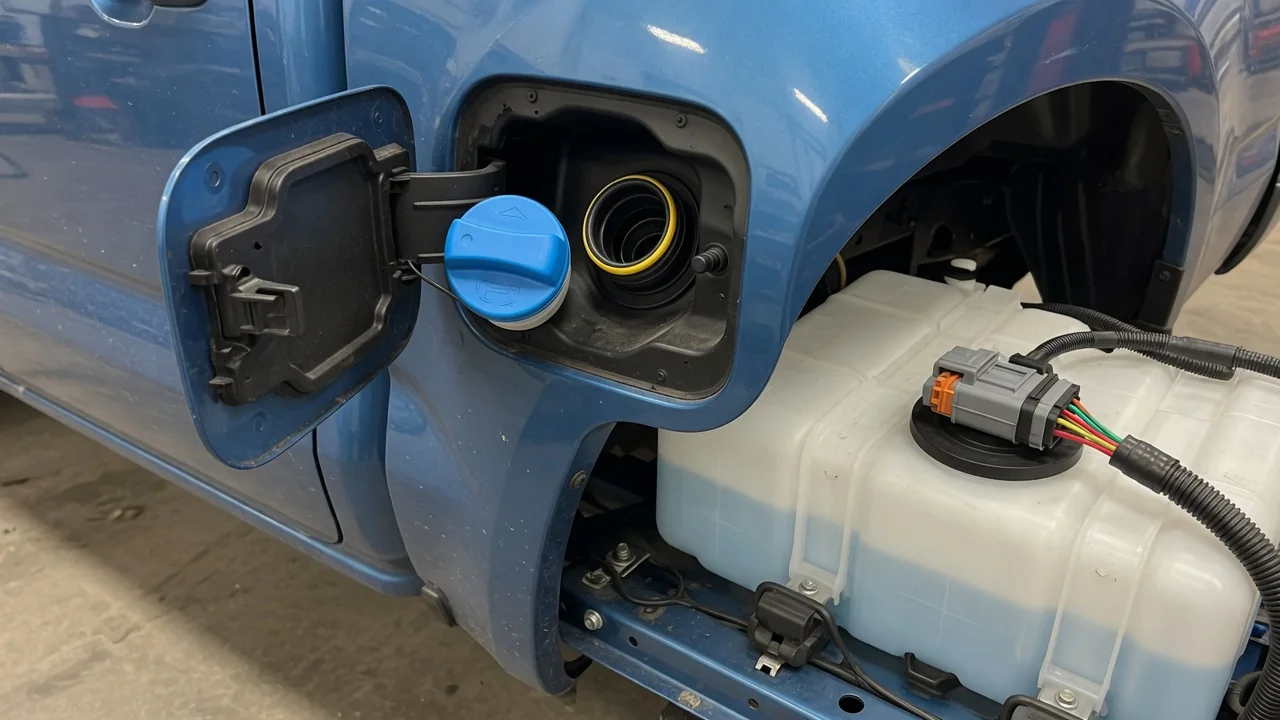
When a P2061, P2063, or P2064 code appears, the engine control module has detected an unexpected electrical condition in the reductant supply control circuit. This circuit manages how diesel exhaust fluid reaches the selective catalytic reduction system that lowers NOx emissions. The code alone does not name a failed part; it identifies a monitored area that needs diagnosis. Wiring corrosion, DEF crystallization, a weak supply pump, or connector damage can all produce similar codes, and manufacturer-specific definitions determine the correct troubleshooting path.
How the Reductant Supply Control Circuit Fits Into the DEF and SCR System
Diesel exhaust fluid is drawn from its dedicated tank by an electric supply pump and pushed through heated lines to a dosing injector mounted in the exhaust. The injector meters a fine spray of DEF into the hot exhaust stream ahead of the SCR catalyst, where the fluid breaks down into ammonia and reacts with nitrogen oxides. The reductant supply control circuit includes the pump, its drive electronics, associated wiring, and any pressure or temperature sensors that report to the control module.
The engine or emissions control module commands pump speed or line pressure and watches return signals to confirm the circuit is behaving properly. Supply control, pump heater, and injector circuits are monitored separately, so P20xx codes may refer to different hardware even when their numbers are close together. The P2061 to P2064 range is grouped here only for convenience; drivers should not assume codes in the same numeric family share one cause or one repair.
P2061: Confirm the Exact Code Definition for Your Vehicle First
Generic listings for P2061 give a general idea, but the exact definition often varies by manufacturer, engine family, and even model year. One application may interpret P2061 as a reductant supply control circuit open, while another may define it as an unexpected voltage or a performance problem in the pump module. A scan tool with OEM-level definitions or the vehicle's service information is required before testing begins.
When the code sets, record any stored codes, freeze frame data showing engine temperature and DEF level, and whether the warning appeared only once or returns consistently. The code shows only that the module saw an electrical condition outside its expected range—not that the pump, module, or wiring has failed. Intermittent codes after a cold start or after refilling the DEF tank point toward a different inspection path than a code that sets immediately every key cycle.
P2063: Reading a Reductant Supply Code in Context
P2063 must also be read through the manufacturer's specific definition. In many systems it relates to reductant supply control circuit performance or a range/performance problem, but the wording can change. If P2063 appears alongside a DEF pressure sensor code, a pump heater fault, or a DEF quality message, those companions help narrow the diagnosis. A supply control performance code could mean the pump cannot reach commanded pressure, or it could reflect a wiring resistance issue.
A code that only sets during cold starts may indicate frozen DEF or a heater circuit problem rather than a failed pump. In contrast, a code that appears after refilling may point to contaminated fluid, a loose filler cap, or air trapped in the supply line. Technicians use freeze frame data to see the temperatures, run times, and DEF levels present when the fault occurred, turning a parked code into a useful diagnostic clue.
P2064: What the Code Can and Cannot Tell You
Before interpreting P2064, check the vehicle-specific definition. Some manufacturers use P2064 for a reductant supply control circuit low condition, others for an open circuit or a short to ground. The module is reporting that the voltage or signal on that circuit was not what it expected, but the wording does not say whether the problem lies in the pump windings, a connector, or the module's driver circuit.
Replacing the DEF pump or supply module on the strength of the code number alone risks a costly repair that does not fix the fault. A professional will inspect terminals, check circuit continuity under load, and command the pump to see if the signal responds. If the code returns after being cleared, that is a strong sign the underlying electrical or mechanical condition is still present; repeated resets only delay proper testing and may allow the vehicle to enter a derate or no-start countdown.
Warning Lights, Derate Messages and Other Symptoms Drivers May Notice
Drivers usually notice a check engine light first, often accompanied by a DEF or emissions system message on the instrument cluster. Some vehicles begin a countdown warning that limits engine speed or prevents restarts after a set number of miles if the fault is not corrected. The exact warning strategy varies by manufacturer and emission certification, so one vehicle may show only a light while another displays a miles-to-derate counter.
Even when the truck or SUV drives normally, a stored reductant supply code should not be ignored. The DEF system is still trying to control tailpipe emissions, and a fault may prevent proper dosing while the vehicle remains drivable. Read the cluster messages and owner's manual guidance carefully; they often explain how much driving is permitted under the current derate schedule and when the engine may refuse to start.
Possible Causes Across the DEF Delivery System
Across the DEF delivery system, common possibilities include chafed or corroded wiring near the tank or exhaust, DEF crystal accumulation inside connectors, a failing supply pump or its integrated pressure sensor, and control module software errors. Cold weather can freeze DEF if the tank or line heaters are not working, which may set supply pressure codes on vehicles that rely on those heaters during warm-up.
Using contaminated, diluted, or old diesel exhaust fluid can change the fluid's conductivity and pressure behavior enough to confuse the supply control circuit. Only API-certified DEF should be added to the tank, and the filler cap should seal tightly to prevent dirt and moisture. None of these causes are ranked; the actual fault depends on the exact code definition, other stored codes, and tests performed with the vehicle's service information.
Safe Owner Checks and When Professional Testing Is Needed
A careful owner can check the DEF level, inspect the filler cap and neck for crystal buildup, and look for visible wiring damage or fluid leaks under the vehicle without removing covers. Do not touch hot exhaust components, disconnect emission connectors, or attempt to bypass the SCR system. Tampering with emissions controls is illegal on road vehicles and can cause the engine to derate permanently or fail inspection.
Professional diagnosis typically starts with the manufacturer code definition, then includes live data such as pump command, DEF line pressure, and heater status, followed by commanded pump tests and circuit checks against service information. Ask a dealer about applicable technical service bulletins, software updates, or emissions warranty coverage. A verified repair means the code stays clear and the system completes its self-checks over several drive cycles.