P2030–P2037 Codes: Definitions and EGT Circuit Diagnosis
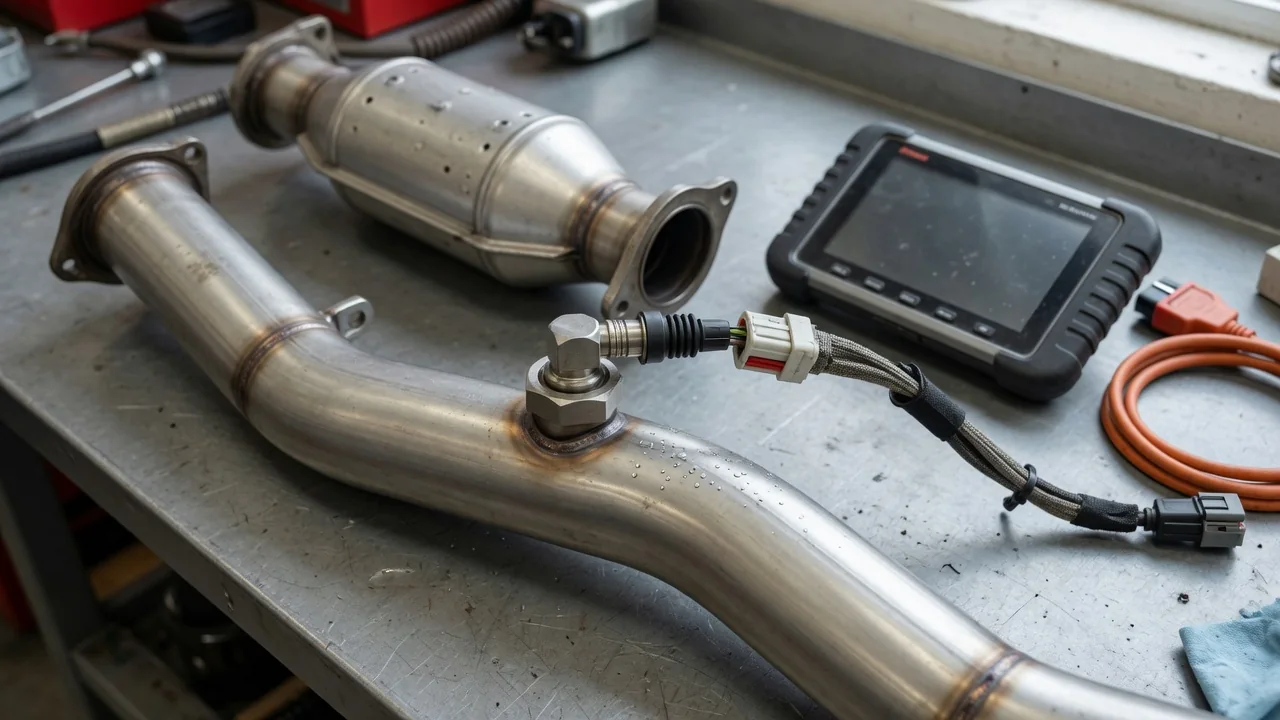
Drivers searching a P2033 code, a P2030 code, or related exhaust gas temperature sensor entries often find consecutive numbers that do not share one system. After confirming the vehicle's year, make, model, engine, and control module, P2031 through P2037 typically describe EGT sensor circuit conditions on bank 1 sensor 2 or bank 2 sensor 2, while P2030 concerns fuel-fired heater performance rather than temperature-sensor wiring.
Verify P2030 Before Treating It as an Exhaust Sensor Fault
A stored P2030 code should not be treated as an exhaust gas temperature sensor problem simply because nearby numbers describe EGT sensor circuit faults. The standard definition for P2030 concerns fuel-fired heater performance, so the consecutive numbering is not evidence that the same circuit or sensor is involved. Confirm the exact definition for the vehicle's year, make, model, engine, and control module before interpreting P2030 or any neighboring code, because manufacturer-dependent labeling can differ from a generic scanner list.
A scan tool's abbreviated description may omit the system name, heater function, or module that set the code, leaving diagnosis on the wrong exhaust path. Once the definition is confirmed as fuel-fired heater performance, keep P2030 work on that heater system: record symptoms, companion codes, and operating conditions, then obtain heater-system testing rather than replacing an exhaust gas temperature sensor. If the module definition does not match the standard P2030 wording, follow the vehicle-specific description instead of assuming an EGT circuit fault.
P2031–P2034: Bank 1 Sensor 2 Circuit Descriptions
After the same year, make, model, engine, and module check, the usual descriptions for this group are P2031 for an exhaust gas temperature sensor circuit, P2032 for circuit low, P2033 for circuit high, and P2034 for an intermittent circuit fault, all assigned to bank 1 sensor 2. A P2033 code therefore points to a high electrical signal on that circuit, not a measured temperature by itself. Circuit low and circuit high describe how the control module sees voltage or current on the EGT sensor circuit, which can occur with wiring, connector, or sensor electrical problems.
Bank 1 sensor 2 is not in the same physical place on every exhaust layout, so a vehicle-specific component diagram is required to find the correct exhaust gas temperature sensor, harness, and connector. Assuming a universal downstream location can send diagnosis to the opposite bank or to a different sensor position. An intermittent circuit fault such as P2034 can remain stored after the warning lamp or live reading looks normal during a later inspection, because the module recorded a brief out-of-range condition that is not present when the vehicle is sitting still.
P2035–P2037: Bank 2 Sensor 2 Circuit Descriptions
On bank 2 sensor 2, the matching standard descriptions after vehicle-specific verification are a P2035 code for the EGT sensor circuit, a P2036 code for circuit low, and P2037 for circuit high. P2037 is not the standard intermittent-circuit entry for that bank; treating the whole P2030 through P2037 list as if both banks include an intermittent code misidentifies what P2037 reports. Confirm that the vehicle actually uses a bank 2 sensor 2 exhaust gas temperature sensor in the exhaust and control-system configuration before chasing that circuit.
A P2035 or P2036 code names a monitored circuit condition, not a failed part. The description cannot establish whether the exhaust gas temperature sensor, a connector, a heat-damaged wire, or another portion of the circuit is at fault, because the module reports the electrical behavior it measured, not a parts list. Inline engines, V configurations, and aftertreatment layouts also assign bank 2 differently, so the identified bank and sensor designation must match the vehicle before any replacement decision. Circuit high on P2037 still requires that same confirmation rather than a default sensor swap.
Symptoms and Decisions About Continued Driving
A P2031, P2033, P2035, or P2036 circuit code may illuminate a malfunction indicator, display an emissions-system message, reduce available power, or produce no obvious change in how the vehicle drives. None of those presentations is guaranteed on every vehicle, because monitoring strategy and driver displays vary. An EGT sensor circuit fault can interrupt exhaust-temperature monitoring, and on vehicles that use that information for aftertreatment, it may limit regeneration availability or related exhaust-system control until the circuit is diagnosed. The stored code remains evidence of a monitored condition, not proof of a failed sensor.
Whether continued driving is appropriate depends on the vehicle's own warning-message guidance rather than a shared mileage limit. Follow those messages when a P2032 circuit-low condition or a related EGT circuit high or intermittent circuit fault is present. Stop safely and seek assistance if smoke appears, a burning smell develops, power drops severely, or the display gives an explicit stop warning. Those signs can indicate a problem beyond a stored electrical reading and should not be ignored while waiting to see whether the lamp stays on.
Sensor, Connector, and Wiring Faults That Need Confirmation
Plausible sources of a P2031, P2033, P2035, or P2037 EGT sensor circuit complaint include a failed exhaust gas temperature sensor, corroded connectors, loose terminals, damaged insulation, and wiring that has been exposed to exhaust heat. Open circuits, shorts, and high resistance can all change the electrical signal the module monitors, and whether that appears as circuit low, circuit high, or a general circuit code depends on circuit design and monitoring logic. The code is a starting point for confirmation, not a parts-replacement order.
Recent exhaust work, heat-shield removal, or harness repairs are useful history because those jobs can disturb bank 1 sensor 2 or bank 2 sensor 2 connectors, yet they do not prove the work caused a later P2032 or P2036 circuit-low storage. Actual exhaust-temperature problems and control-module faults remain possible, but they require their own evidence. Inferring a hot exhaust stream or a failed module from an electrical circuit code alone skips the checks that separate a wiring issue from a genuine temperature or processor fault.
Safe Observations and Professional Diagnostic Checks
Before clearing a P2030, P2033, or P2035 code, preserve stored and pending codes, freeze-frame data, warning messages, and the speed, load, and temperature conditions when symptoms appeared. Freeze-frame data shows the snapshot the module saved at the moment of detection and can distinguish a circuit high event from a later intermittent circuit fault that is not reproducing. Owner inspection should wait until the exhaust has cooled and stay limited to readily accessible harnesses and connectors, looking for obvious damage or looseness without crawling under an unsupported vehicle.
Professional diagnosis of a P2031 or P2036 EGT sensor circuit typically uses vehicle-specific wiring information, live-data plausibility checks against expected operating conditions, and the manufacturer's prescribed circuit tests rather than a generic resistance guess. Do not handle a hot exhaust, pierce insulation, install bypass devices, or attempt forced regeneration from a circuit code. After any confirmed repair, the manufacturer's diagnostic procedure is the proper way to verify that the circuit low, circuit high, or general circuit condition has been resolved and that related monitors can run.