P2024–P2027 Codes: EVAP Fuel Vapor Temperature Sensor Faults
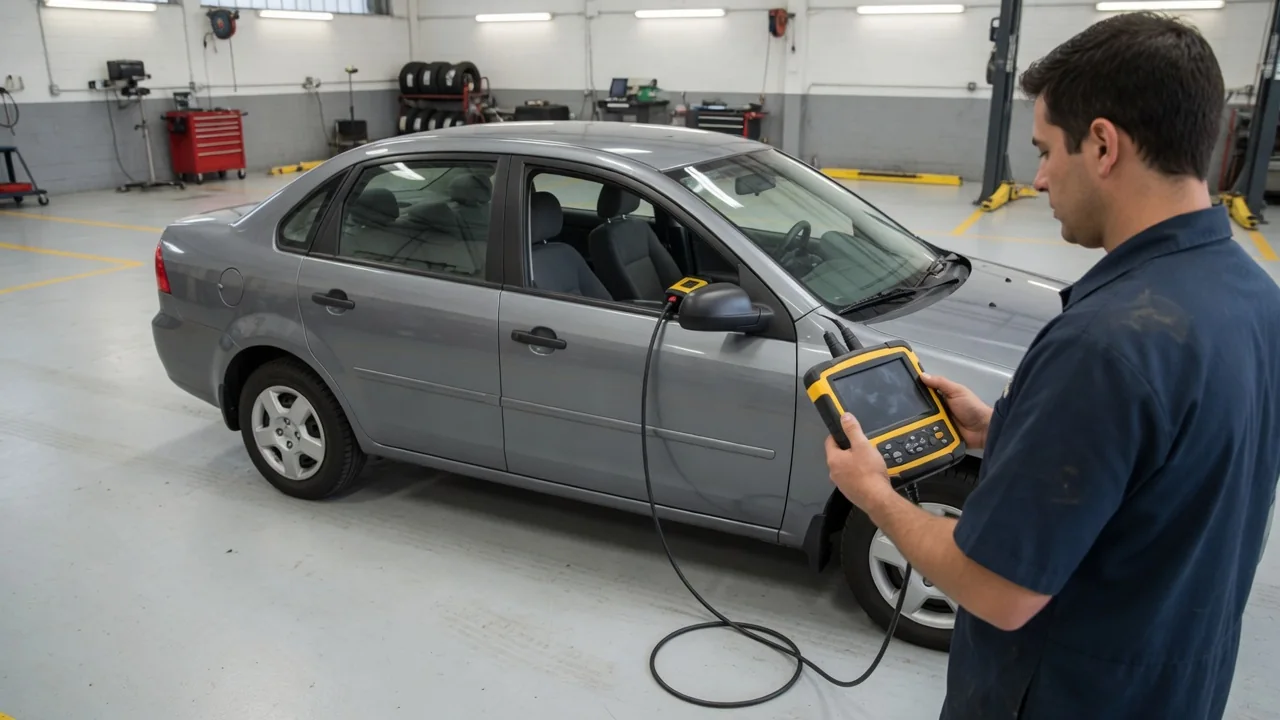
Codes P2024, P2025, P2026, and P2027 point to the evaporative emission fuel vapor temperature sensor circuit rather than a confirmed failed part. A P2025 code, P2026 code, or P2024 code is a diagnostic starting point: the powertrain control module has seen a circuit, range, or input condition that needs vehicle-specific confirmation. Interpreting these faults correctly depends on year, make, model, and EVAP system design.
Verify What P2024, P2025, P2026, and P2027 Mean for the Vehicle
Before treating any of these faults as a failed sensor, confirm each definition and diagnostic procedure in service information for that vehicle’s year, make, model, and powertrain. Manufacturer-dependent codes can share a family of numbers yet use different pinouts, enable criteria, and test steps. The standard P2024 description identifies the EVAP fuel vapor temperature sensor circuit. That wording names the monitored path; it does not establish which component has failed, whether the sensor, harness, connector, or control module.
The standard P2025 description identifies a range or performance concern involving the same sensor circuit, meaning the module saw a signal that did not match expected behavior under the conditions it was checking. The standard P2026 description identifies low circuit input; low input alone does not establish the actual vapor temperature. The standard P2027 description identifies high circuit input, and the vehicle’s circuit design and diagnostic criteria determine how that high reading should be interpreted. Vehicle-specific confirmation is required before any replacement decision.
Symptoms and Warning Signs That Need Attention
An illuminated malfunction indicator light may be the only noticeable symptom when a P2024, P2025, or related circuit fault is stored. Smooth idle, normal acceleration, and uneventful highway driving do not rule out a sensor circuit problem, because the EVAP system often operates in the background. These codes can affect emissions inspection readiness or cause a failed inspection in some jurisdictions, though local rules and remaining monitors determine the outcome. Do not assume a particular inspection result from the code number alone.
Fuel odor, visible leakage, stalling, or difficult starting should be treated as additional evidence that needs assessment, not as symptoms automatically explained by a P2025 code or P2026 code. Those drivability complaints can come from unrelated fuel delivery, ignition, or leak issues. If you notice strong fuel odor or visible fuel leakage, stop in a safe location and arrange professional help. Avoid ignition sources and further inspection near escaping fuel. Do not crawl under the vehicle or disturb fuel-system fittings while vapor or liquid is present.
Possible Causes Within the Sensor Circuit
Possible causes within the fuel vapor temperature sensor circuit include a faulty sensor, damaged wiring harness, poor terminal contact, connector corrosion, and faults in reference voltage or signal ground. Each of those possibilities requires testing rather than parts swapping. An open circuit or a short can pull the reported signal high or low depending on how that vehicle’s circuit is designed, so a P2026 low circuit input or a P2027 high circuit input should be read as an electrical condition, not as a proven vapor temperature.
Intermittent connections or an implausible sensor response may set a P2025 range and performance fault without proving the sensor itself has failed. Heat, vibration, or a loose pin can distort the signal only under certain conditions and then recover. These codes alone do not justify replacing a fuel cap, purge valve, canister, or control module. Those EVAP components serve other functions, and substituting them because a circuit code is present wastes time and can leave the original wiring or sensor-circuit problem unresolved.
Safe Observations to Record Before Diagnosis
Before diagnosis, record all stored and pending codes, available freeze-frame data, warning-light behavior, and when the concern first appeared. Freeze-frame data captures operating conditions at the moment the module set the fault and can show whether the event occurred at idle, under load, or after a cold start. Note recent repairs, refueling events, and whether the fault appears after parking or during driving. Timing is useful context, not proof of a cause, because a P2024 code may store well after the electrical condition began.
Limit owner inspection to readily visible wiring damage or loose connectors that can be reached without lifting the vehicle or disturbing fuel-system components. Do not probe terminals, backprobe harnesses, or disconnect EVAP lines as a casual check. Clearing codes or disconnecting the battery before recording data can erase freeze-frame information and reset readiness monitors, removing evidence a technician needs to reproduce a P2026 or P2027 condition. Save scan-tool screenshots or written notes first so later testing can be compared with the original snapshot.
Professional Tests That Identify the Fault
A technician should locate the correct fuel vapor temperature sensor and review its wiring diagram, specifications, and diagnostic criteria before any testing. Professional checks typically include sensor data plausibility, power supply, ground integrity, signal behavior, and connector condition. Those checks must follow the vehicle’s service procedure rather than generic probing or jumper methods. Reference voltage and signal ground quality matter because a healthy-looking sensor can still report an implausible value if the supply or return path is compromised.
Related codes and shared circuit faults can change the diagnostic sequence. If other EVAP or temperature-sensor codes are present, the first test may be a common power, ground, or harness issue rather than the vapor temperature sensor itself. Circuit codes such as P2024 and P2025 alone do not establish an EVAP leak. Any leak testing should follow vehicle-specific diagnostic evidence and approved equipment procedures. Treating a circuit-range fault as a leak search can send diagnosis toward the canister and hoses while the electrical path remains untested.
Evidence-Based Repairs and Confirmation
Repairs should follow confirmed findings, such as correcting damaged wiring, restoring connector integrity after corrosion, or replacing a sensor that failed its specified tests. Verify the vehicle’s component arrangement and service procedure before deciding replacement scope, because sensor location, harness routing, and whether the element is serviceable separately vary by platform. Replacing a control module because a P2027 or P2026 code is stored is not justified until supply, ground, signal, and the sensor itself have been evaluated against that vehicle’s criteria.
After the repair, confirmation means plausible sensor data on a scan tool, no returning codes under similar operating conditions, and completion of the applicable diagnostic monitor. An extinguished warning light immediately after clearing codes does not establish a successful repair, especially for intermittent wiring-harness or connector faults that may not reappear until heat, moisture, or vibration returns. Drive-cycle completion and a later scan for pending P2024, P2025, P2026, or P2027 faults give a more reliable picture than a dark lamp on the first restart.