P2002 and P2003 Codes: DPF Efficiency Faults and Next Steps
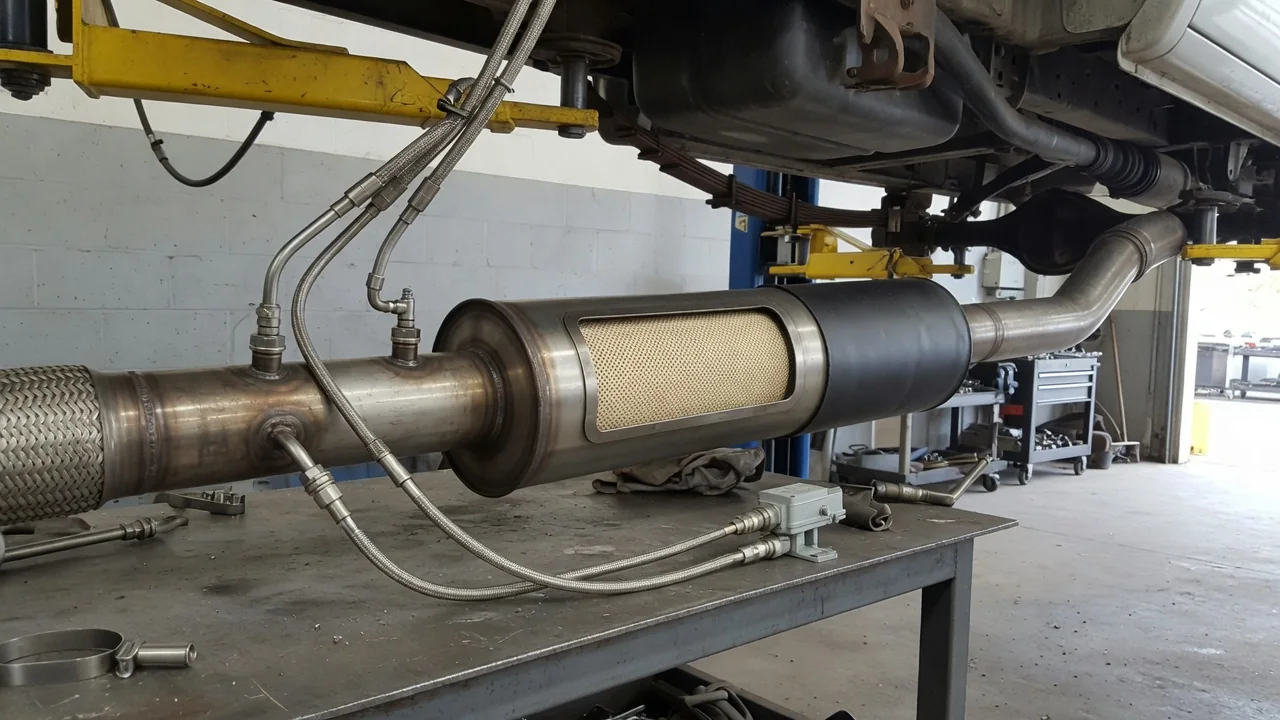
A P2002 code reports that diesel particulate filter efficiency has fallen below the control module's threshold, usually for bank 1. A related P2003 code often applies the same efficiency test to bank 2. Neither result, by itself, names a failed part. Understanding how the module uses differential pressure, exhaust temperature, and soot loading helps you decide what to inspect, when regeneration may help, and which repairs actually restore DPF efficiency.
What P2002 Means and What the Code Cannot Prove
On many diesel applications, P2002 commonly identifies diesel particulate filter efficiency below threshold for bank 1. The monitor compares expected soot conversion with signals from exhaust pressure sensors, looking at the differential pressure across the filter and related exhaust temperature. That comparison is a failed efficiency assessment, not a teardown report. Before treating the result as a clogged filter, confirm the exact code description and the monitoring strategy published for the vehicle's year, engine, and emissions configuration, because manufacturer wording and bank labeling can differ.
The P2002 code cannot independently prove that the filter is clogged or that replacement is required. A leaking pressure hose, a biased sensor, an exhaust leak ahead of the measurement point, or incomplete DPF regeneration can all make efficiency look low while the substrate is still serviceable. The stored result only means the control module judged conversion below its limit during the completed test. Interpreting that judgment still requires vehicle-specific confirmation, because a manufacturer-dependent definition can change which component, bank, or sensor pair the code actually names.
Confirming the P2003 Definition for the Vehicle
The common generic P2003 description is particulate filter efficiency below threshold for bank 2, but that wording is still subject to vehicle-specific verification. Some engines use two diesel particulate filters, while others use one filter and still assign bank language in the scan-tool text. Checking manufacturer diagnostic information before assuming a second filter or a particular bank arrangement prevents chasing the wrong housing. A P2003 code should be read against the same emissions configuration used to interpret P2002, including how the module pairs pressure and temperature inputs.
An incomplete scan-tool description can leave the affected component unclear, especially when the display shortens diesel particulate filter efficiency to a generic particulate message. The exact code and the vehicle details matter because bank 2 may refer to a second filter, a second pressure tap, or a labeling convention that does not match the physical layout under the vehicle. Until that mapping is confirmed, treating P2003 as proof of a failed filter on a specific side is premature. Record the full definition from factory information rather than relying on a truncated aftermarket line.
Symptoms and Warning Signs That Affect Driving Decisions
Drivers may see a check-engine lamp, a dedicated DPF warning, reduced power, or a change in regeneration behavior after a P2002 or P2003 efficiency fault. In other cases noticeable symptoms are absent, and the only evidence is the stored assessment. Regeneration may start more often, run longer, or fail to finish, depending on soot loading and exhaust temperature. Those signs indicate the emissions system is under stress, but they do not rank causes. Follow the owner's manual for the specific warning displayed rather than assuming every lamp means the same next step.
Reduced power can reflect a protective control strategy that limits fueling or torque when DPF efficiency or related temperatures look abnormal. That derate cannot identify the underlying fault by itself, because a clogged filter, a false differential pressure reading, or an exhaust leak can trigger similar protection. Obtain prompt assistance for severe power loss, overheating, or exhaust fumes entering the cabin, since those conditions go beyond a routine efficiency monitor. Until a technician evaluates the warnings, avoid aggressive driving that would demand more exhaust flow through an already constrained system.
Diagnostic Checks That Establish the Cause of a P2002 Code
Preserve all stored codes and freeze-frame data before clearing anything, including related pressure, temperature, and engine-management faults that may explain why DPF efficiency looked low. Freeze-frame captures operating conditions at the moment the P2002 code set, which helps a technician compare commanded regeneration, exhaust temperature, and differential pressure against expected ranges. Professional testing then evaluates sensor readings, pressure sensing lines, wiring integrity, exhaust leaks, and filter condition as a set. Clearing the memory first erases that context and can force a long drive cycle before the monitor runs again.
Soot loading, ash accumulation, internal filter damage, and misleading sensor signals are all possibilities that require evidence rather than assumption. A restricted filter can raise differential pressure, yet a pinched sensing line or a drifted exhaust pressure sensor can imitate the same pattern. Owners can usefully record warning messages, recent driving patterns, and service history, including missed oil changes or short-trip use that affects soot. Leave hot exhaust inspection and pressure testing to trained technicians, because those checks involve elevated exhaust temperature and fittings that are easy to damage if handled incorrectly.
Why Regeneration May Not Resolve an Efficiency Fault
DPF regeneration burns accumulated soot by raising exhaust temperature so the trapped carbon oxidizes. It does not remove ash accumulation left by lubricant additives, and it cannot restore cracked, melted, or otherwise damaged filter material. If the efficiency fault was caused by ash or physical damage, completing a regeneration cycle will not bring the monitor back into range. That is why a highway drive should not be treated as a guaranteed fix for a P2002 or P2003 code; vehicle-specific owner guidance and an assessment of current warnings come first.
Interrupted regeneration, unsuitable operating conditions, or active faults can prevent a cycle from completing even when soot loading is the real issue. Low exhaust temperature from short trips, a disabled injector used for regeneration, or an exhaust leak that cools the stream can abort the process. Forced regeneration requires professional evaluation because excessive loading and very high exhaust temperatures can create hazards if the filter is already overloaded or damaged. A technician should confirm sensor plausibility and look for competing codes before commanding a service regeneration.
Repair Options and Evidence That the Problem Is Resolved
Confirmed sensor, wiring, pressure-line, or exhaust-leak faults should be repaired before authorizing diesel particulate filter replacement. Those defects can make DPF efficiency appear low without a failed substrate, so replacing the filter first wastes the part and leaves the false signal in place. When loading, physical condition, and manufacturer guidance support it, professional filter cleaning or replacement may be appropriate. Engine faults that contribute to excess soot or contamination, such as poor combustion or oil consumption issues identified during diagnosis, also need attention so the repaired system can function correctly.
A completed repair is shown by plausible sensor data, finished diagnostic monitoring, and the absence of returning P2002 or P2003 faults, not by a blank code list after a reset. Clearing codes alone does not establish that differential pressure, exhaust temperature, and soot loading now behave as designed. Repair options should restore the emissions system's intended function. Filter removal and software defeat are not legitimate paths, because they leave the vehicle unable to control particulate emissions and can create additional legal and operating problems the efficiency monitor was meant to prevent.