P1999 Code: Verify Its Meaning and Plan a Safe Diagnosis
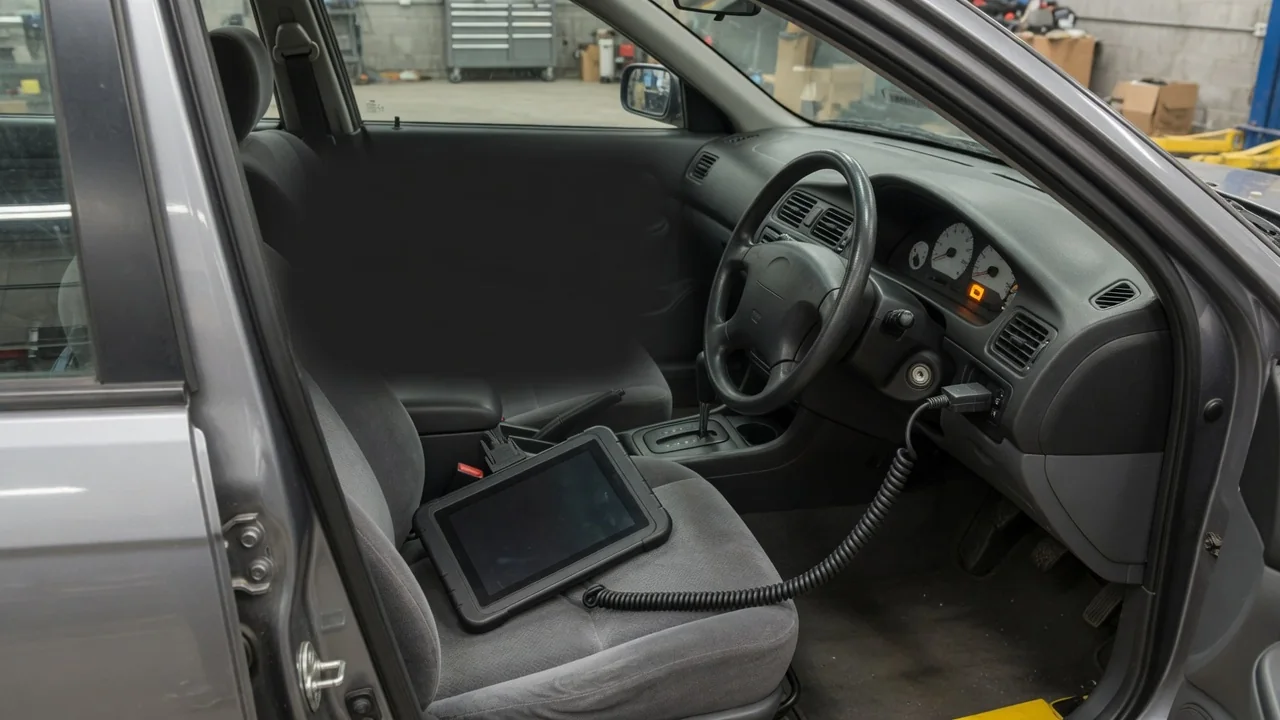
A P1999 diagnostic trouble code is not a single, shared definition across every make. It is typically a manufacturer-specific trouble code, so its meaning depends on the vehicle identification number, powertrain, and market. Before treating it as a failed part, confirm the official description in service information, capture the full scan result, note what the vehicle is actually doing, and follow a vehicle-specific diagnostic path.
Verify What P1999 Means for Your Vehicle
P1999 is a manufacturer-specific trouble code, not a standardized SAE definition that names one component on every vehicle. Two cars can store the same number and still be describing different systems, different modules, or different test conditions. That is why a generic code list, an aftermarket scanner label, or an internet summary is not enough. Use the vehicle identification number to identify the exact make, model, year, engine, and market, then open the matching service information and read the official P1999 description for that calibration.
A stored code is evidence that a control module ran a monitor and recorded a result it did not like. It does not prove that a sensor, solenoid, wiring harness, or mechanical part has failed. The same P1999 entry can be set by an out-of-range signal, a communication issue, or a condition that exists only under certain operating states. Until the vehicle-specific definition is confirmed, later symptom and testing discussion remains conditional on that verified meaning.
Record the Complete Scan Result
When a scan tool reports P1999, write down the exact code, any letter suffix, the description the scanner displayed, and which module reported it. Capture every accompanying diagnostic trouble code, including a pending code, a current code, and a stored history code, along with each displayed status. Save freeze-frame data if the tool provides it, because those snapshots show engine speed, load, temperature, and other conditions at the moment the monitor failed. That complete record is more useful than the number by itself when you later compare the result with factory documentation.
If the scanner shows a blank, generic, or mismatched description, treat that as a coverage problem rather than a confirmed diagnosis. Scan tool coverage varies by brand and software, and a consumer tool may not decode manufacturer-specific trouble codes as completely as a factory-level interface. Check coverage against the vehicle identification number, then confirm the wording in service information. Preserve the scan report before clearing codes or disconnecting the battery, because erasing memory can drop freeze-frame data and pending code status that show whether the condition was intermittent.
Document Symptoms Without Assuming Their Cause
P1999 has no universal symptom list, because the code can represent different monitors on different vehicles. One application might illuminate a check engine light with no obvious change in how the vehicle drives, while another might set the same number alongside a drivability complaint, a transmission message, or a reduced-power indication. Document what is actually happening rather than borrowing a symptom list from an unrelated make. Note warning lamps, starting behavior, idle quality, shifting, power delivery, unusual noises or smells, and whether anything feels different at all.
Record when the warning appeared, including whether it came on at startup, after a long highway run, during a cold start, or after stop-and-go traffic. Note recent service, battery replacement, jump starts, or programming, because those events can affect module memory and monitor completion without proving a failed part. Symptoms and recent events supply context for the verified P1999 definition; they do not identify a particular component as the cause. Two vehicles with the same number can share a check engine light and still need entirely different tests once the factory description is known.
Decide Whether the Vehicle Needs Immediate Attention
The P1999 number by itself cannot tell you whether continued driving is safe. On one vehicle it may be a low-urgency manufacturer-specific trouble code; on another it may accompany a strategy that limits performance. Follow the owner's manual for the warning lights and messages actually displayed, rather than assuming the digits imply a particular risk. A steady check engine light still deserves prompt investigation, while a flashing lamp is generally treated as more urgent. Do not infer safety from the code number when the displayed warnings and vehicle behavior are the information you actually have.
If you notice overheating, smoke, a strong fuel odor, severe loss of power, or impaired vehicle control, stop in a safe place and arrange assistance. Limit owner checks to dashboard indications and to visible conditions inspected with the vehicle parked and powered off, such as fluid on the ground or messages that remain on the cluster. Do not probe wiring or open a hot cooling system. The immediate goal is to avoid compounding a problem while preserving the information a technician will need.
Use Professional Testing to Confirm the Fault and Repair
Testing should follow the verified P1999 definition and the manufacturer's diagnostic procedure for that specific vehicle, not a one-size-fits-all flowchart. A technician typically starts with the captured scan report, related diagnostic trouble codes, freeze-frame data, and live operating data to see which monitor failed and under what conditions. From there, the procedure may call for circuit checks, communication tests, or component tests that match the official description. Those steps exist because several faults can produce the same stored result, and replacing a part without test evidence often leaves the original condition in place.
There is no universal P1999 repair list, because the correct part or repair depends on the confirmed cause for that vehicle. Recommend replacement only after tests show why the module set the code, whether the issue is in wiring, a connector, a control strategy, or a component. After the repair, verification should include checking code status so a pending code or stored code does not remain unnoticed, then confirming that the original symptom is gone under safe, appropriate operating conditions. Clearing the lamp without repeating the relevant monitor leaves the diagnosis unfinished.