P1915 Code: Vehicle-Specific Meaning, Diagnosis, and Repairs
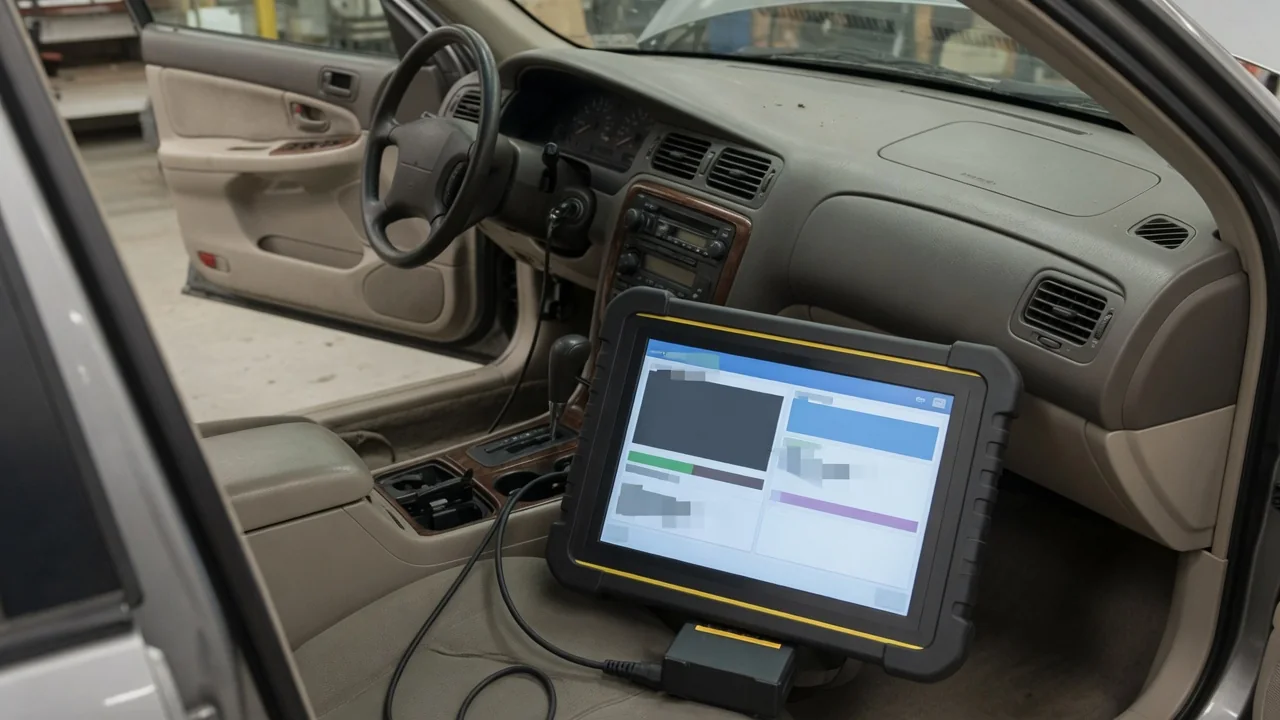
A P1915 code is a manufacturer-specific trouble code, meaning its definition can change completely between automakers, model years, and control modules. One vehicle may use it for a transmission range sensor concern, while another uses it for an engine torque management signal. Before replacing anything, a technician must verify the exact code meaning for that vehicle identification number and reporting module—otherwise diagnosis can point at the wrong system entirely.
Verify What P1915 Means for the Vehicle
P1915 cannot be interpreted reliably from a generic list. The same numeric code may refer to a body control module communication error on one brand and to a powertrain input correlation on another. The reporting control module, exact descriptor, and software calibration all matter. Because the code is reserved for manufacturer definitions before SAE standardization, it is essential to confirm the text in factory service information, not just a phone app's one-line scanner label.
To pin down P1915, gather the vehicle's complete make, model, model year, powertrain, and ideally its vehicle identification number. Service procedures may split by engine, transmission, or even build date. A professional-grade scan tool that reads module-specific descriptions can reveal whether P1915 is active in the engine controller, transmission controller, or another module. Confirm the exact wording—such as 'torque converter clutch circuit performance' or 'transmission range sensor correlation'—before treating it as a specific fault.
Record Symptoms and Decide Whether to Drive
The same P1915 code can be set during normal startup, hard acceleration, or after a recent service. Careful notes about when it appears help separate an intermittent fault from a steady failure. Pay attention to warning lights, shift quality, cruise control behavior, and any change in engine response. These observations are not universal symptoms but they give the technician clues about which subsystem is involved and whether the malfunction is consistent or only occurs under specific conditions.
A stored fault code alone is not a severity warning. A vehicle may drive normally with P1915, or it may enter a reduced-power mode, refuse to shift, or stall unexpectedly. If the car loses propulsion, behaves erratically, or shows a red or flashing stop warning, the driver should pull over when safe and call for assistance. When the problem is intermittent, driving home with a scan tool reading available is one option, but only if the vehicle remains controllable and no safety warnings are present.
Identify Possible Causes From the Confirmed Definition
Once the exact P1915 definition is confirmed, possible causes are tied to that system. If the code points to a transmission range sensor correlation, the diagnostic path checks the sensor signal against gear selection, wiring continuity, and the controller's interpretation. If it points to a torque management message error, the check may involve data bus integrity and powertrain control module inputs. No universal list of failed parts applies; the verified definition dictates which circuit, component, or communication path is suspect.
Companion trouble codes change the diagnostic priority. A P1915 combined with a lost communication code suggests a wiring or network problem, while a code for a sensor stuck out of range points toward that input circuit. Recent repairs matter too—loose connectors, pinched harnesses, or unplugged modules after service can set manufacturer-specific codes. Still, a code indicates that a monitoring condition was met, not that a particular sensor or solenoid has failed. Testing the suspected circuit is required before condemning any part.
Preserve Useful Evidence Before Clearing P1915
Before clearing P1915, preserve the scan tool report. Record the exact code number, the reporting control module, and whether the status is stored, pending, or active. Some tools can show how many times the fault was detected and whether it occurred this drive cycle. This information helps a technician reproduce the fault later. If the scan tool supports freeze-frame data, save those snapshots too—they capture engine speed, temperature, gear position, and other conditions at the moment the code set.
Do not clear the code or disconnect the battery to make the light go out. Clearing erases valuable diagnostic evidence and may reset adaptive data that reveals the failure. If a warning light is difficult to see while driving, a passenger can photograph it, or the driver can record it with the vehicle parked and engine off. Note any visible damage to wiring or connectors without touching or unplugging them. A code that has been erased without repair is likely to return—but with less information to guide the next test.
Understand the Professional Diagnostic Process
A professional diagnosis begins by confirming the vehicle-specific P1915 meaning in the manufacturer's service information. The technician then performs a complete module scan, not just an engine or transmission code pull. This identifies exactly which controller set the code and whether other modules report related faults. Live data is compared to expected values for the defined circuit or function; for example, a transmission range sensor P1915 requires watching the indicated gear versus actual shifter position and selected gear.
Manufacturer diagnostic procedures may call for circuit checks, connector inspection, or a functional test of the monitored component. These tests are not owner-level tasks; they may involve backprobing connectors, commanding solenoids with a scan tool, or monitoring high-speed data lines. Driving the vehicle to intentionally trigger an intermittent fault should be performed only in controlled conditions and with proper equipment. The goal is to verify the actual failure rather than replace parts based on a code definition alone.
Choose a Supported Repair and Verify the Result
The repair depends on what testing finds. A verified poor circuit may require repairing a wire or replacing a connector terminal, while a failed sensor or actuator is replaced only after electrical integrity is confirmed. If the definition points to an internal transmission or engine controller issue, module replacement or programming may be necessary—but only after the diagnostic procedure has eliminated external causes. No repair should be undertaken without a supporting test result, and module programming requires specific hardware and software.
When requesting an estimate, ask for a breakdown of diagnosis time, parts, labor, and any required programming. Prices vary by region and vehicle, so avoid relying on generic cost figures. After the repair, verification includes clearing the code with the scan tool, performing a drive cycle according to the manufacturer's criteria, and re-scanning to confirm P1915 does not return. If the original symptom was intermittent, the vehicle should be driven across conditions that previously triggered the fault, under safe conditions, before closing the repair.