P1901 to P1985 Manufacturer-Specific Codes: Quick Reference Guide
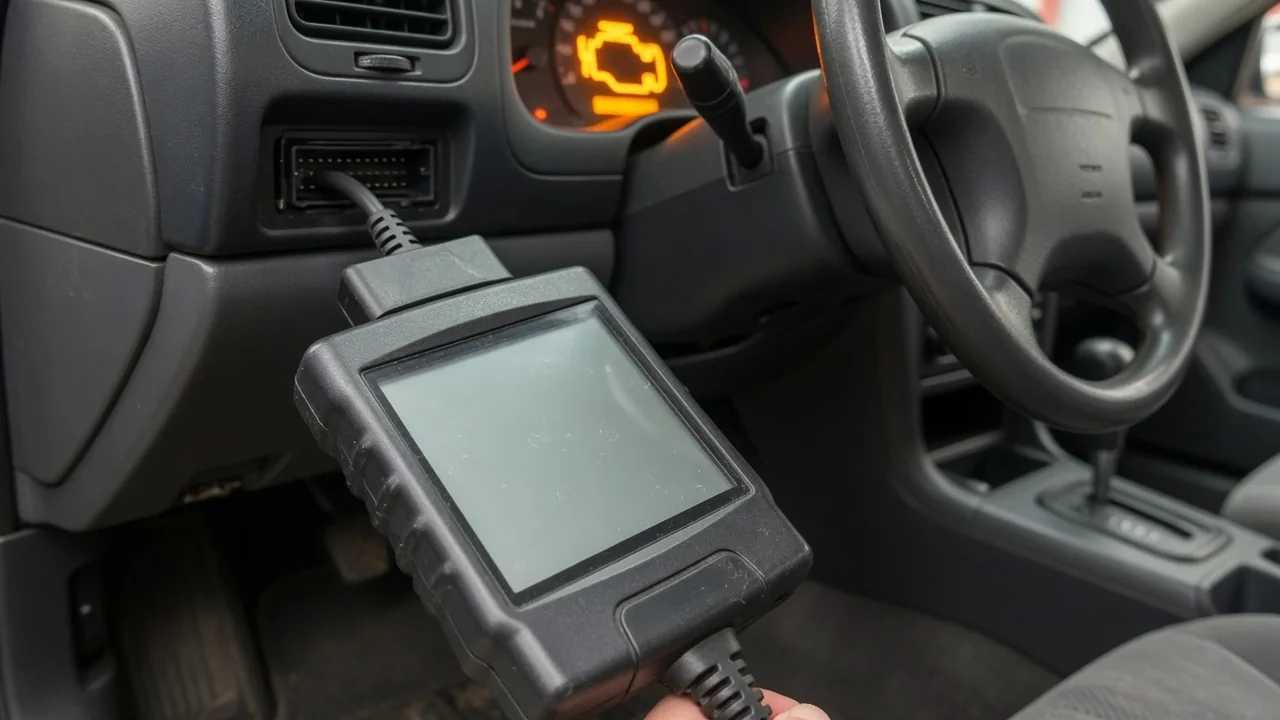
P1935 and other P1901–P1985 codes sit in the manufacturer-specific P1xxx range, meaning each automaker assigns its own definitions to the same numbers. A P1935 on one model may point to a transmission issue; on another, it could relate to a body control module. Because no single generic meaning exists, interpreting these OBD-II diagnostic trouble codes requires the exact vehicle, model year, and often the powertrain configuration. Without confirming factory service information, a code number alone can mislead even experienced DIYers.
What the P1901–P1985 Range Means and Why P1901 Has No Universal Definition
The P1901–P1985 block consists of manufacturer-controlled diagnostic trouble codes. Unlike P0xxx codes defined by SAE standards, P1xxx codes are reserved for each automaker’s proprietary use. Therefore, the same number—including P1901—can describe entirely different faults on different makes, models, and model years. A code may indicate a transmission pressure sensor circuit on one vehicle, yet relate to an evaporative system monitor on another. This variability means no universal table can safely decode these numbers.
Before acting on any P19xx code, record the complete code, freeze-frame data, and exact vehicle details—make, model, year, engine, and transmission type. A generic OBD-II scanner may show only the number or a vague description, which can be misleading. The authoritative meaning comes from manufacturer-level scan tools, factory service information, or a VIN-specific lookup. Skipping this confirmation can lead to unnecessary parts replacement and overlooked root causes in the powertrain control module or related systems.
P1910, P1922, P1924, P1925 and P1926: How to Confirm the Make-Specific Meaning
Codes P1910, P1922, P1924, P1925, and P1926 cannot be given a fixed meaning. Their definitions depend entirely on the manufacturer’s service information for the exact vehicle and model year. Online code lists frequently disagree because they may pull from different automakers or outdated data. Always match the lookup to the VIN or exact model year, since a code meaning can change between model years even within the same model line, especially when a new engine or transmission is introduced.
When a scan tool reports one of these codes, note whether it is current, pending, or stored history. A current code indicates an active fault at that moment; a pending code means the condition occurred but has not yet confirmed; a stored code may be from a past event. Also record any other codes present, as related faults often appear together. Do not assume the code number directly identifies a failed component—a P1924 might involve a pressure switch circuit, a wiring issue, or a control module logic error, and only pinpoint testing can distinguish them.
P1932 Through P1948, Including P1935 and P1946: Reading These Codes Safely
P1932, P1935, P1937, P1938, P1941, P1945, P1946, and P1948 are all manufacturer-dependent codes. Their meanings vary by make, model, and sometimes powertrain or emissions calibration. For example, P1935 is used by several automakers but with different definitions—some relate to transmission diagnostics, others to glow plug circuits or brake switch inputs. Related codes stored alongside one of these can help a technician identify the affected system. A cluster of transmission-related P19xx codes often points to a shared power or communication issue rather than multiple failed parts.
A driver can safely note when the check engine light appeared, the driving conditions at the time, and any change in how the vehicle drives. Observations such as rough shifting, delayed engagement, or reduced power can help a technician focus testing. However, a fault code only shows where a module detected a problem—not which part failed. A P1935 indicating a circuit malfunction could stem from a damaged wire, a corroded connector, a faulty sensor, or a software glitch. Replacing a component based solely on the code without circuit confirmation is a common and costly mistake.
P1951 Through P1966: Lookup Tips for P1951, P1956, P1957, P1959, P1963, P1964 and P1966
P1951, P1956, P1957, P1959, P1963, P1964, and P1966 also have make-specific meanings that must be checked against the manufacturer’s definitions. Before any diagnosis, verify the code for the exact vehicle. A code that returns after clearing matters more than one that clears and stays gone, as a recurring code indicates an active or intermittent fault. However, clearing codes erases freeze-frame data, which holds vital conditions at the time of the fault—engine speed, temperature, load, and more.
Always save the scan results or record the freeze-frame values before clearing any code. Intermittent faults may not set a hard code on the first occurrence, but pending codes and freeze-frame snapshots can reveal a pattern. For recurring or hard-to-find issues, data logging with a scan tool or a road test by a qualified technician may be needed. Do not rely on a single code readout; the same number can represent different failures depending on vehicle configuration and calibration.
P1971, P1981, P1984 and P1985: Late-Range Codes and Checking Them by Vehicle
P1971, P1981, P1984, and P1985 are late-range manufacturer-specific codes. Their meanings differ by automaker and must be confirmed per vehicle. Before suspecting a part, check whether a technical service bulletin or software update may apply. A dealer or official manufacturer resource can reveal if the code is known to be triggered by a calibration issue, a wiring harness routing problem, or a module software bug. Many late-range P19xx codes are tied to transmission or body control functions, but the system varies widely.
When talking to a repair shop about these codes, provide the full code, the conditions when it was set, and any related symptoms. For example, “P1981 set during a cold start, with rough idle and a stored P0700” gives the technician a clearer starting point. Avoid buying parts based on forum posts or code lists that do not match the exact vehicle. A code definition that fits a different make or model year can send the diagnosis down the wrong path, wasting time and money.
Common Symptoms Drivers May Notice With P19xx Codes
Manufacturer-specific P19xx codes may be accompanied by noticeable symptoms, but those depend entirely on the system involved. A transmission-related code may cause harsh or delayed shifts, while an emissions or body code may show no drivability change. Some codes trigger a reduced power mode or force the transmission into a default gear. The check engine light may be steady or, in cases of severe misfire or catalyst damage, flashing—meaning the vehicle should be driven as little as possible to prevent further harm.
Many P19xx codes cause no noticeable symptoms and appear only during a routine scan or emissions test. A stored code without a current malfunction may be from a past intermittent event. However, some signs suggest the vehicle should not be driven further: a flashing warning light, sudden loss of power, overheating warnings, or unusual smells and noises. Symptoms alone cannot confirm what a manufacturer-specific code means—only the vehicle-specific definition and targeted testing can reveal the cause.
A Safe Diagnostic Approach and When to Get Professional Testing
A safe diagnostic approach begins with recording all codes and freeze-frame data, then confirming the meaning for the exact vehicle. Do a visual check only of areas that are easy and safe to reach, such as loose or damaged wiring, connectors, or obvious fluid leaks—but only when the engine is off and cool. Avoid working on hot engines, energized circuits, fuel systems, or a raised vehicle without proper equipment and training. High-voltage systems in hybrids demand special precautions.
Professional testing is needed for module communication checks, pinpoint circuit tests, transmission or powertrain concerns, or any reprogramming. A technician will use a scan tool to read live data, compare values to specifications, and often perform a bidirectional control test. After repair, the code should be cleared and the vehicle driven to confirm it does not return. A professional diagnosis may include checking for related TSBs and verifying the repair by rescanning, ensuring the fault is truly resolved.