P1843 Code: Meaning and How to Diagnose It
A P1843 code can leave you staring at a scan tool screen with more questions than answers. Unlike standardized P0xxx or P2xxx codes, P1843 is manufacturer-specific, so its meaning shifts depending on your vehicle. This code may point to a transmission issue on one make and a powertrain control module fault on another. To avoid misdiagnosis and unnecessary parts, you need the correct definition for your exact vehicle. The following guide explains how to confirm that definition, note relevant symptoms, and use safe diagnostic steps before seeking professional help.
What P1843 Means and Why the Definition Depends on the Manufacturer
P1843 sits in the manufacturer-specific P1xxx range of OBD-II diagnostic trouble codes. These codes are assigned by individual automakers to describe faults that do not have a universal Society of Automotive Engineers definition. As a result, the same number can refer to completely different systems across makes and models. For example, one manufacturer may use P1843 for a transmission control module communication error, while another may assign it to an engine torque management fault. The only way to know what the code means for your vehicle is to consult the correct factory service information.
Because the definition depends on the manufacturer, generic online code lists often fail. A list written for a Ford application may describe a transmission range sensor circuit, but if you drive a Hyundai, that description is irrelevant and could lead to buying the wrong part. Even within one brand, the same code number may be reused for different engine or transmission configurations. Before interpreting P1843, record the make, model, year, engine size, and transmission type. Without that data, any symptom list or cause category is only a guess.
How to Confirm the Correct P1843 Definition for Your Vehicle
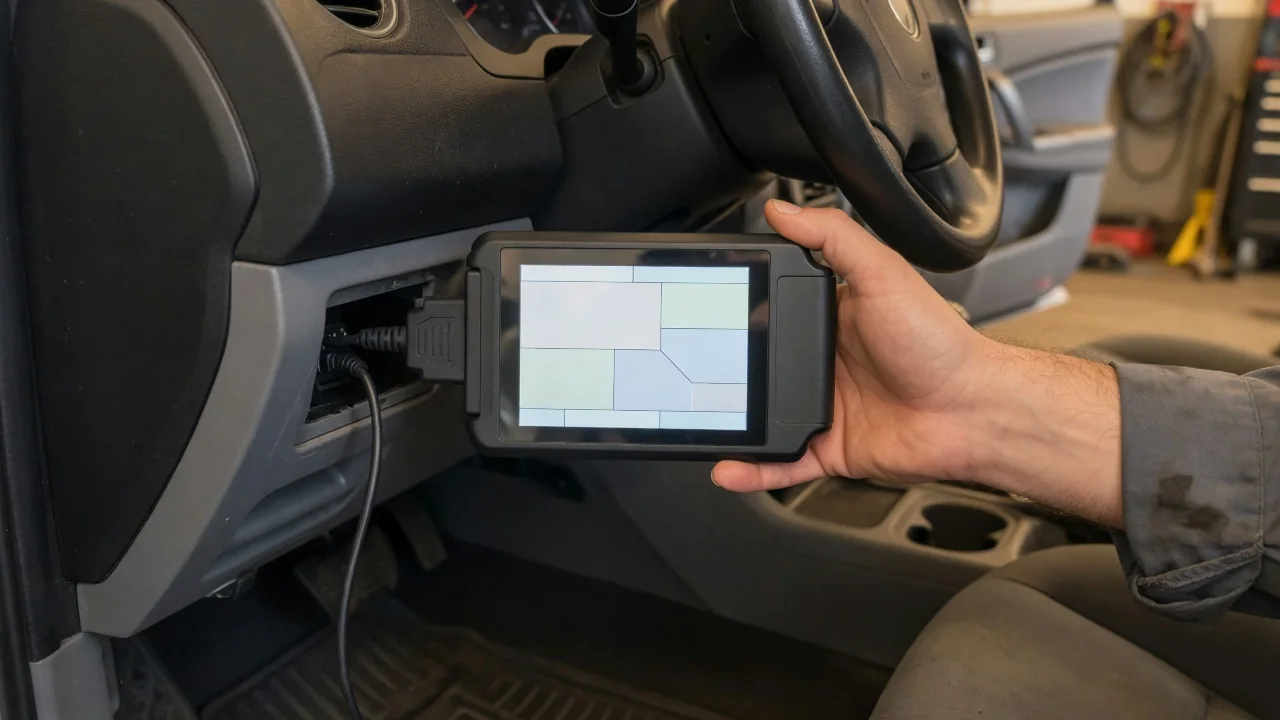
An enhanced scan tool is the first practical step to confirm the correct P1843 definition. A basic code reader often shows only the number, which tells you nothing on a manufacturer-specific code. An enhanced scan tool or the dealer-level diagnostic software can display the full code description as written by the automaker. That description, not the number alone, tells you which system the fault logic is monitoring. If your tool cannot read manufacturer-enhanced codes, a reputable repair shop or dealer can retrieve the description for you.
The vehicle identification number (VIN) is essential when looking up the definition in factory service information. The VIN encodes the model year, engine, transmission, and market, which affect how the manufacturer applies the code. Freeze frame data and the code status—pending, confirmed, or history—should also be recorded before any clearing. This information shows the operating conditions when the fault was detected and whether it is an active problem. Do not clear the code until you have written down all stored codes and freeze frame details; clearing erases the evidence a technician needs.
Symptoms to Note When P1843 Is Stored
Symptoms for P1843 depend entirely on the system the manufacturer assigned to the code. Some vehicles may show no noticeable change in operation, only a steady check engine light or a message such as “Service Vehicle Soon.” In other applications, the fault may affect transmission shifting, engine performance, or even all-wheel-drive operation. Because the code can involve different control modules, the driver may notice harsh gear changes, reduced power, or a failure to engage a gear. The lack of a universal symptom makes the vehicle-specific definition even more important.
Keep a simple log of when the problem appears: cold start, warm engine, during a shift, at a certain road speed, or after driving in rain. Note which warning lights are on, any message center alerts, and whether the problem comes and goes. Does the transmission slip only when cold, or does the engine stumble after a long drive? These observations help a technician focus on the correct system. However, symptoms alone cannot confirm the cause of a manufacturer-specific code; they only narrow the possible fault areas.
General Cause Categories to Check After the Definition Is Confirmed
After the P1843 definition is confirmed, the cause generally falls into one of four broad categories. The first is a circuit problem: damaged wiring, corroded connectors, or a loose terminal in the harness related to the specified system. The second is a sensor or actuator fault, where the component itself is out of range or not responding correctly. The third is a control module or communication issue, such as a failed internal circuit or a data bus error. The fourth is low system voltage, often from a weak battery or charging system problem. The confirmed definition tells you which categories are plausible.
Other stored codes can change the diagnosis. If a low-voltage code or a communication bus code appears alongside P1843, the root cause may be electrical rather than the component named in the P1843 description. For example, a failing alternator can set multiple spurious codes in different modules. No single part is a universal fix for P1843, and replacing a component based only on the code number is a common mistake. The diagnostic process must focus on the system the manufacturer defined, not on a name from a generic code list.
Safe Checks You Can Do Before Visiting a Shop
Before visiting a shop, you can perform a few safe checks. Have the battery and charging system tested; a weak battery or unstable voltage can set electrical fault codes that are not real component failures. Many auto parts stores offer free battery and alternator testing. Also, visually inspect easy-to-reach wiring and connectors related to the system in the confirmed definition, if you know where they are. Look for obvious damage such as cracked insulation, green corrosion, or a connector that is not fully seated. Do not disconnect anything or probe live circuits.
Never clear the P1843 code before recording its freeze frame data and checking for other stored codes. Clearing the code erases the snapshot of engine temperature, vehicle speed, and other conditions that may be needed for diagnosis. After recording the information, you may drive the vehicle through a normal drive cycle to see if the code returns. Note the conditions under which it returns: immediately on startup, after reaching operating temperature, or only during certain driving maneuvers. This pattern helps a technician distinguish between an intermittent circuit fault and a consistent component failure.
When P1843 Needs Professional Testing and What to Expect
A manufacturer-specific code like P1843 usually requires professional testing with the factory diagnostic procedure, wiring diagrams, and proper test equipment. A technician will perform circuit tests on the related wiring and connectors, test the suspect component according to the factory service information, and review live data from the relevant control module. They will also check module communication and look for software updates or technical service bulletins that may apply to your vehicle. These steps are often beyond the reach of a home mechanic because they require specialized tools and access to the automaker’s service data.
If your vehicle shifts, brakes, steers, or accelerates abnormally, do not continue driving. Prompt professional help is important to avoid further damage or a safety risk. After the repair, confirm that the P1843 code stays clear and that the symptoms do not return under the same driving conditions. Some faults require a complete drive cycle before the code will be erased from memory, so a short test drive may not be enough. A proper repair should be verified over several days of normal driving to ensure the problem is truly resolved.