P1840–P1895 Codes: Manufacturer-Specific Meanings and How to Diagnose Them
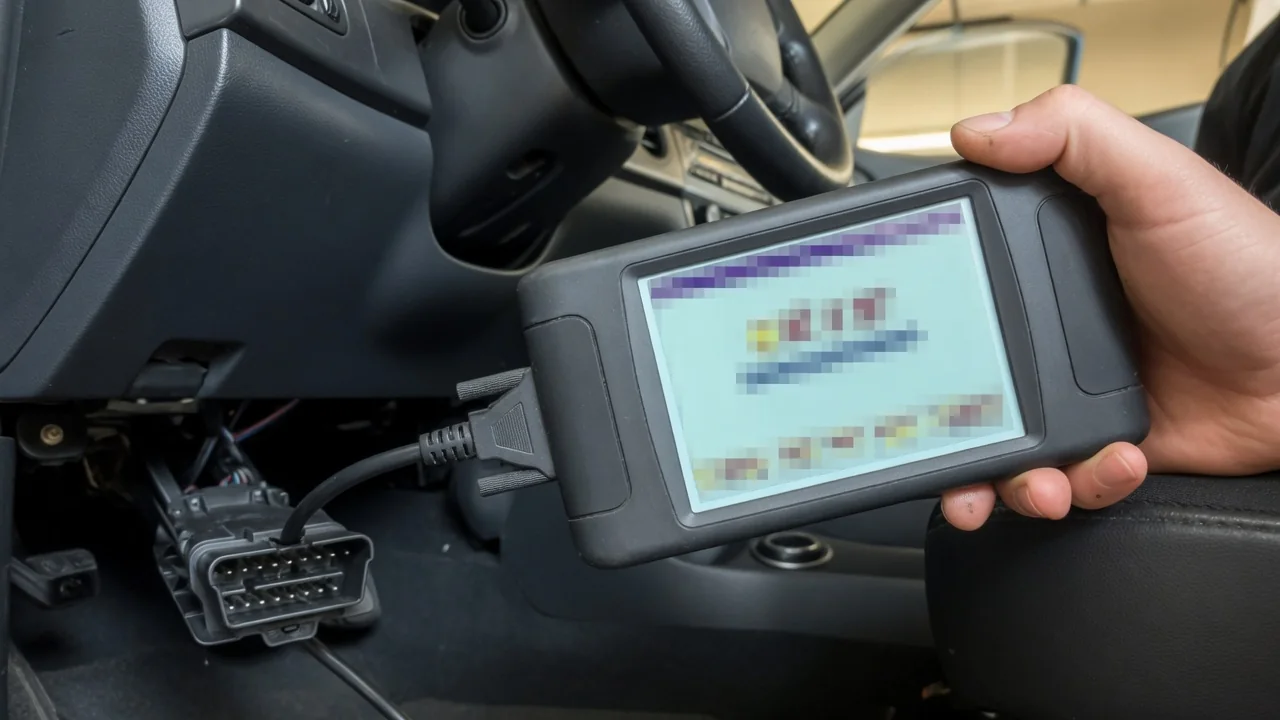
When a check engine light appears with a code such as P1850 or P1887, the real meaning depends on the vehicle that generated it. These P1840 through P1895 numbers are manufacturer-specific powertrain codes, so a definition that fits one brand may be meaningless on another. Owners need the exact make, model, year, engine and transmission data, plus a scan tool with enhanced manufacturer coverage, to interpret the fault correctly before spending money on repairs.
Why P1840 Through P1895 Codes Have No Single Universal Meaning
The P1 prefix identifies a manufacturer-specific powertrain code. Unlike standardized P0 codes, where a number has one definition industry-wide, each automaker assigns its own meaning to numbers in the P1 range depending on model, engine or control module software. A scan tool displaying P1850 may be reporting a transmission issue on one vehicle and a transfer case concern on another, so no universal explanation is possible.
Generic online lists often present a single description for every P1840–P1895 code, but those descriptions can mislead if they come from a different make. Before acting on any code, confirm the exact definition in vehicle service information or with a scan tool that provides manufacturer-specific text. Record the VIN, engine, transmission and any related codes, because those details shape what the code means on the reader’s particular vehicle.
Looking Up P1840, P1848, P1850, P1851 and P1853
For codes such as P1840, P1848, P1850, P1851 and P1853, the first step is not to assume a component. The owner should write down the VIN, make, model, year, engine size and transmission type, then note whether the check engine light is steady or flashing. If the scan tool offers a full manufacturer code text—for example a description that names a specific solenoid or circuit—that text is more reliable than a short generic phrase.
Codes stored together can help narrow the system after each meaning is confirmed. If P1848 appears alongside a standard P0700 transmission code, the fault likely involves the transmission control module, but only the vehicle-specific definition will say what P1848 reports. A basic code reader may show only the number and a vague line, so enhanced coverage or service information is needed before any component is suspected.
Looking Up P1857, P1858, P1864 and P1865
Codes P1857, P1858, P1864 and P1865 each have definitions that change by manufacturer and often by model year. Freeze frame data captured when the code set shows the speed, coolant temperature and engine load at that moment. These values can reveal whether the fault occurred cold, hot, under acceleration or at idle, which helps a technician recreate the condition and test the suspected circuit.
When a scan tool reports a code status, pending means the condition was seen but not yet confirmed, stored means it has set and turned on the warning light, and permanent means the code remains until the vehicle completes its own drive cycle checks. None of these statuses authorizes replacing a part based on the number alone. P1864 on one vehicle may be a pressure switch; on another it could be a range sensor, so diagnosis must start with the vehicle-specific meaning.
Looking Up P1873, P1884, P1886, P1887 and P1889
Codes P1873, P1884, P1886, P1887 and P1889 are manufacturer-dependent entries with no universal system to assign. Check whether a technical service bulletin or software update exists for the confirmed code on the reader’s vehicle. A bulletin may describe a known calibration issue that a control module reflash can correct, or it may point to a wiring repair, but bulletins are specific to make, model and year and should not be assumed to apply.
A code that sets once and never returns after being cleared may have been triggered by a temporary voltage spike or a loose connector during extreme conditions. A code that keeps coming back after clearing indicates a repeatable fault that is present under certain driving conditions. Save the scan results and freeze frame data before clearing anything, because that information can be lost and a technician may need it to compare with a later failure.
Looking Up P1891 and P1895
P1891 and P1895 also require vehicle-specific service information for their confirmed meanings. Many basic scan tools only report “manufacturer control” or “undefined” for these numbers because they lack enhanced manufacturer coverage. Without the automaker’s code text, the number itself does not tell which system, sensor or circuit is involved, so guessing will waste time and possibly cause incorrect repairs.
Along with the code, write down the mileage, any recent repairs or battery work, and when the warning light first came on. A code that appears right after a battery replacement may be related to a communication loss, while one that starts after a transmission service may point to a connector left loose. A basic code reader can usually read and clear codes and show freeze frame data, but it cannot perform manufacturer-specific tests or access all modules.
Symptoms Owners May Notice and Safe Checks to Make
A manufacturer-specific powertrain code may appear with no noticeable change in how the vehicle drives, or it may accompany shifting problems, drivability changes, reduced-power mode or warning messages. Because the same symptom can come from different faults, the driver’s seat impression is not enough to identify the cause. A vehicle may feel sluggish from a torque converter issue, a throttle control problem or even a cooling system concern, so the code definition must come first.
Perform only safe visual checks: look for loose or damaged wiring harness connectors that are visible without taking anything apart, check fluid levels using the owner’s manual method, and note any other warning messages. If the check engine light is flashing, there is a burning smell, leaking fluid, overheating or a sudden loss of power, stop driving and have the vehicle towed. Those are signs that continued operation could cause severe damage regardless of the code number.
A Step-by-Step Diagnostic Approach and When to Get Professional Testing
A safe diagnostic order starts with confirming the vehicle-specific definition in service information or a professional scan tool. Record all stored codes, freeze frame data and any related symptoms, then check for technical service bulletins that match the code and vehicle. Only after that should the owner decide whether to seek professional testing; many manufacturer codes require wiring diagrams, oscilloscope checks and scan tool bidirectional control that most owners do not have.
Avoid clearing codes repeatedly or swapping modules and sensors without testing. A code is evidence of a condition the module detected, not proof that a specific part has failed, and replacing parts by guesswork often leaves the original problem in place. When contacting a repair shop, provide the exact code, the year, make, model, engine and transmission, the symptoms, and when the problem happens. That lets the technician begin with the right service information instead of starting from zero.