P1817 Code: Meaning, Symptoms and Fixes
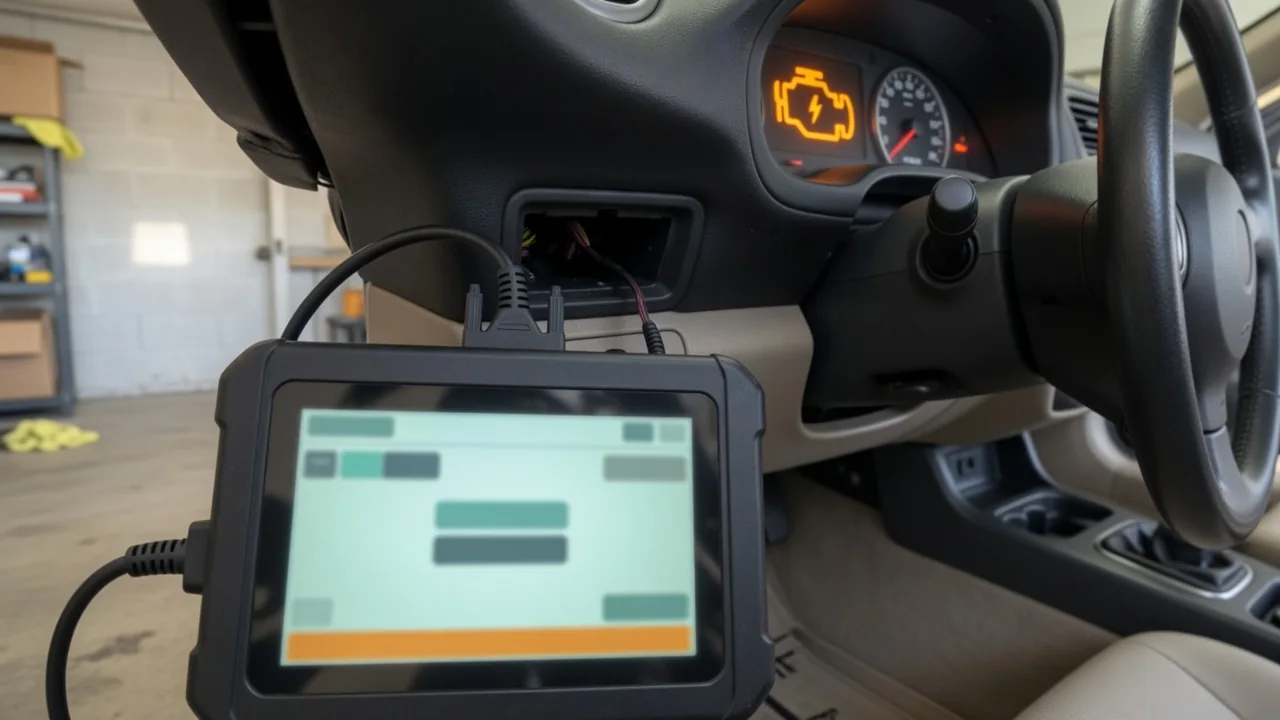
A P1817 diagnostic trouble code appears when a vehicle’s control module detects a fault in a manufacturer-defined circuit or function, but the precise meaning varies by automaker. Because this is a P1xxx code, no universal definition applies; the same number can indicate a transmission pressure switch issue on one model and a control module communication error on another. The check engine light may illuminate with driveability changes or no symptoms at all. To interpret P1817 accurately, drivers must confirm the vehicle-specific definition before considering causes or repairs.
What the P1817 Code Means and Why It Depends on the Manufacturer
P1817 belongs to the manufacturer-specific P1xxx range, so its definition is assigned by each automaker rather than by a single industry standard. Two different vehicles from different manufacturers can store P1817 for entirely unrelated systems, such as a transmission sensor circuit on one and a body control module input on another. Even within one brand, the code may point to different components based on the model, engine, transmission, or model year. Therefore, the first step after reading P1817 is to look up the exact definition for the specific vehicle, not to assume the code always means the same thing.
The most reliable sources for confirming the P1817 definition are a professional scan tool that includes manufacturer-specific code descriptions, factory service information for the vehicle, or the service department at a dealership for that make. Generic code charts often list only one explanation for P1817, which may be incorrect for a particular car and can lead to unnecessary parts replacement. Because the same code can reflect different circuit faults depending on control module programming, matching the vehicle identification number and calibration details to the correct definition is essential before any diagnostic work begins.
How to Confirm P1817 on Your Vehicle Before Drawing Conclusions
Before interpreting P1817, record the freeze frame data captured when the code set, including engine speed, coolant temperature, vehicle speed, and any other stored codes. The scan tool should also show the code status as pending, confirmed, or history. A pending code means the condition occurred once but has not yet repeated enough to set the check engine light, while a history code indicates a past fault that may not be active. These details help determine whether the problem is intermittent or ongoing and provide a snapshot of the operating conditions when the fault occurred.
Clearing the code without fixing the underlying condition will simply remove the stored information and the light until the fault returns. After clearing, a drive cycle may be needed for the module to rerun its tests; if P1817 comes back, the fault is still present. Related codes stored alongside P1817 can often narrow the diagnostic path, as they may identify an open circuit, a short, or a communication issue. Write down the complete scan tool description, all codes, freeze frame data, and the vehicle’s year, make, model, engine, and transmission to give a technician the most useful starting point.
Symptoms That May Appear With a P1817 Code
Because P1817 can be tied to different systems depending on the manufacturer, symptoms vary widely. Some vehicles may exhibit shifting problems such as harsh engagement, delayed gear changes, or the transmission staying in a lower gear, while others may show a check engine light only. There is no fixed set of symptoms for this code. Drivers should note any warning lights, abnormal transmission behavior, reduced power, or unusual sounds that begin at the same time as the code, and whether those symptoms appear only when the engine is cold, hot, or under specific driving conditions.
On certain vehicles, P1817 may not cause any noticeable driveability change at all, with the check engine light being the only sign. Intermittent symptoms that come and go can be especially difficult to diagnose, because a wiring or connector problem may make contact only in certain positions. Observing symptoms is useful, but it does not prove a specific cause. A transmission that shifts erratically could be caused by a failed sensor, a damaged wire, low fluid, or a control module strategy, so professional testing is required to separate symptom from root cause.
Possible Causes Once the Vehicle-Specific Definition Is Known
Once the exact P1817 definition is confirmed for the vehicle, likely causes can be grouped into categories rather than named parts. The fault may involve a sensor or switch circuit reading out of range, damaged wiring or connectors, an internal control module issue, or low system voltage from a weak battery or charging problem. Circuit faults are particularly common because heat, vibration, and corrosion can break wires or loosen terminals. Therefore, visual inspection of the wiring harness and connectors associated with the defined circuit is often the first diagnostic step before any component is replaced.
Replacing a part based only on the code definition without testing can waste money and time. For example, a transmission pressure sensor code may be set by a wiring short to ground, not by the sensor itself. A control module may also set P1817 if its power or ground supply is intermittent due to a corroded battery cable. Testing with a multimeter, an oscilloscope, and a scan tool capable of viewing live data is necessary to compare the actual circuit behavior against the expected values. The correct cause is found through verification, not by guessing from the code.
Safe Checks You Can Do and Where Professional Diagnosis Starts
Safe checks for a vehicle owner can include a visual inspection of connectors and wiring in areas that can be reached without removing protective covers or working near moving parts. Look for obvious damage such as melted insulation, broken wires pulled from connectors, or a connector that is not fully seated. Because many P1817 codes relate to transmission or engine circuits, inspect accessible harness runs around the transmission case and engine bay only with the engine off and the key out. Checking battery voltage with a simple multimeter at the battery posts can also identify low voltage that may cause spurious codes, but avoid touching any other electrical circuits.
Circuit testing, module diagnosis, and software checks require service information, wiring diagrams, and specialized tools. A professional will test the specific circuit identified by the manufacturer’s P1817 definition, checking for open circuits, high resistance, shorts to power or ground, and correct signal operation. They may also check for control module updates or technical service bulletins related to the code. To speed up the diagnosis, bring your written code details, freeze frame data, a list of symptoms, and any recent work done on the vehicle. Do not attempt repairs involving airbags, high-voltage systems, fuel lines, or live electrical circuits; leave those to qualified technicians.
Is It Safe to Drive With P1817 and How Urgent Is It?
The urgency of a P1817 code depends on its vehicle-specific meaning and the symptoms that accompany it. If the car drives normally and the check engine light is steady, many drivers can continue to their destination and schedule diagnosis soon, but an unresolved code may prevent emissions inspection readiness in areas that require OBD-II monitor checks. However, if the transmission is slipping, shifting unpredictably, or the vehicle enters a fail-safe mode that limits speed or gear selection, continued driving could damage the transmission or create a safety risk.
Stop driving and seek immediate assistance if the check engine light is flashing, which indicates a misfire severe enough to damage the catalytic converter, or if there is a loss of power, erratic shifting that could cause sudden deceleration, or any other safety-related warning. Repeatedly clearing the code to keep the light off does not fix the fault and can erase important diagnostic information. A professional diagnosis can determine whether the issue is a simple connector or a more serious internal problem, and timely attention often prevents a minor circuit fault from becoming a major repair.
Fixing P1817 and Confirming the Repair Worked
There is no single fix for P1817 because the correct repair depends on the confirmed definition and the test results. A repair may involve repairing a wire or connector, replacing a faulty sensor or switch, updating control module software, or in rare cases replacing a module. Before replacing any part, a technician should check for technical service bulletins from the manufacturer that might describe a known issue and a specific repair or software update for that code on that vehicle. However, the existence of a bulletin is not guaranteed for every model.
After the repair is completed, the technician will clear the code and then perform a drive cycle that meets the manufacturer’s enabling criteria for the affected monitor. The vehicle must complete enough normal driving for the control module to run its self-tests and confirm the fault no longer occurs. If P1817 does not return after several drive cycles and the related readiness monitors set to complete, the repair can be considered successful. Repair costs vary based on whether the issue is a simple connector cleaning, a wiring repair, or a part replacement, as well as labor rates and the vehicle’s design.